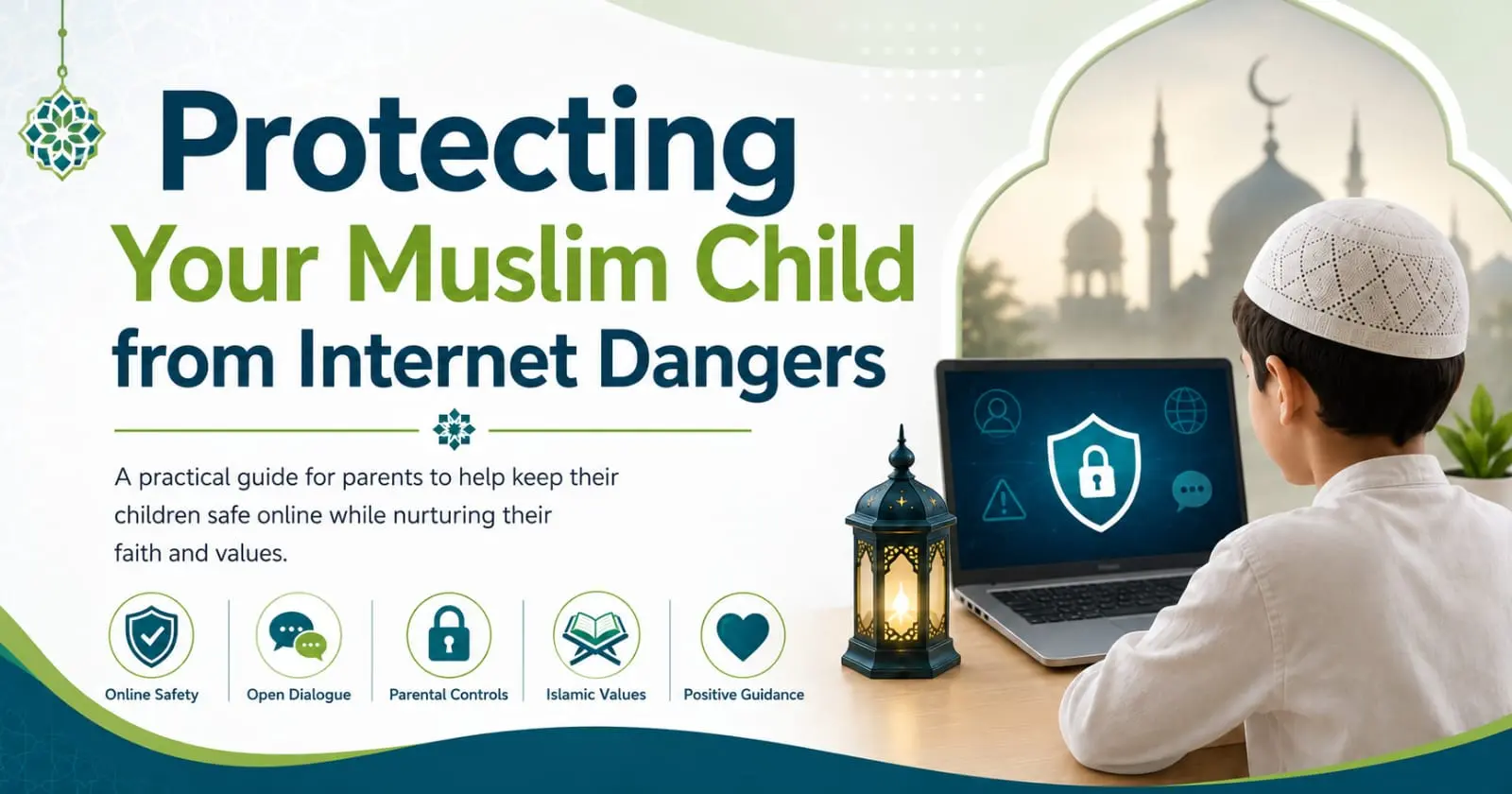
Protecting Your Muslim Child from Internet Dangers
📅
15 Jun 2026
•
Category: Islamic Learning
At Nour Center, we believe that complete prohibition is rarely sustainable or successful in the West. Instead, the answer lies in Empowered Tarbiyah—combining modern digital literacy with deep-rooted Islamic values. We must transition from being just "screen-time police" to being "digital mentors and spiritual guardians."
This guide provides a professional, actionable framework to help you protect your children and raise digitally resilient Muslims.
Section 1: Understanding the Modern Landscape (Know Your Dangers)
To protect, we must first understand. Muslim children in the West face specific, multifaceted dangers online:
Ideological and Moral Dangers (Nifs-al-Aqeedah): Exposure to content promoting atheism, extreme secular ideologies, and moral confusion (including hyper-sexualized media and LGBTQ+ ideologies presented in children’s programming).
Contact Dangers (Cyberbullying and Predators): Muslim children, especially girls wearing Hijab, can be targets for Islamophobic cyberbullying. Furthermore, online predators often target vulnerable children in gaming and social platforms.
Behavioral Dangers (Conduct and Identity): The "influencer culture" promotes materialism, immodesty (Tabarruj), and values that clash with Islamic principles of humility and contentment.
Health Dangers (Addiction): Digital addiction leads to social isolation, sleep disorders, and neglect of religious duties, especially Salah.
Section 2: The Nour Center Five-Pillar Strategy for Digital Tarbiyah
We propose a holistic approach that places the spiritual and emotional connection between parent and child at the center.
1. Spiritual Fortification (Building the Internal Filter)
The goal is to teach children to fear Allah (Taqwa) when they are alone with a screen, not just to fear their parents.
The Concept of Al-Basir: Teach them that Allah is Al-Basir (The All-Seeing) and Al-Alim (The All-Knowing).
Salah as a Anchor: Use the five daily prayers as digital breaks. A strict rule: "Salah before Screen."
Insulating the Fitrah: Fill their offline lives with Quran and Dhikr so that their hearts naturally reject immodest or atheistic content when they encounter it.
2. Radical Trust and Open Dialogue
Living in societies with different norms, your children must feel safe talking to you.
Be a Harbor, Not a Judge: Cultivate an environment where your child can come to you if they see something wrong or scary online without fear of immediate punishment or phone confiscation. If they are scared to tell you, they will be easy targets for blackmail or manipulation by others.
The "Zero-Blame" Pledge for Grooming: Specifically tell your older children that if anyone ever makes them uncomfortable or asks for inappropriate things online, it is NOT their fault, and they must tell you immediately.
3. Comprehensive Digital Literacy (The Mental Shield)
Teach your children to be critical consumers, not passive observers.
Question Everything: Teach them that just because something has millions of views on TikTok doesn't make it right, true, or Islamic.
Understanding Private vs. Public: In the West, data privacy is crucial. Teach them: "What goes online stays online forever." Emphasize never sharing photos, addresses, school names, or passwords.
4. Technical Safeguards (The Outer Wall)
While not enough on their own, technical tools are essential first-level defenses.
Parental Control Apps: Utilize Google Family Link (Android) or Screen Time (iOS) to set limits and approve apps.
Safe Browsing and YouTube Kids: Strictly use YouTube Kids for younger children. Enforce "SafeSearch" on Google and YouTube.
The Router Solution: Consider home routers that allow you to block specific categories (like pornography and violence) at the source for all devices in the house.
5. Clear Family Digital Policy (The Agreement)
Rules must apply to everyone and be agreed upon in advance.
No-Screen Zones: No phones at the dinner table. Ever.
Screen-Free Bedroom at Night: All devices (including parents') must be charged in a central location overnight.
Use in Public Areas: For younger children, screens should be used in the living room or shared spaces, not behind closed doors.
Section 3: Nour Center’s Role in Supporting Your Family
At Nour Center, we understand the unique pressures of raising Muslim families in the West. We are your partners in this marathon.
Parenting Workshops in English: We offer specialized online workshops focusing on digital parenting, bridging the generational gap, and handling adolescence in Western contexts.
Educational Support for Kids: We offer engaging, structured Quranic and Islamic studies classes that insulate your child's identity and fill their time with meaningful learning.
Family Counseling: If your child is struggling with digital addiction, online bullying, or identity issues, our trained counselors offer faith-based behavioral support.
Frequently Asked Questions
What is the appropriate age to give my child their first smartphone?
There is no single "magic number." It depends entirely on maturity and responsibility. However, many parenting experts in the West suggest waiting until age 13 or 14 (high school entry) for a standalone smartphone with full internet access. Before that, consider a "dumb phone" that only allows calls/texts, or a home-bound tablet with strict controls.
Is it Islamically permissible to "spy" on my older child's phone?
This requires balancing Gheerah (protectiveness) with Amana (trust).
For children under 12: Active supervision is a necessity for protection, not spying.
For adolescents (13+): Secret spying can permanently break trust, driving them deeper into secret behavior. The best approach is "transparent monitoring." Agree on the rules upfront: "Because I love you and I am responsible to Allah for you, I may check this device from time to time. We must both know the password." Utilize parental apps that alert you to danger keywords (sex, drugs, suicide) without reading every casual chat.
My child’s school requires Chromebooks/tablets at home. How do I manage this?
This is a major challenge in Europe/America.
Define "Homework Mode": School devices should be used in common areas only (e.g., dining table), not in bedrooms.
Technical restrictions: School-issued devices usually have filters, but they are not perfect. Ensure your home router has an extra layer of DNS filtering to block adult content on any device connected to your Wi-Fi.
How do I talk to my child about content that contradicts Islamic moral values
Do not avoid the topic, as they will hear about it in school or online.
Start with Fitrah: When they are young, root them firmly in the Quran’s description of humanity and family (men and women created as pairs).
Be Age-Appropriate: As they get older, explain that while we are respectful to all people, we disagree with ideologies that contradict Allah's creation. Teach them how to hold onto their principles respectfully when questioned at school.
What should I do if my child is a victim of Islamophobic cyberbullying?
Emotional Support First: Reassure them immediately. "I love you. It is not your fault. We will handle this together."
Document and Save: Do not delete the messages. Take screenshots immediately as evidence.
Do Not Retaliate: Advise your child not to reply to the bully.
Block and Report: Use the platform’s tools to block the user and report the cyberbullying to the administration of the social media site or game.
Involve the School: If the bully is a schoolmate, contact the school administration in writing with your evidence.
Seek Nour Center Support: Contact us if your child is emotionally distressed; our counselors can provide support.
Comments
No comments yet. Be the first to comment.
Note: Comments may require approval
before appearing publicly.