Islamic Studies for Kids: A Complete Beginner's Guide
Discover Islamic Studies for Kids with a clear beginner guide covering faith, the Five Pillars, Quran learning, Salah, S...
Read Article →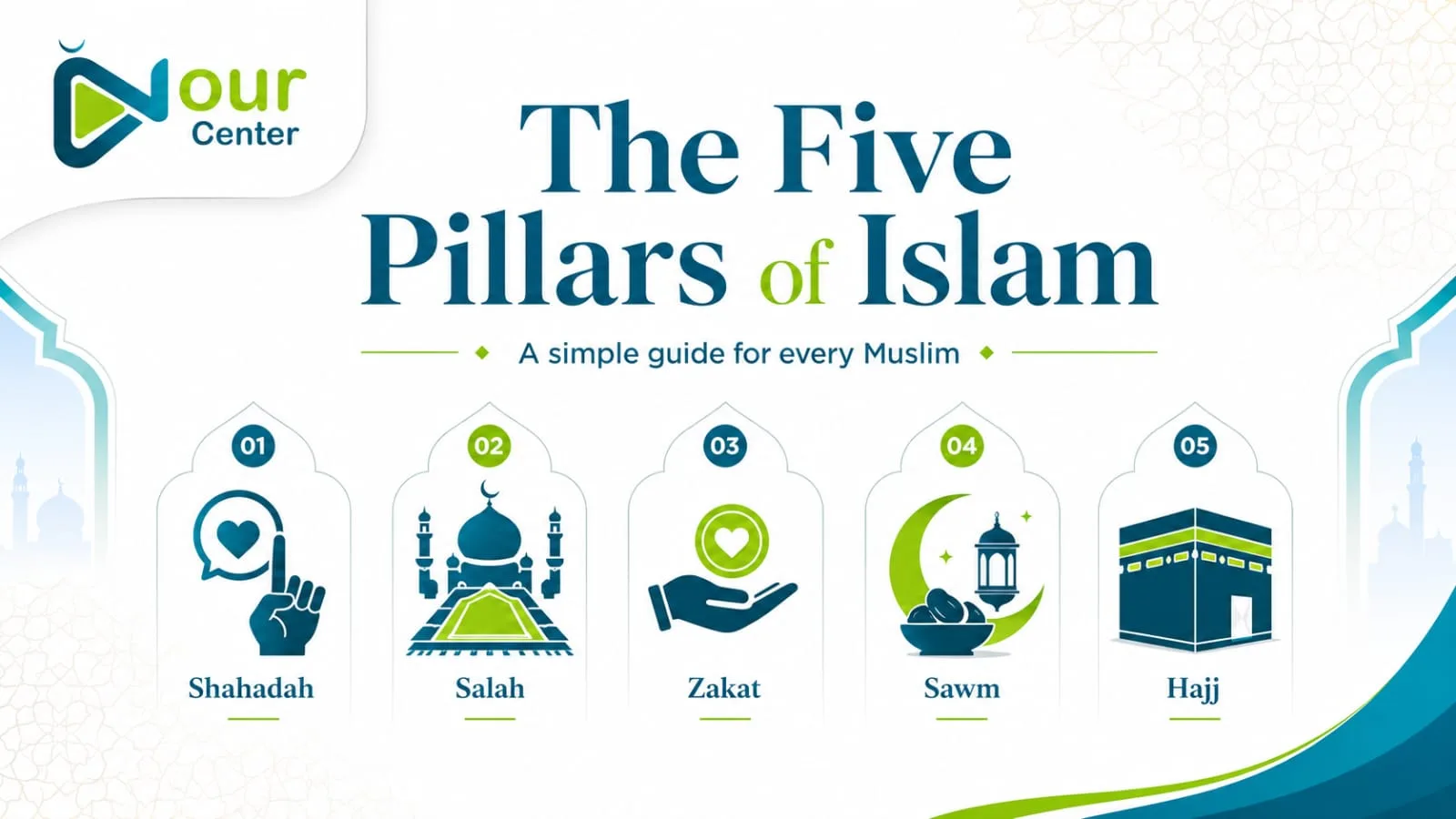
At Nour Center, we help children and adults learn Islamic studies, Quran, Arabic, and the basic teachings of Islam through simple and engaging online lessons.
What Are the Five Pillars of Islam?
The Five Pillars of Islam are the main acts of worship that every Muslim is expected to follow according to their ability. They provide Muslims with a clear structure for living a faithful and meaningful life.
The five pillars are:
1. Shahadah: The declaration of faith
2. Salah: The five daily prayers
3. Zakat: Giving obligatory charity
4. Sawm: Fasting during Ramadan
5. Hajj: The pilgrimage to Makkah
Each pillar teaches an important lesson, including faith, discipline, generosity, patience, equality, and submission to Allah.
1. Shahadah: The Declaration of Faith
The first and most important pillar of Islam is the Shahadah, or declaration of faith. It is expressed by saying:
“There is no god but Allah, and Muhammad is the Messenger of Allah.”
The Shahadah confirms the two central beliefs of Islam. The first is Tawheed, which means believing that Allah is One and has no partner. The second is believing that Prophet Muhammad, peace and blessings be upon him, is the final Messenger of Allah.
The Shahadah is not simply a sentence that Muslims repeat. It is a belief that should influence every part of a Muslim’s life. A Muslim worships Allah alone, follows His commands, avoids what He has forbidden, and follows the teachings and example of Prophet Muhammad.
Teaching the Shahadah to Muslim children helps them understand their Islamic identity and develop a strong foundation of faith from an early age.
2. alah: The Five Daily Prayers
Salah, or Islamic prayer, is the second pillar of Islam. Muslims perform five obligatory prayers every day:
- Fajr: Before sunrise
- Dhuhr: After midday
- Asr: In the afternoon
- Maghrib: Just after sunset
- Isha: At night
The five daily prayers help Muslims remember Allah throughout the day. During Salah, Muslims stand, bow, prostrate, recite verses from the Quran, and make supplications to Allah.
Salah teaches Muslims punctuality, cleanliness, concentration, humility, and self-discipline. Before praying, Muslims perform Wudu, or ablution, to prepare themselves physically and spiritually.
Prayer also gives Muslims comfort during difficult times. When a person feels worried, confused, or sad, Salah provides an opportunity to turn directly to Allah and ask for guidance and support.
Parents should encourage their children to learn how to pray step by step. Children can begin by learning Wudu, the prayer movements, Surah Al-Fatihah, and short Quranic chapters used during Salah.
At Nour Center, qualified Islamic teachers help students learn the correct method of prayer in an easy and age-appropriate way.
3. Zakat: Giving to Those in Need
Zakat is the third pillar of Islam. It is an obligatory form of charity paid by eligible Muslims who possess a certain amount of wealth for a complete lunar year.
In general, Zakat is calculated as 2.5% of qualifying savings and wealth. It is distributed to specific groups of people mentioned in Islamic teachings, including the poor, the needy, and those experiencing financial hardship.
Zakat teaches Muslims that wealth is a blessing and responsibility from Allah. A Muslim should not become selfish or ignore the needs of other people. By giving Zakat, Muslims purify their wealth, support vulnerable members of society, and help reduce poverty.
Zakat is different from Sadaqah, which is voluntary charity. Muslims can give Sadaqah at any time and in many forms. Giving food, helping someone in need, supporting an Islamic education project, or even speaking kindly can be considered an act of charity.
Teaching children about Zakat and Sadaqah helps them become generous, grateful, and caring Muslims.
4. Sawm: Fasting During Ramadan
The fourth pillar of Islam is Sawm, which means fasting during the blessed month of Ramadan.
During Ramadan, adult Muslims who are physically able to fast avoid food, drink, and other things that invalidate the fast from dawn until sunset. Muslims begin the day with a pre-dawn meal called Suhoor and break their fast at sunset with a meal called Iftar.
However, Ramadan fasting is not only about avoiding food and drink. Muslims should also avoid lying, arguing, backbiting, bad language, and harmful behavior. The purpose of fasting is to develop Taqwa, which means being conscious of Allah and trying to obey Him in every situation.
Ramadan is also known as the month of the Quran. Muslims try to read and understand more of the Quran, perform additional prayers, make Dua, give charity, and improve their behavior.
Fasting teaches patience, gratitude, self-control, and compassion for people who do not have enough food. It also reminds Muslims that spiritual needs are more important than physical desires.
Children who have not yet reached the age of obligation are not required to fast. However, parents may help them practice for short periods when they are ready and healthy.
5. Hajj: The Pilgrimage to Makkah
Hajj is the fifth pillar of Islam. It is the pilgrimage to the sacred city of Makkah in Saudi Arabia.
Hajj is required once in a lifetime for every adult Muslim who is physically and financially able to perform it. It takes place during the Islamic month of Dhul Hijjah.
During Hajj, Muslims perform several important acts of worship, including entering the state of Ihram, circling the Kaaba, walking between the hills of Safa and Marwah, standing at Arafah, and remembering Allah during the days of Hajj.
Millions of Muslims from different countries, cultures, languages, and social backgrounds gather to worship Allah. They wear simple clothing and perform the same acts of worship. This powerful experience demonstrates the equality and unity of the Muslim Ummah.
Hajj reminds Muslims of the sacrifices and obedience of Prophet Ibrahim, his wife Hajar, and their son Prophet Ismail, peace be upon them.
Why Are the Five Pillars of Islam Important?
The Five Pillars of Islam are important because they connect belief with action. Islam does not teach Muslims to have faith only in their hearts. True faith should also be reflected in worship, behavior, and treatment of others.
The Shahadah strengthens belief in Allah. Salah maintains a daily connection with Him. Zakat encourages generosity and social responsibility. Sawm develops patience and self-control. Hajj teaches unity, equality, sacrifice, and complete submission to Allah.
Together, the five pillars help Muslims build a balanced life based on worship, good character, and service to the community.
How Can Parents Teach the Five Pillars of Islam to Children?
Parents can begin teaching the Five Pillars of Islam using simple explanations and practical examples. Young children can memorize the names of the pillars and learn a short meaning for each one.
Parents can also:
- Pray together as a family.
- Encourage children to give a small amount to charity.
- Read stories about Ramadan and Hajj.
- Use Islamic activities, worksheets, and educational games.
- Praise children when they practice good Islamic manners.
- Enroll them in structured online Islamic classes.
Children learn best when Islamic education is consistent, positive, and connected to everyday life. Parents should explain that worship is not a burden, but a way to love Allah, thank Him, and become a better person.
Learn Islam Online with Nour Center
Understanding the Five Pillars of Islam is an essential part of every Muslim’s education. Whether a student is learning the basics of Islam for the first time or wants to strengthen their existing knowledge, receiving guidance from qualified teachers can make the learning process easier and more effective.
Nour Center offers online Quran and Islamic studies classes for children and adults. Our lessons are designed to help students learn Quran recitation, Arabic, Salah, Islamic manners, stories of the prophets, and the fundamental teachings of Islam.
Through personalized online classes, students can study from home with experienced teachers and follow a learning plan suited to their age and level
The Five Pillars of Islam are the foundation of a Muslim’s religious life. They are Shahadah, Salah, Zakat, Sawm, and Hajj. Each pillar teaches Muslims how to worship Allah, control their desires, support others, and live with faith and responsibility.
Learning and practicing these pillars helps Muslims strengthen their relationship with Allah and become positive members of their families and communities
Note: Comments may require approval before appearing publicly.
Discover Islamic Studies for Kids with a clear beginner guide covering faith, the Five Pillars, Quran learning, Salah, S...
Read Article →
ajj is one of the Five Pillars of Islam and a journey of worship, repentance, unity, and devotion to Allah. Learn what H...
Read Article →
Learn what Qalqalah means in Tajweed, the five Qalqalah letters, when the echoing sound occurs, the difference between m...
Read Article →
Learn how to learn Arabic online with a practical step-by-step plan covering the alphabet, pronunciation, reading, vocab...
Read Article →