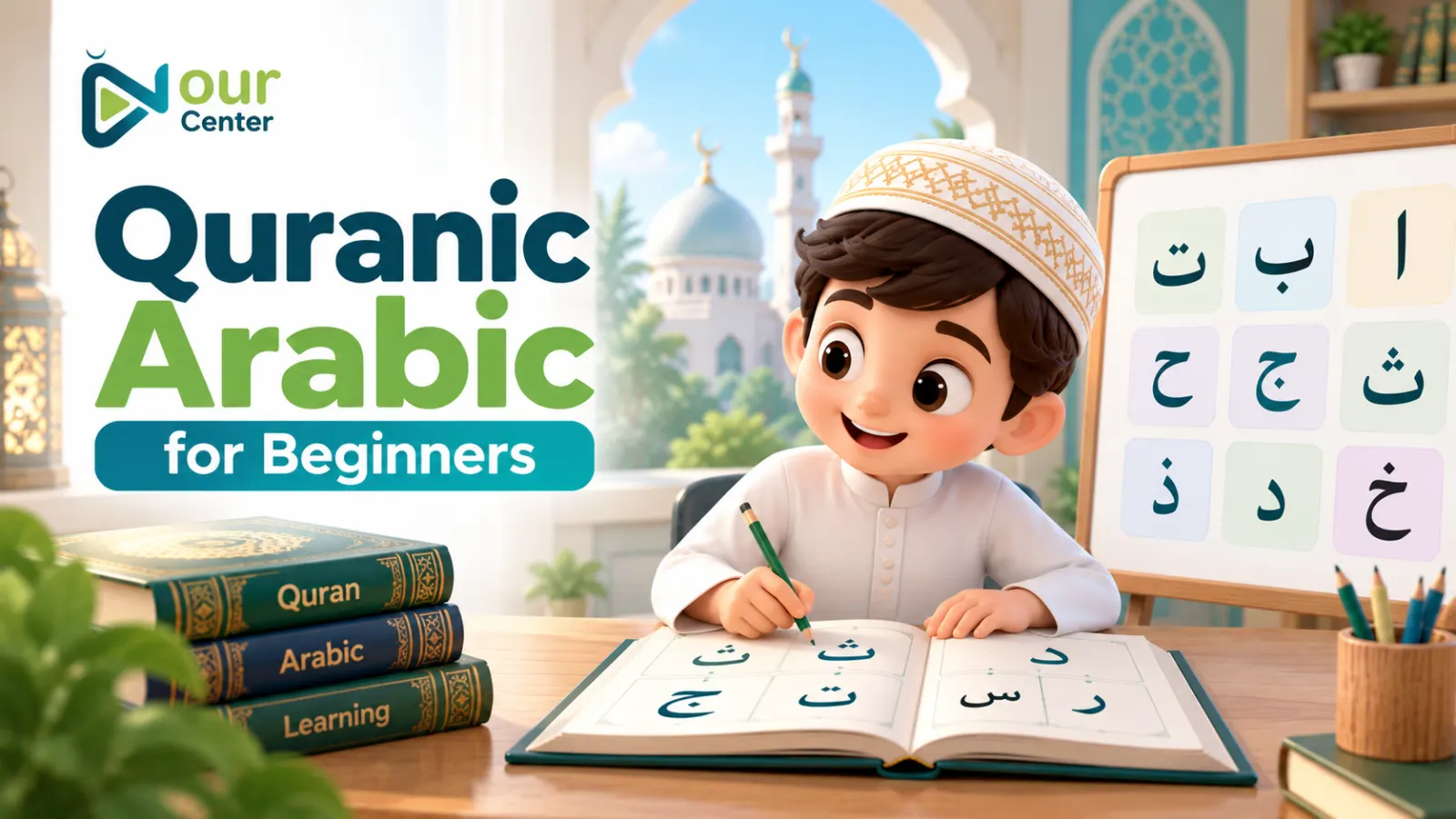
Quranic Arabic for Beginners: Start Understanding Quran Vocabulary
Learn Quranic Arabic for beginners step by step, build essential Quran vocabulary, understand common word patterns, reco...
Read Article →
A Step-by-Step Plan for Beginners
Learning How to Learn Arabic Online becomes much easier when you stop treating Arabic as one enormous subject and begin dividing it into clear stages.
A new alphabet. A different writing direction. Unfamiliar sounds. Connected letters. Vowel marks. Grammar. Vocabulary. Speaking. Listening. Quranic Arabic. All at the same time. That can feel overwhelming. But you do not need to learn everything at once. Arabic can be approached through a logical sequence. First learn the writing system. Then learn the sounds. Then learn to read. Then begin building vocabulary. Then add grammar. Then develop listening and speaking.
If your goal includes understanding the Quran, begin adding Quranic Arabic vocabulary and structure once your reading foundation is stable. This guide provides a complete beginner roadmap for learning Arabic online and explains what to study first, what to study later, how to organize daily practice, how online lessons can help, and which common mistakes can slow progress. Can You Really Learn Arabic Online? Yes.
Arabic can be learned effectively online when the student combines structured instruction with consistent practice.
Live teacher-led lessons. Pronunciation correction. Arabic reading practice. Vocabulary study. Grammar lessons. Listening exercises. Speaking practice. Writing exercises. Quranic Arabic. Homework. Recorded review. The most important factor is not simply whether the lesson takes place online. The important question is whether the learning process is structured. Watching random videos without a sequence can create gaps. A clear curriculum helps each new skill build on what came before. What Should a Complete Beginner Learn First?
A complete beginner should begin with the Arabic writing system.
The 28 basic letters. Right-to-left reading. Letter names. Basic letter sounds. Similar letter shapes. Connected forms. You do not need advanced grammar during your first alphabet lessons.
Look at an Arabic letter and recognize it confidently. Students who completed Arabic Alphabet for Beginners already have the first major foundation for online Arabic learning because recognizing the 28 letters makes every later reading and vocabulary lesson easier. Once that foundation becomes reasonably stable, move into pronunciation and reading.
Learn the Arabic Alphabet
Arabic contains 28 basic letters.
The isolated forms. The letter names. Their main sounds. The dots. Common visual families. Letters that connect. Letters that do not connect forward. Do not only memorize the alphabet in order. Test yourself randomly.
Alif, Ba, Ta, Tha...
غ you still need recognition practice. The goal is instant identification.
Several Arabic letters share similar basic shapes.
ب ت ث ج ح خ د ذ ر ز س ش ص ض ط ظ ع غ Grouping them can make visual learning easier.
Shape. Number of dots. Position of dots. Then combine recognition with sound.
Arabic is normally read and written from right to left. This should become natural from the beginning. Do not continually reverse Arabic mentally into English direction.
Start on the right. Follow the word toward the left. The sooner your eyes adapt, the easier connected reading becomes.
Learn Correct Arabic Letter Sounds
Knowing the alphabet visually is not enough. Arabic contains sounds that may not exist in your first language.
ح خ ع غ ق ص ض ط ظ
Listening. Imitation. Makhrij explanation. Repetition. Teacher correction. Avoid permanently replacing unfamiliar Arabic letters with the nearest English sound.
Qaf should not simply become Kaf. Dad should not simply become Dal. Ayn should not disappear. The stronger your pronunciation foundation, the easier Arabic reading and speaking become later.
Transliteration may help during the earliest stages. But it should gradually disappear.
Arabic script → Arabic sound.
Arabic script → English letters → Arabic sound. If you always depend on transliteration, your Arabic reading can remain unnecessarily slow. Use Arabic script as early as possible.
Learn Fathah, Kasrah, and Dammah
Once you know the letters and their sounds, learn the three basic short vowels: Fathah. Kasrah. Dammah. They transform a consonant into a readable sound unit.
بَ بِ بُ The consonant remains Ba. The Harakah changes the short vowel. This is the stage where the alphabet begins turning into actual reading. Practice the same consonant with all three vowels. Then use random letters. Do not memorize only predictable sequences.
Harakat train you to read what is written rather than guess. A beginner who only knows the alphabet can recognize letters but may not know how to vocalize them. Harakat provide that missing information.
Fathah. Kasrah. Dammah. are recognized almost instantly.
After short vowels, learn Sukoon. Sukoon tells you that a consonant has no short vowel after it. This is an important change.
a. i. u. after every consonant. Sukoon teaches you to close the consonant cleanly. For example, a Sakin consonant must be connected to the preceding sound without inventing an extra vowel. This is one of the first major steps toward real word reading.
Shaddah represents a doubled consonant.
A louder consonant. A longer vowel. A decorative mark. Instead, the consonant itself is doubled. Understanding Sukoon first helps because a Shaddah can be analyzed for learning purposes as: A first Sakin occurrence of the consonant. Followed by the same consonant carrying a vowel.
Fathah. Kasrah. Dammah. Then practice it inside complete words.
Fathatain. Kasratain. Dammatain. These are Tanween forms.
-an. -in. -un. Tanween frequently appears in vocalized Arabic and Quranic Arabic.
Tanween. Shaddah. Long vowels. An actual written Noon. Each has its own function.
Learn How Arabic Letters Connect
This is where many beginners feel that Arabic suddenly looks different.
An isolated form. An initial form. A medial form. A final form. The letter has not changed identity. Its shape changes according to its position and connections. Learn the six common letters that do not connect to the following letter on the left: ا د ذ ر ز و These letters can create visible breaks inside one word. Do not assume every visual break means a new word.
Learning this system makes connected Arabic much easier to understand.
Begin Reading Complete Arabic Words
Once the alphabet, Harakat, Sukoon, Shaddah, Tanween, and letter connections are familiar, begin word reading. Students who can follow How to Read Arabic Words for Beginners should focus on decoding unfamiliar words accurately before trying to increase reading speed.
Start from the right. Identify the letters. Check the dots. Read the Harakat. Notice Sukoon. Notice Shaddah. Check the ending. Break difficult words into sound units. Blend them. Read the word again. Accuracy should come before speed.
Guessing is one of the most damaging beginner habits. You recognize the first two letters. The word looks familiar. You predict the rest. Sometimes you are correct. But this does not prove you can read the word. Use unfamiliar fully vocalized words to test genuine decoding. Read everything that is actually written.
Develop Reading Fluency
After you can decode words correctly, begin reducing pauses.
Correct letters. Correct sounds. Correct word. Smooth word. Faster word. Do not attempt speed first. A fast reader who repeatedly changes letters or ignores vowel marks has not built strong fluency. A slow accurate reader can gradually become faster. Repeat difficult words. Then read them inside short sentences.
Start Learning Useful Arabic Vocabulary
Once reading becomes manageable, begin learning vocabulary systematically. Do not memorize random dictionaries.
People. Family. Home. Time. Food. Places. Common actions. Descriptions. Numbers. Daily expressions. If Quranic Arabic is your goal, prioritize frequent Quranic vocabulary and common grammatical words.
Arabic spelling. Correct pronunciation. Meaning. A simple example. Review. Avoid learning only English translations.
Learn Vocabulary in Context
A word is easier to remember when it appears inside a phrase or sentence.
Word = translation.
The word inside a short Arabic context.
Natural usage. Word order. Prepositions. Pronouns. Grammar. Meaning. Context also makes vocabulary easier to remember.
Learn Common Arabic Phrases
Beginners should start using Arabic early. Simple useful phrases can help build confidence.
Greetings. Introductions. Questions. Daily activities. Family. Study. Time. Needs. Preferences. You do not need advanced grammar to begin using short structured phrases. Speaking and grammar can grow together.
Begin Basic Arabic Grammar
Some reading ability. Some vocabulary. Some familiar phrases. Do not begin Arabic with the most complicated grammar textbook you can find.
Nouns. Verbs. Particles. Pronouns. Definite and indefinite words. Simple adjective structures. Possession. Prepositions. Basic sentence patterns. Simple verb tense recognition. Then progress gradually.
A grammar lesson is most useful when you can see the rule inside words and sentences you already understand. For example, after learning a set of familiar nouns, the teacher can show how: The definite article. Adjectives. Possession. Prepositions. affect those nouns. This creates meaningful grammar rather than abstract terminology.
Learn Basic Arabic Roots
Arabic vocabulary often belongs to word families built around consonantal roots. Root awareness can help you recognize relationships between words.
A shared root does not mean every word has exactly the same meaning. Use roots as a learning tool.
The actual word. Its pattern. Its context. Its specific meaning. Root study becomes increasingly valuable as vocabulary grows.
Learn Basic Arabic Morphology
Arabic morphology, often associated with Sarf, helps explain how words are built.
Recognizing a root. Recognizing common prefixes. Recognizing common suffixes. Identifying common verb forms. Recognizing attached pronouns. Understanding related word families. You do not need to master advanced morphological tables immediately. Use morphology to make vocabulary more understandable.
Begin Listening Practice
Reading and listening are different skills. You may recognize a written word but fail to understand it when someone says it quickly. Therefore, begin listening practice early.
Teacher speech. Short beginner dialogues. Slow Arabic audio. Repeated vocabulary recordings. Simple stories. Quranic vocabulary audio if that is your focus. Listen to material that is slightly challenging but not completely incomprehensible.
Use a short audio clip. First listen without stopping. Second listen while following the written text. Third pause and repeat. Fourth listen again without the text.
Which words can I recognize? Which sounds were difficult? Did connected speech sound different from isolated vocabulary? Repeat short clips rather than constantly changing material.
Practice Speaking From the Beginning
Some learners wait until they “know enough Arabic” before speaking. That point never feels like it arrives. Start with simple language.
Introducing yourself. Answering simple questions. Describing daily activities. Naming objects. Using common verbs. Asking basic questions. Repeating teacher models. Speaking does not need to begin with complex conversation. Short accurate sentences are valuable.
Create a complicated English sentence. Then attempt to convert it word by word into Arabic. This often causes unnatural structures. Instead, learn Arabic sentence patterns. Use structures you have already studied. Expand gradually.
Arabic pattern + known vocabulary.
English sentence + direct substitution.
Practice Arabic Writing
Letter recognition. Connections. Vocabulary. Spelling. Grammar. You do not need to begin by writing essays.
Individual letters. Words. Short phrases. Simple sentences. Vocabulary lists. Answers to lesson questions. Writing makes you notice details you may overlook while reading.
Both are useful.
Letter formation. Connections. Direction. Spelling.
Digital communication. Homework. Online learning. Modern study. A learner can practice both gradually.
Decide Which Type of Arabic You Need
Arabic learning goals differ.
Quranic Arabic. Modern Standard Arabic. Conversational Arabic. Arabic for children. Arabic reading only. Arabic for Islamic studies. Professional Arabic. A combination. Your learning plan should reflect your main objective. Someone studying Quranic Arabic does not need exactly the same first-year curriculum as someone preparing to live in an Arabic-speaking country.
Reading. Pronunciation. Quranic vocabulary. Roots. Sarf. Nahw. Text analysis. Students beginning Quranic Arabic for Beginners should combine vocabulary recognition with basic roots and grammar rather than trying to understand Quranic passages through translation alone. This allows you to gradually understand how the Arabic text itself communicates meaning. Do You Need to Finish Reading Before Starting Quranic Arabic? No. You do not need perfect fluency.
But your basic decoding should be stable enough that every vocabulary lesson is not consumed by letter recognition.
You can continue improving reading while beginning simple vocabulary. A balanced plan works well.
Reading. Writing. Vocabulary. Grammar. Listening. Formal speaking. News and educational language later. Modern Standard Arabic provides access to a wide range of written and formal communication. Begin with the same core foundations. Then expand vocabulary according to your goals.
If conversation is your priority, listening and speaking should receive more time. You still benefit greatly from learning the script.
Useful phrases. Questions. Conversation. Listening comprehension. Pronunciation. High-frequency vocabulary. Your teacher may also help you decide whether to focus on a particular dialect. Should You Learn a Dialect? This depends on your objective. A learner focused entirely on Quranic Arabic may not need dialect study at first. A student who wants everyday communication may choose a spoken dialect in addition to formal Arabic. Avoid mixing several dialects randomly during the beginner stage.
Choose a clear goal. Build a stable foundation. Then expand.
Create a Daily Arabic Routine
Consistency matters more than occasional intense study. A beginner can make significant progress through short daily practice. Your routine should include several skills.
Reading. Vocabulary. Listening. Speaking. Review. The exact duration can vary. A realistic plan you can maintain is more valuable than an ambitious plan you abandon after one week.
Review Arabic letters or reading patterns.
Practice vocabulary.
Read a short passage.
Listen and repeat.
Review mistakes. This is suitable for very busy learners.
Review previous material.
Read Arabic aloud.
Learn or review vocabulary.
Study one grammar concept.
Listening practice.
Speaking or writing practice. Adjust the proportions according to your goals.
Reading and pronunciation.
Vocabulary.
Grammar or morphology.
Listening.
Speaking.
Review and homework. You do not need one continuous hour. The practice can be split throughout the day.
Reading and Pronunciation
Review letters, Harakat, and difficult sounds.
Learn and review useful words.
Study one beginner grammar topic and use it with known vocabulary.
Use short comprehensible Arabic audio.
Practice simple questions and responses.
Reading and Writing
Read a short text and write simple sentences.
Vocabulary. Reading. Pronunciation. Grammar. Then identify what needs more practice next week.
Without review, lessons accumulate but knowledge becomes unstable.
Which letters still confuse me? Which vocabulary have I forgotten? Which grammar rule is unclear? Which sounds are difficult? Can I read last week's passage more smoothly? This creates a learning cycle instead of an endless stream of new material.
Use a Structured Course
Online resources are abundant. That is both an advantage and a problem.
One alphabet video. Then an advanced grammar lecture. Then a dialect lesson. Then Tajweed. Then vocabulary. Then another alphabet system. The information may all be useful. But the sequence becomes chaotic.
Order. Progression. Review. Feedback. Clear goals. This reduces learning gaps.
Work With a Teacher When Possible
Pronunciation. Makharij. Reading correction. Speaking. Grammar explanation. Vocabulary usage. Quranic Arabic. Accountability. A video cannot always hear your mistake. A live teacher can.
ق is correct.
ك and correct it immediately. This can prevent months of repeated incorrect practice.
Use One-to-One Lessons Effectively
A private online lesson should not be passive. Come prepared. Bring questions. Read aloud. Speak. Make mistakes. Receive correction. Review the corrections afterward. One-to-one instruction is especially useful because the teacher can focus on your actual weak areas.
Pronunciation.
Reading fluency.
Grammar.
Conversation.
Quranic vocabulary. Personalized instruction prevents wasting time on material you already understand.
Take Notes After Each Lesson
Your lesson notes do not need to be long.
New vocabulary. Grammar rules. Pronunciation corrections. Reading mistakes. Homework. Questions.
Review it before the next lesson. This prevents the same mistake from returning repeatedly.
Review Teacher Corrections
A correction is valuable only if you practice it afterward. Suppose your teacher corrects Qaf.
“Okay.” Then forget it.
Repeat Qaf. Read words containing Qaf. Record yourself. Compare. Use it in the next lesson. The same applies to grammar and vocabulary.
Use Flashcards Carefully
Vocabulary. Letter recognition. Roots. Verb forms. Common phrases. But do not make every card overloaded.
Arabic word.
Meaning. Then add more detail only when needed. The purpose is rapid recall.
Use Spaced Review
Do not review every vocabulary word with equal frequency forever. Difficult words need more attention. Familiar words can be reviewed less frequently. Repeated retrieval over time improves retention. Whether you use an app or paper cards, the principle is simple: Return to information before it disappears completely.
Read Arabic Every Day
Even a few minutes helps.
Beginner exercises. Short sentences. Graded stories. Course material. Quranic Arabic material. The important thing is regular contact with the script. Arabic reading should become normal rather than something you encounter only during class.
Listen to Arabic Every Day
Your ears need regular exposure too. Even ten minutes of focused listening can help. Do not choose extremely advanced audio simply because it is authentic. If you understand nothing, the exercise may not be efficient at your current level. Use material where you can identify at least some familiar words and structures. Then increase difficulty.
Speak Regularly
Speaking requires active recall.
كتاب when reading. But can you produce the word when you need it? Speaking exposes the difference between passive and active vocabulary.
Short responses. Questions. Descriptions. Daily routines. Simple conversations. Fluency develops through use.
Build Arabic Writing Gradually
Write five vocabulary words. Write your name. Write a short introduction. Write three sentences about your day. Answer a lesson question. Use today's grammar structure. Do not wait until you can write complex essays. Writing skill grows progressively.
Track Progress Through Skills
Months studied. Pages completed. Lessons attended.
Can I recognize all letters? Can I read connected words? Can I read without transliteration? Can I distinguish difficult sounds? Can I understand common vocabulary? Can I form simple sentences? Can I follow a beginner conversation? Can I identify common Quranic words? These milestones provide a more realistic picture of improvement. How Long Does It Take to Learn Arabic? There is no single answer.
Your starting point. First language. Study frequency. Goals. Teacher support. Practice quality. Reading exposure. Listening exposure. Whether you want basic reading or advanced proficiency.
“Become fluent in 30 days.” You can certainly make progress quickly. But long-term language ability requires continued practice. Set milestones rather than unrealistic deadlines.
“I will become fluent.” set specific goals.
I will recognize all Arabic letters. I will read Fathah, Kasrah, and Dammah. I will master Sukoon. I will read 20 unfamiliar beginner words. I will learn 100 useful vocabulary items. I will hold a basic introduction conversation. I will recognize common Quranic vocabulary. Specific goals are easier to track. Can Children Learn Arabic Online? Yes. Online Arabic classes can work well for children when lessons are: Interactive. Age appropriate.
Short enough for attention span. Visually clear. Repetitive. Supported by teacher feedback.
Alphabet. Pronunciation. Reading. Vocabulary. Simple speaking. Quranic Arabic. The lesson should not simply recreate a long adult lecture on a screen. Children need active participation.
Parents can support learning without becoming Arabic teachers.
Maintain lesson schedules. Encourage short daily practice. Review flashcards. Listen to the child read. Celebrate progress. Make sure homework is completed. Avoid correcting detailed pronunciation if they are unsure of the correct sound. Teacher guidance should remain the main pronunciation reference. Can Adults Learn Arabic Online? Yes.
Clear goals. Ability to understand grammar explanations. Independent study habits. Motivation. Adults may sometimes worry that language learning is only easy for children. But consistent adult learners can make strong progress. The important factor is not trying to learn everything immediately. Follow a sequence. Review regularly. Practice actively.
Learning Random Topics
Watching unrelated Arabic lessons creates gaps. Use a structured progression.
Staying on the Alphabet Too Long
Learn the alphabet well. Then move into Harakat and reading. Do not spend months only reciting letter names.
Moving Past the Alphabet Too Quickly
The opposite problem is also common. If you constantly confuse letters, word reading will be difficult. Build reasonable recognition before progressing.
Depending on Transliteration
Gradually remove Latin-letter support. Read Arabic directly.
Ignoring Pronunciation
Incorrect pronunciation can become habitual. Use listening and correction from the beginning.
Studying Only Grammar
Grammar is important.
Vocabulary. Reading. Listening. Speaking. does not create complete language ability.
Studying Only Vocabulary
Vocabulary without grammar eventually limits comprehension and expression. Combine them gradually.
Do not wait for perfect Arabic before speaking. Use simple sentences now.
Never Listening
Reading alone does not prepare you for spoken Arabic. Train your ear.
Trying to Speak Too Fast
Slow accurate Arabic is more useful than fast unclear Arabic. Build accuracy first.
Changing Courses Constantly
Every time a course feels difficult, some learners start a new beginner course. This can create endless restarts. Choose a sound structured plan and give it time.
Using Too Many Resources
Ten Arabic apps do not automatically produce better learning.
One main course. One teacher. One vocabulary system. One listening source. One reading source. Add resources when they solve a specific need.
Never Reviewing
New material without review creates forgotten material. Schedule review deliberately.
Practicing Only Before Lessons
Arabic improves faster with regular contact between lessons. Even short practice matters.
Comparing Yourself With Other Students
Know another language. Have Arabic-speaking family. Have studied Quran reading before. Practice more hours. Have different goals. Measure your progress against your previous ability.
Look for a course with a clear progression. For a complete beginner, the program should address areas such as: Alphabet. Pronunciation. Harakat. Connected reading. Vocabulary. Grammar. Listening. Speaking. Writing. Your exact course may prioritize different skills according to your goals.
Quranic vocabulary. Classical Arabic. Sarf. Nahw. Students focused on conversation may need more speaking and listening.
Is the course suitable for complete beginners? Will I have live teacher interaction? Will pronunciation be corrected? Does the course include reading? Does it include speaking? What Arabic variety is taught? Is Quranic Arabic available? How is progress measured? Is homework provided? Can the lesson pace be adjusted? Clear answers help you choose a course that fits your goals.
Immediate personalized feedback.
Pronunciation mistakes. Reading errors. Incorrect vowel length. Grammar problems. Unnatural speaking patterns. Then correct them immediately. This short correction loop is extremely valuable.
Some learners want a highly structured reading path before moving into broader Arabic. Students who need structured foundational practice may benefit from Noorani Qaida for Kids because its progressive approach moves from Arabic letters and vowel marks toward increasingly complex reading patterns. Although commonly associated with children and Quran preparation, structured Qaida-style progression can also illustrate an important principle for every learner: Build skills in order. Do not skip the foundation.
At Nour Center, one-to-one online Arabic lessons can be adapted to the learner's age, current ability, and learning goals.
Arabic alphabet. Letter pronunciation. Makharij. Harakat. Sukoon. Shaddah. Tanween. Connected letters. Word reading. Vocabulary. Grammar. Listening. Speaking. Writing. Quranic Arabic. Students who already know some Arabic can begin at a more advanced point instead of repeating everything from zero.
Quranic vocabulary. Sarf. Nahw. Reading comprehension.
Listening. Conversation. Vocabulary. Sentence building. The value of one-to-one learning is flexibility.
Alphabet recognition. Writing direction. Basic pronunciation. Similar letters.
Harakat. Short-vowel reading. Letter-sound review.
Sukoon. Shaddah. Tanween introduction. Connected forms.
Simple word reading. Vocabulary. Basic phrases. Listening and speaking practice. This is not a promise of fluency in 30 days. It is simply a possible foundation-building framework. The student should continue reviewing after the first month.
Alphabet. Pronunciation. Harakat. Sukoon. Shaddah. Tanween.
Connected reading. Simple vocabulary. Basic sentences. Listening. Speaking.
More vocabulary. Basic grammar. Short reading passages. Writing. Conversation. Quranic vocabulary if relevant. The exact pace should adapt to the learner.
Strong reading foundation.
Vocabulary, basic grammar, speaking, and listening.
Longer reading. More natural conversation. Writing. Expanded grammar. Quranic Arabic or specialized vocabulary according to the student's goal. Again, learners progress at different speeds. The roadmap provides direction rather than a guaranteed timetable. What Should You Practice Between Online Lessons?
Review teacher corrections. Read aloud. Revise vocabulary. Complete homework. Listen to Arabic. Write short sentences. Practice speaking aloud. Review difficult letters. Revisit older material. Do not wait until five minutes before the next lesson. Consistent small practice makes live lessons much more productive.
Arabic is a long-term skill. Motivation naturally rises and falls. Create systems rather than relying only on motivation.
A regular lesson time. A fixed daily practice period. A simple vocabulary review routine. A weekly progress check. Track small milestones.
I learned the alphabet. I read my first word. I stopped using transliteration. I understood my first Arabic sentence. I recognized a Quranic word without translation. These milestones show real progress.
Do not immediately assume you need a completely different course. Identify the actual difficulty.
Letter recognition? Pronunciation? Connected forms? Vocabulary? Grammar? Listening? Speaking confidence? Once you identify the weak skill, practice it directly. A specific problem usually needs a specific solution.
Early language learning requires building systems that advanced learners use automatically.
A new writing direction. New shapes. New sounds. New word patterns. New grammar. This takes repetition. After the foundational systems become automatic, learning often feels more efficient because every new lesson builds on a larger base.
This sequence can overlap. You do not need to completely finish one skill forever before touching the next. But the order provides a strong foundation.
Reading helps vocabulary. Vocabulary makes listening easier. Listening improves pronunciation. Speaking develops active recall. Grammar helps connect words. Writing strengthens spelling and structure. Roots help expand vocabulary. Quranic Arabic combines reading, vocabulary, morphology, and grammar. Arabic is not a set of isolated subjects. The skills eventually support one another.
You recognize Arabic letters immediately. You read from right to left naturally. You distinguish similar letters. You pronounce difficult consonants more accurately. You recognize Harakat automatically. You handle Sukoon correctly. You preserve Shaddah. You recognize Tanween. You read connected words. You need less transliteration. You recognize familiar vocabulary. You understand short phrases. You can answer simple questions. You understand more of your teacher's Arabic. You can write simple sentences. You notice roots and word patterns.
If studying Quranic Arabic, you recognize more recurring Quran vocabulary. Progress is cumulative. You may not notice it daily. Compare your ability every few weeks.
Before considering yourself beyond the foundational stage, aim to become reasonably comfortable with: The 28 letters. Correct reading direction. Basic pronunciation. Connected forms. Fathah. Kasrah. Dammah. Sukoon. Shaddah. Tanween. Simple long vowels. Short words. Short sentences. Core vocabulary. Basic grammar. Listening. Basic speaking. Simple writing. You do not need perfection in every category. The goal is to create a foundation strong enough for intermediate study. What Comes After the Beginner Stage?
After the beginner stage, your path becomes more specialized.
Expand vocabulary. Study grammar more deeply. Read graded texts. Increase listening speed. Hold longer conversations. Write paragraphs.
Expand Quran vocabulary. Study Sarf. Study Nahw. Analyze Quranic sentences. Study pronoun structures. Recognize verb patterns. Read Classical Arabic explanations appropriate to your level.
Increase listening. Choose a dialect if appropriate. Practice natural conversation. Learn high-frequency expressions. The foundation remains the same. The specialization changes.
Learning How to Learn Arabic Online is ultimately about following the right sequence and practicing consistently. Arabic becomes much more manageable when you divide the journey into stages.
The alphabet.
Correct letter sounds.
Fathah, Kasrah, and Dammah.
Sukoon. Shaddah. Tanween. Connected letters. Word reading.
Vocabulary. Grammar. Listening. Speaking. Writing. Roots. Morphology.
Quranic vocabulary. Pronouns. Particles. Sarf. Nahw. Text analysis. Do not depend permanently on transliteration. Do not rush reading speed. Do not ignore pronunciation. Do not study grammar without vocabulary. Do not memorize vocabulary without context. Do not rely on passive videos alone. Read. Listen. Speak. Write. Review. Receive correction. Most importantly, practice regularly. Arabic does not need to be mastered in one giant step. Each stage makes the next stage easier.
When the alphabet becomes automatic, reading becomes easier. When reading becomes easier, vocabulary becomes easier. When vocabulary grows, grammar makes more sense. When grammar and vocabulary work together, comprehension improves. When listening and speaking are practiced regularly, Arabic becomes something you can use rather than simply study.
A structured online course, consistent daily practice, and regular teacher feedback can turn Arabic from an unfamiliar writing system into a language you can increasingly read, understand, and communicate with.
The goal is not to finish Arabic. The goal is to keep building the skill until Arabic becomes a natural part of your learning, reading, communication, and—if that is your objective—your understanding of Quranic Arabic.
Note: Comments may require approval before appearing publicly.
Learn Quranic Arabic for beginners step by step, build essential Quran vocabulary, understand common word patterns, reco...
Read Article →
Learn Arabic letter sounds for beginners, discover how to pronounce all 28 Arabic letters, distinguish difficult sounds,...
Read Article →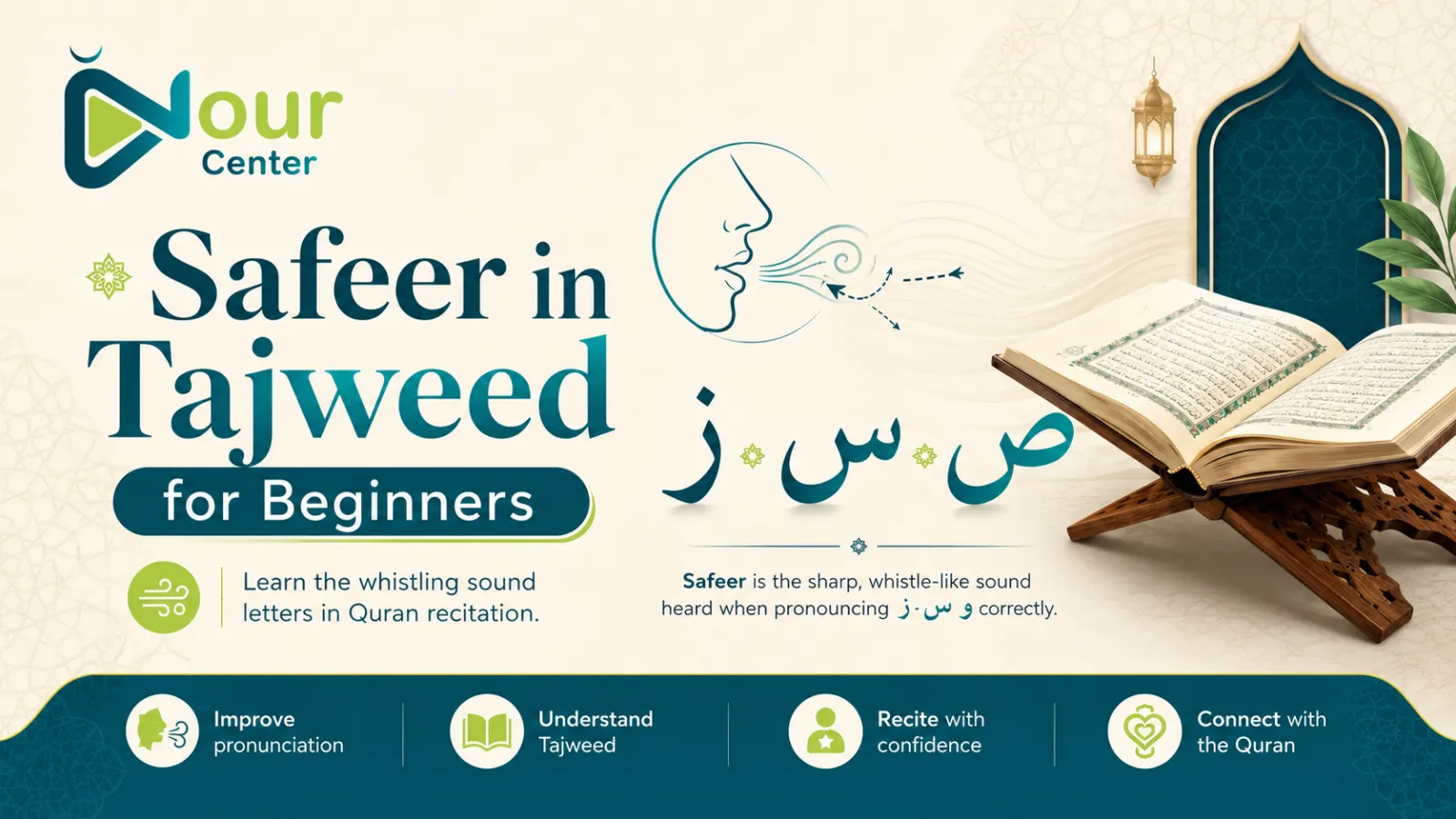
Learn Safeer in Tajweed for beginners, the three Safeer letters, how the whistling sound is produced, common pronunciati...
Read Article →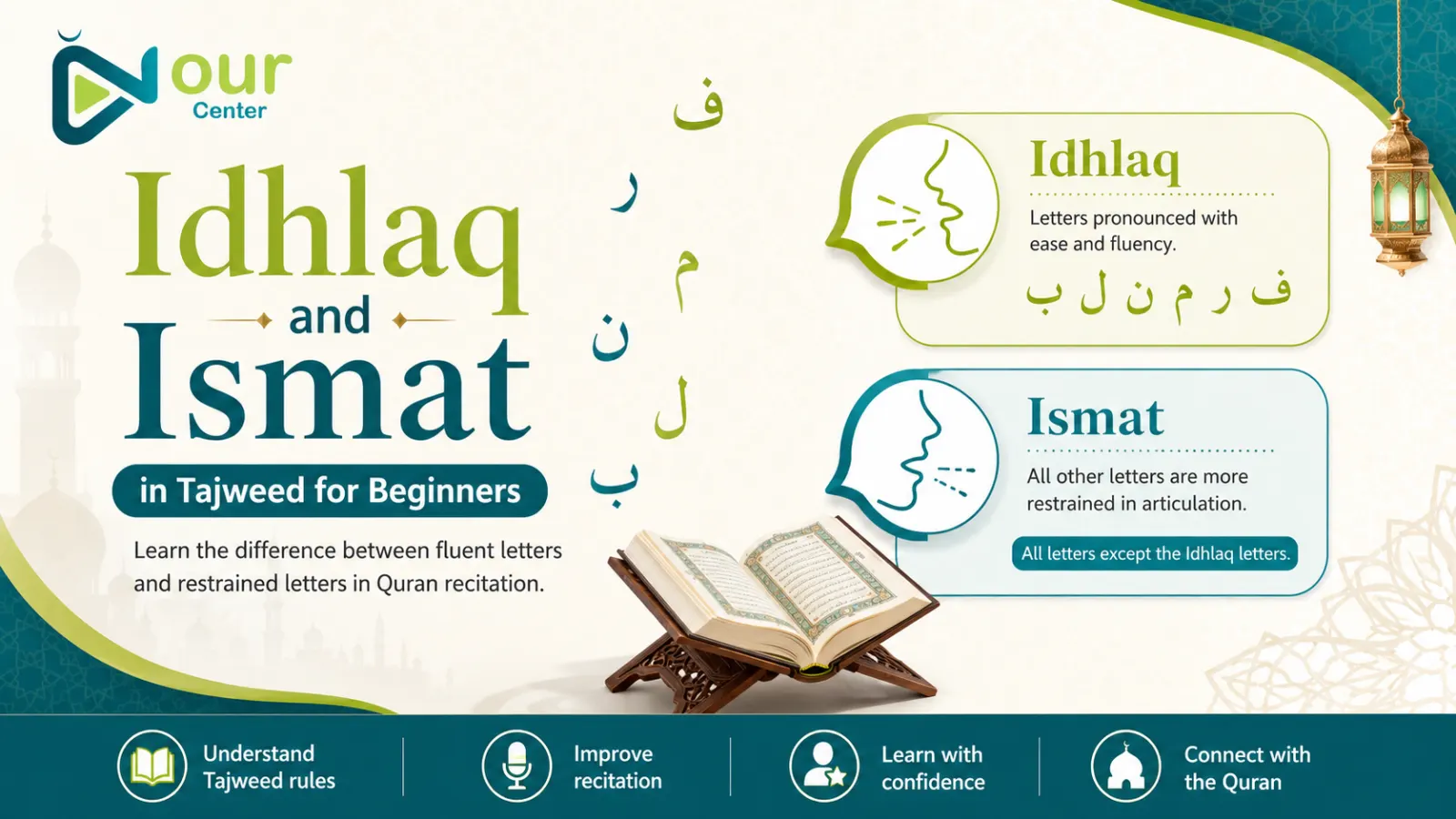
Learn Idhlaq and Ismat in Tajweed for beginners, the six Idhlaq letters, their pronunciation characteristics, the differ...
Read Article →