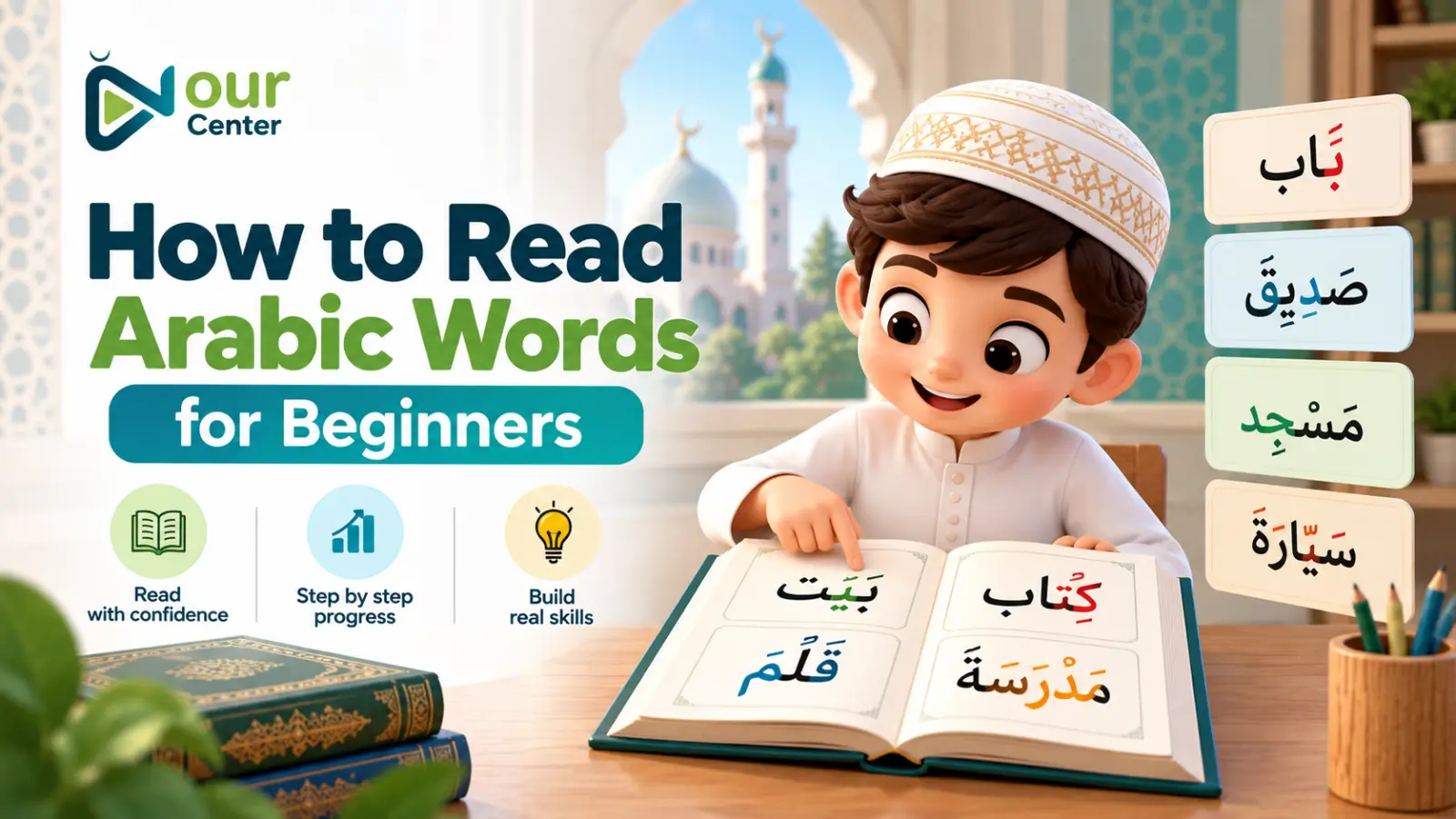
How to Read Arabic Words for Beginners Step by Step
Learn how to read Arabic words for beginners step by step by combining connected letters, Harakat, Sukoon, Shaddah, and...
Read Article →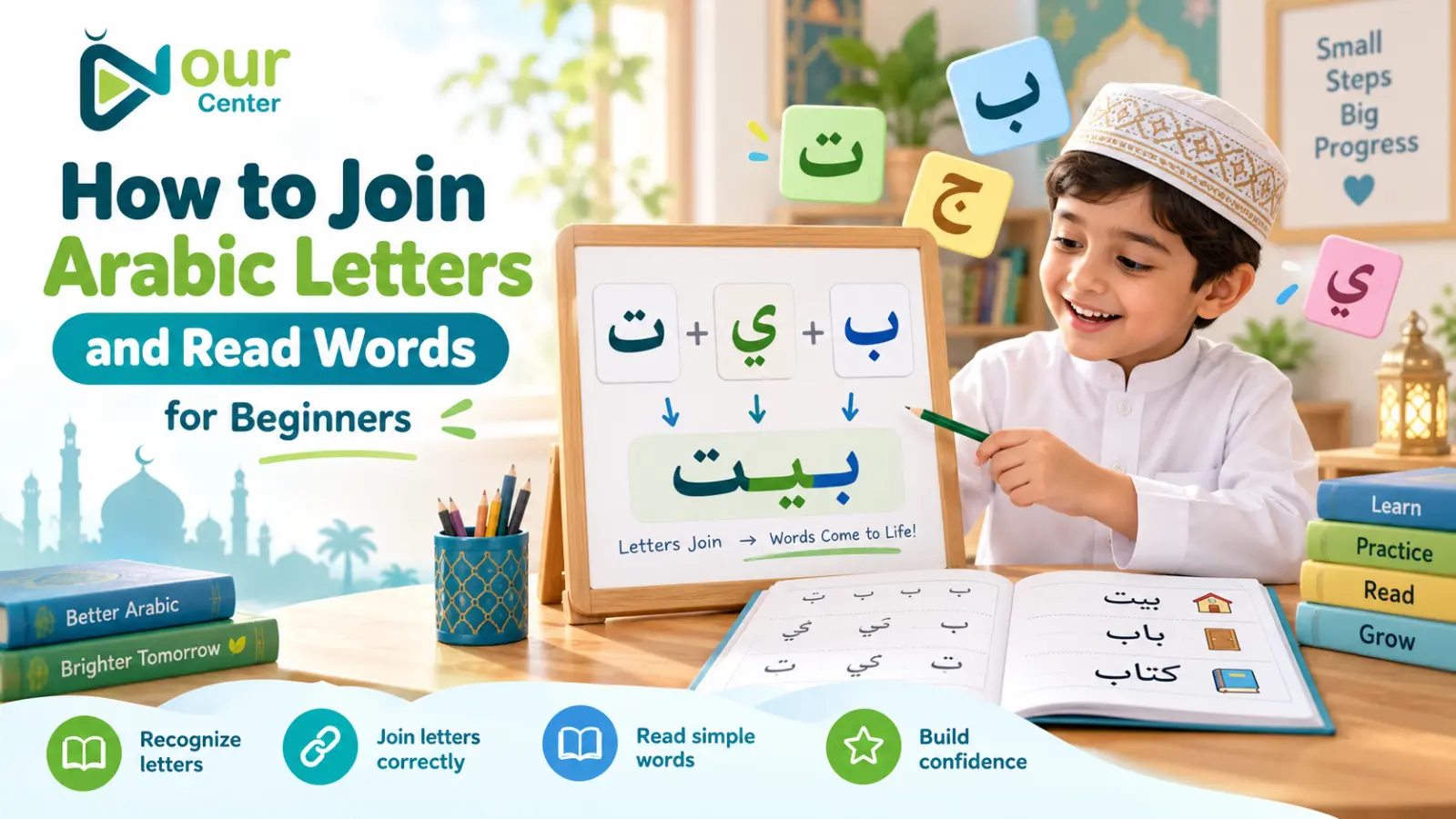
A Beginner's Guide
Learning How to Join Arabic Letters and Read Words is one of the biggest milestones for an Arabic beginner. At first, students usually learn the Arabic alphabet as separate letters: ا ب ت ث ج and so on. This is necessary. But real Arabic does not usually appear as a row of isolated alphabet letters. Arabic is a connected writing system.
Many letters join to the letters around them, and their written shapes can change depending on where they appear inside a word.
“I know this letter by itself, but I cannot recognize it inside a word.” That does not mean you have forgotten the alphabet. It means you are ready for the next stage. You need to learn how familiar Arabic letters behave when they connect. Students who completed Arabic Alphabet for Beginners will find connected Arabic easier once they understand that a letter can change its written form while keeping the same identity and basic sound.
Once this principle becomes clear, connected Arabic becomes much less intimidating. This guide explains how Arabic letters connect, which letters break a connection, how initial, medial, final, and isolated forms work, and how to combine Harakat, Sukoon, and Shaddah while reading complete words. Why Do Arabic Letters Join Together? Arabic is written in a connected script. Many letters naturally attach to the next letter within the same word. This creates a flowing writing style.
English usually keeps letters visually separate. Arabic often links them.
ب as an isolated Ba. Inside a word, Ba may appear in a connected shape such as: بـ ـبـ ـب These forms may look slightly different, but all of them represent the same letter: Ba. The position changes. The identity does not.
Most connecting Arabic letters have several visual forms.
Isolated. Initial. Medial. Final. The exact form depends on whether the letter connects to the letters around it.
“What does this letter look like?”
“What are the possible forms of this letter?” Once you learn the pattern, the forms become predictable.
Arabic letters can generally appear in four visual situations.
The letter stands by itself or is visually disconnected.
ب
The letter appears at the beginning of a connected sequence.
بـ
The letter connects from both sides.
ـبـ
The letter appears at the end of a connected sequence.
ـب Not every Arabic letter has four distinctly different forms. Some letters do not connect to the following letter. But this four-position model is the best place to begin.
Arabic is read from right to left. It is also written from right to left. Therefore, when we say a letter connects to the “next” letter, that next letter appears visually toward the left. For learners used to English, this direction can initially feel backward. Do not mentally reverse the word. Train your eyes to begin on the right and move toward the left. With regular practice, the direction becomes automatic.
Do All Arabic Letters Connect? No. This is one of the most important rules in beginner Arabic reading. Most Arabic letters can connect to a following letter. But six commonly taught letters do not connect to the following letter on their left.
ا — Alif د — Dal ذ — Dhal ر — Ra ز — Zay و — Waw These letters can connect to a preceding compatible letter on their right. But they do not continue the connection to the next letter on the left. This creates a visible break inside some Arabic words.
ا د ذ ر ز و These six letters are extremely important. A beginner who forgets them may think a word has ended whenever the writing line breaks. But the word may still continue. The break might simply be caused by one of these six letters. A useful beginner goal is to recognize these six instantly.
ر Ra cannot connect forward to the next letter on its left. Therefore, you may see one part of the word connected and another part visually separated. This does not mean there is a space between two words. The reader must continue reading according to the actual spacing and word structure. This distinction becomes easier after seeing many examples.
Disconnected letters can still belong to the same word. The true word boundary is indicated by the actual space between words. Do not use connection alone to decide where a word ends. A word may contain multiple disconnected sections because of letters such as: ا د ذ ر ز و Read the complete word from right to left. Which Letters Usually Connect on Both Sides?
Most of the remaining Arabic alphabet can connect to letters on both sides when the neighboring letters permit it.
ب ت ث ج ح خ س ش ص ض ط ظ ع غ ف ق ك ل م ن ه ي These letters can participate in longer connected sequences. However, whether a connection actually appears also depends on the letter immediately before them. For example, a normally connecting letter cannot connect backward across a letter that has already broken the connection.
“There are 28 letters and four forms, so I need to memorize more than 100 completely different symbols.” Fortunately, that is not the best way to think about it. Most connected forms keep the main identity of the letter. The shape is adjusted mainly to create a connection line. For example, the dots usually remain useful clues. The basic structure remains recognizable.
The base shape. Where the connection enters. Where the connection leaves. The dot pattern. This makes the system much easier.
ب ت ث Their isolated forms share the same basic body. The dots distinguish them.
ب One dot below.
ت Two dots above.
ث Three dots above. When these letters connect, their body changes slightly. But the dots remain the key clue.
Look at the entire letter, including the dots.
ج ح خ These letters share a similar structure.
ج has a dot below.
ح has no dot.
خ has a dot above. Their connected forms also share related shapes. Grouping them together makes recognition easier.
س ش Seen has no dots. Sheen has three dots. Their connected forms preserve this distinction. Once you recognize the basic tooth-like structure, the dots tell you which letter you are reading.
ص ض Dad has a dot. Sad does not. These letters remain recognizable in connected writing when the learner focuses on the main body and dot pattern.
ع غ Ghayn has a dot above. Ayn does not. Their medial forms can look particularly unfamiliar to beginners. This is why exposure to connected forms is essential. Do not assume the medial form is a completely new letter.
ف ق Their dot patterns help distinguish them in the commonly taught script. As the letters connect, the basic body may become more compact.
Dots. Position. Context. to identify them.
An initial form appears at the beginning of a connected group. Because Arabic runs right to left, the letter connects toward the left. For example, a connecting letter at the beginning of a word may have a short connecting stroke extending toward the next letter. Beginners should practice identifying initial forms separately.
Isolated. Initial. Repeat with several letters. Do not begin with the whole alphabet in one session.
A medial letter is connected from both sides. This is often the hardest form for beginners. The letter may look compressed compared with the isolated form. But its important features usually remain.
Where are the dots? What is the main body shape? Which letters come before and after it? With practice, medial forms become just as familiar as isolated letters.
A final letter is connected from the right but has no continuing connection to the left. The shape often resembles the isolated form more closely. For many beginners, final forms are easier to recognize than medial forms.
Isolated form. Final form. Then add initial and medial forms.
A letter may look isolated even when it occurs inside a word. This happens when the preceding letter breaks the connection. For example, if a non-connecting letter appears before another letter, the following letter begins a new visual segment. This is why letter position and visual connection are not always identical. A letter can be in the middle of the word but appear visually like the beginning of a new connected group.
Suppose a letter is physically the third letter of a word. It may still use a shape influenced by a broken connection.
Initial. Medial. Final. describe connection behavior as much as simple numerical position.
Look at whether the letter connects on the right. Look at whether it connects on the left. Then recognize its form.
When a new word looks difficult, do not panic. Use a simple method.
Start from the right.
Identify the first letter.
Check its dots.
Notice whether it connects to the next letter.
Identify the next shape.
Check the Harakah.
Blend the sounds. Continue until the end of the word. This turns one complicated visual object into several manageable pieces.
Joining letters is only the visual part of reading. You still need the vowel marks. Students who understand Arabic Harakat for Beginners should continue reading Fathah, Kasrah, and Dammah normally when those marks appear on connected letter forms.
Ba + short Fathah.
Meem + short Kasrah. The connection does not change the basic vowel system.
The letter.
The Harakah.
Blend.
بَ
ba. When letters connect, saying their alphabet names makes reading extremely slow.
Shape + mark → sound. Then sounds are blended into the word.
Sound 1. Pause. Sound 2. Pause. Sound 3. This is useful at the beginning. But the next stage is blending.
ba ... ta ... ka the reader begins connecting the sound sequence smoothly. The goal is not speed at first. The goal is continuity. Read slowly but continuously. Then increase speed gradually.
Students who studied Sukoon in Arabic for Beginners should remember that a Sakin consonant remains connected to the preceding sound without receiving Fathah, Kasrah, or Dammah after it. This becomes especially important inside real words.
A vocalized letter. Followed by a Sakin letter. Do not read them as two independent alphabet names. Blend the sounds. Avoid inserting an extra vowel after the Sakin consonant. Sukoon often creates the first true consonant clusters that beginners need to decode.
Students who have practiced Shaddah in Arabic for Beginners should preserve the doubled consonant even when the letter appears in a connected form inside a complete word.
The connected letter. The Shaddah. The accompanying Harakah. Then pronounce the doubled consonant correctly. Do not allow visual complexity to make the Shaddah disappear. A doubled letter remains doubled regardless of its connected shape.
Tanween usually appears at the end of words.
Fathatain. Kasratain. Dammatain. Do not stop mentally at the final consonant. Read the ending mark as well.
-an -in
-un according to the written Tanween.
At this stage, Arabic reading begins to feel much more realistic.
A connected initial letter. A short vowel. A medial letter. Sukoon. Another connected consonant. Shaddah. A final letter. Tanween. This can look complicated. But each part has already been studied separately. The solution is not to learn a new reading system. The solution is to combine the systems you already know.
Identify the letters only.
Identify the marks.
Read each sound slowly.
Blend the sounds.
Read the entire word again. This is more effective than staring at the word and trying to guess it.
A beginner may recognize the start of a familiar word and guess the rest. This creates bad reading habits. Read every letter. Read every relevant Harakah.
Dots. Sukoon. Shaddah. Tanween. Do not assume the word. Decode it.
Connected Arabic can make the basic letter bodies look similar. Dots often become the fastest identification tool.
ب ت ث share a related body. The dots distinguish them. The same principle applies to other families. Train your eyes to notice dots automatically. Do not treat them as decorative marks. They are part of the letter.
This is another common beginner problem.
Dots. Fathah. Kasrah. Dammah. Sukoon. Shaddah. Tanween. All near the same small area. The page can look visually busy.
Letter dots = identify the consonant. Harakat and reading marks = control pronunciation. With practice, your brain processes them separately.
ا د ذ ر ز و These letters break the connection to the following letter on the left. A simple daily exercise is to recite them until recognition becomes automatic. Then look for them inside real words.
“The next letter may begin a new visual segment.” This greatly reduces confusion.
ا does not connect to a following letter on its left. But a preceding compatible letter can connect to Alif from the right. Therefore, Alif often ends a connected segment. The following letter then begins another visual segment if the word continues.
د
ذ also break forward connection. They are distinguished mainly by the dot. Once you recognize either one, prepare for a visual break after it.
ر
ز follow the same basic connection rule. Neither continues to the next letter on the left. The dot distinguishes Zay from Ra. Waw
و is another important non-connecting letter. Beginners encounter it frequently. It can function as a consonant or participate in vowel structures, but its connection behavior remains important visually. When Waw appears, expect the next letter to begin a new segment. What About Lam-Alif? When Lam is followed by Alif, Arabic writing commonly forms the familiar Lam-Alif ligature: لا This can initially look like an entirely new letter. It is not a separate alphabet letter.
Lam + Alif. Beginners should learn to recognize this combination early because it appears frequently. Do not count it as a twenty-ninth basic letter. It is a written combination of two letters.
Arabic fonts can vary. One educational font may show letters very clearly. Another may be more decorative. A beginner may know a word in one font but struggle in another. This is normal.
Clear printed Arabic.
Different digital fonts. Printed books. Quranic script if Quran reading is your goal. Handwriting later. Do not begin with highly decorative calligraphy.
Handwriting can simplify or modify some letter shapes. Beginners should first become comfortable with standard printed Arabic. Once recognition becomes strong, handwriting is easier to learn.
Print. Handwriting. Calligraphy. Quranic script. all at once can cause unnecessary confusion. Build one stable visual system first.
Choose five letters.
Isolated. Initial. Medial. Final. Then place the letter inside simple connected combinations. Repeat until recognition becomes fast.
Review those five. Add a few more. This is more effective than studying a huge chart once and never reviewing it.
Use Ba as a model.
ب بـ ـبـ ـب
Is it still Ba? Yes. What changed? Only its connection form.
ت ث ن ي These letters share some useful shape similarities and can help develop visual pattern recognition.
م Then look at its connected forms. Meem may appear visually quite different depending on position. This makes it a good test of whether you are learning letter identity rather than memorizing one isolated shape.
These are especially valuable. Their medial forms can surprise beginners.
ع غ in all connection positions. Pay attention to the dot on Ghayn. Do not wait until you encounter the letters inside a long word. Learn them deliberately.
Take a connected Arabic word. Instead of reading it immediately, mark the letter boundaries mentally.
Letter 1? Letter 2? Letter 3? Then identify the vowel marks. Then read. This strengthens visual analysis. After several repetitions, remove the segmentation step and read normally.
Look at a word from right to left.
ا د ذ ر ز و predict a break before looking at the next visual segment. This turns the six non-connectors into an active reading skill rather than a memorized list.
Take an isolated letter.
Initial position. Medial position. Final position. Do this across several words. Children especially benefit from this matching activity.
Same letter, different clothing. The identity remains unchanged.
Connected Arabic is the stage where transliteration becomes particularly harmful if overused. If the learner sees the English spelling first, the brain may ignore the Arabic structure.
Look only at Arabic. Decode the letters. Read the Harakat. Produce the sounds. Use transliteration only when absolutely necessary. The goal is direct Arabic reading.
Looking for Isolated Letter Shapes
ع but fails to recognize its medial form. The solution is not to relearn Ayn from the beginning. Study its connected forms.
Same letter. Different position.
Thinking Every Break Means a New Word
The six non-connecting letters can create visible gaps inside one word. Look at actual spaces between words. Do not rely only on connection.
Trying to Connect Alif Forward
Alif does not connect to the following letter on its left. Memorize the non-connector group.
Forgetting Waw Breaks the Connection
Waw is extremely common. Recognize that the next letter may start a new visual segment.
Reading From Left to Right
English reading habits can return when a word becomes difficult. Stay disciplined. Start on the right. Move left.
Ignoring the Dots
Dots are essential parts of the letters. Without them, many connected shapes become ambiguous.
Ignoring Harakat
The letter connection does not replace the vowel marks. Read both. Students who understand Arabic Harakat for Beginners should continue reading Fathah, Kasrah, and Dammah normally when those marks appear on connected letter forms.
Adding Vowels Between Connected Letters
Connection does not mean every consonant receives a short vowel. If a letter has Sukoon, do not add one. Students who studied Sukoon in Arabic for Beginners should remember that a Sakin consonant remains connected to the preceding sound without receiving Fathah, Kasrah, or Dammah after it.
Ignoring Shaddah
A connected word can already look complicated. This causes some learners to overlook the Shaddah. Students who have practiced Shaddah in Arabic for Beginners should preserve the doubled consonant even when the letter appears in a connected form inside a complete word. Check all reading marks before blending.
Reading Every Letter Separately
Letter-by-letter decoding is necessary at first. But permanent pauses prevent fluency. Gradually blend the sounds.
Guessing the Word
Do not guess based on the first two letters. Read to the end.
Reading Too Fast
Speed hides recognition problems. Slow down until the forms become stable. Then increase speed.
Staying Too Slow Forever
Once accuracy improves, remove unnecessary pauses. Fluency requires continuous reading.
Memorizing One Font
Expose yourself gradually to different clear Arabic fonts. Do not assume a new font contains new letters.
Learning Connections Without Pronunciation
Visual recognition and sound must remain connected. Every letter you recognize should trigger its correct sound.
Review the six non-connecting letters.
Review five letters in isolated and initial forms.
Review medial and final forms.
Read simple connected combinations.
Read two or three short words.
Review isolated vs connected forms.
Practice non-connecting letters.
Decode short words slowly.
Blend the same words.
Read new words.
Review mistakes.
Alphabet recognition review.
Connected-form review.
Harakat and Sukoon practice.
Shaddah and Tanween review.
Read new words slowly.
Read them again with better fluency.
Record one short reading sample. Daily repetition builds automatic recognition.
Understand Connections
Learn why Arabic letters change form.
Learn the Six Non-Connectors
ا د ذ ر ز و
Initial and Final Forms
Practice familiar letters.
Focus on letters that look most different when connected.
Harakat and Sukoon
Read vowelled connected combinations.
Shaddah and Tanween
Add more reading marks.
Read short fully vocalized Arabic words from right to left. Then continue with new words each day.
Children usually understand connection best visually.
One isolated letter. Then the same letter holding onto another letter. Instead of giving a long technical explanation, demonstrate the pattern repeatedly.
This is Ba. This is also Ba. This is still Ba. Only its position changed. The child gradually learns to see letter identity through different forms.
Match isolated and connected forms. Find the same letter inside different words. Circle the six non-connecting letters. Build a word from letter cards. Identify the first letter. Identify the middle letter. Identify the final letter. Read a short connected word. Short activities create repetition without turning the lesson into memorization alone.
Adults often benefit from understanding the rule system first.
Which letters connect. Which six do not. How forms change. Then move quickly into real word reading. Do not spend several weeks memorizing charts without applying them. The purpose of the chart is to help you read. Use it briefly. Then practice words. Can You Learn Arabic Connections in One Day? You can understand the basic rule in one lesson. You may even memorize the six non-connectors quickly. But instant recognition takes repeated exposure.
“Ra does not connect forward. ” Then still hesitate when seeing Ra inside a real word. That is normal. Understanding comes first. Automatic recognition comes through practice. How Long Until Connected Arabic Feels Natural? This varies greatly. Some learners adapt within days. Others need several weeks. The important factor is regular reading. Ten minutes every day can be more useful than one long session every weekend.
Your goal is to reach the point where you no longer consciously ask:
“Is this initial or medial?” You simply recognize the letter.
Read from right to left automatically. Recognize the six non-connecting letters. Identify familiar letters in initial forms. Identify medial forms. Identify final forms. Recognize visual breaks inside words. Distinguish word spaces from connection breaks. Read Harakat on connected letters. Apply Sukoon correctly. Preserve Shaddah. Recognize Tanween endings. Blend two-letter combinations. Blend three-letter combinations. Read short Arabic words without transliteration. Recognize a word even in a slightly different font.
Your reading does not need to be fast.
Accuracy and increasing automaticity are the important signs.
Students learning Arabic specifically for Quran reading need strong connected-letter recognition. The Quran is not written as isolated alphabet flashcards. The reader must identify letters inside complete words. Later Tajweed rules are applied to those same connected forms. If basic recognition is slow, the reader has less attention available for: Makharij. Madd. Ghunnah. Qalqalah. Stopping. Other Tajweed rules. Strong decoding therefore makes later recitation training much easier.
Noorani Qaida and similar methods provide structured practice moving from individual letters into connected reading patterns.
Letters. Harakat. Sukoon. Shaddah. Tanween. Long vowels. Connected combinations. This progression can be particularly useful for students preparing to read Quranic Arabic. The aim is not simply to complete a book. The aim is to build automatic decoding.
At Nour Center, one-to-one online Arabic lessons can help beginners move from isolated letters into complete Arabic words.
Letter recognition. Initial forms. Medial forms. Final forms. Non-connecting letters. Right-to-left reading. Harakat. Sukoon. Shaddah. Tanween. Sound blending. Word reading. Pronunciation. Quranic Arabic preparation. The teacher can immediately identify where the learner is struggling.
The student recognizes isolated letters but not medial forms. The student confuses word breaks with connection breaks. The student reads connected letters correctly but ignores Harakat. The student knows the rules but cannot blend smoothly. Different problems require different practice.
Connected Arabic reading combines several skills at once. This means an error can have several possible causes.
Alphabet recognition. Connected forms. Dots. Harakat. Sukoon. Shaddah. Pronunciation. Blending. Reading direction. Instead of repeating everything, the lesson can focus on the weakest skill. That makes learning more efficient.
Once connected forms become familiar, the learner reaches an exciting stage. Arabic stops looking like a collection of unfamiliar symbols. Words begin to break naturally into recognizable sounds.
“What are these shapes?”
“I can read this word.” This is the foundation of fluency. But knowing how letters connect is still not the end. The next skill is learning how to decode complete words efficiently.
Fast letter recognition. Accurate vowels. Correct consonant pronunciation. Smooth sound blending. Word-level reading. What Should You Study Next?
How to Read Arabic Words for Beginners Step by Step. That lesson will focus less on how letters are written and more on how to decode complete words efficiently.
Break a word into readable sound units. Identify Harakat quickly. Handle Sukoon. Handle Shaddah. Read Tanween. Blend syllables. Avoid guessing. Increase reading speed gradually. Move from isolated exercises into real Arabic reading.
Learning How to Join Arabic Letters and Read Words is one of the most important transitions in beginner Arabic. You already know the alphabet. Now you need to recognize the same letters when they change shape inside connected writing.
Isolated. Initial. Medial. Final. Most Arabic letters can connect. Six commonly taught letters do not connect to the following letter on the left: ا د ذ ر ز و Memorize these six.
A visible connection break does not necessarily mean the word has ended. Read actual word spacing. Use the dots to identify letters. Continue reading Harakat. Apply Sukoon correctly. Preserve Shaddah. Recognize Tanween. Read from right to left. Do not depend permanently on transliteration. Do not guess words. Decode them. Practice slowly first. Then blend. Then gradually increase speed. With regular practice, the different connected forms stop looking like separate letters.
You begin recognizing the same familiar Arabic alphabet in every position. Once that happens, you are ready for the next major stage: Reading complete Arabic words smoothly and confidently.
Note: Comments may require approval before appearing publicly.
Learn how to read Arabic words for beginners step by step by combining connected letters, Harakat, Sukoon, Shaddah, and...
Read Article →
Learn Sukoon in Arabic for beginners, understand how to read consonants without short vowels, join Arabic sounds correct...
Read Article →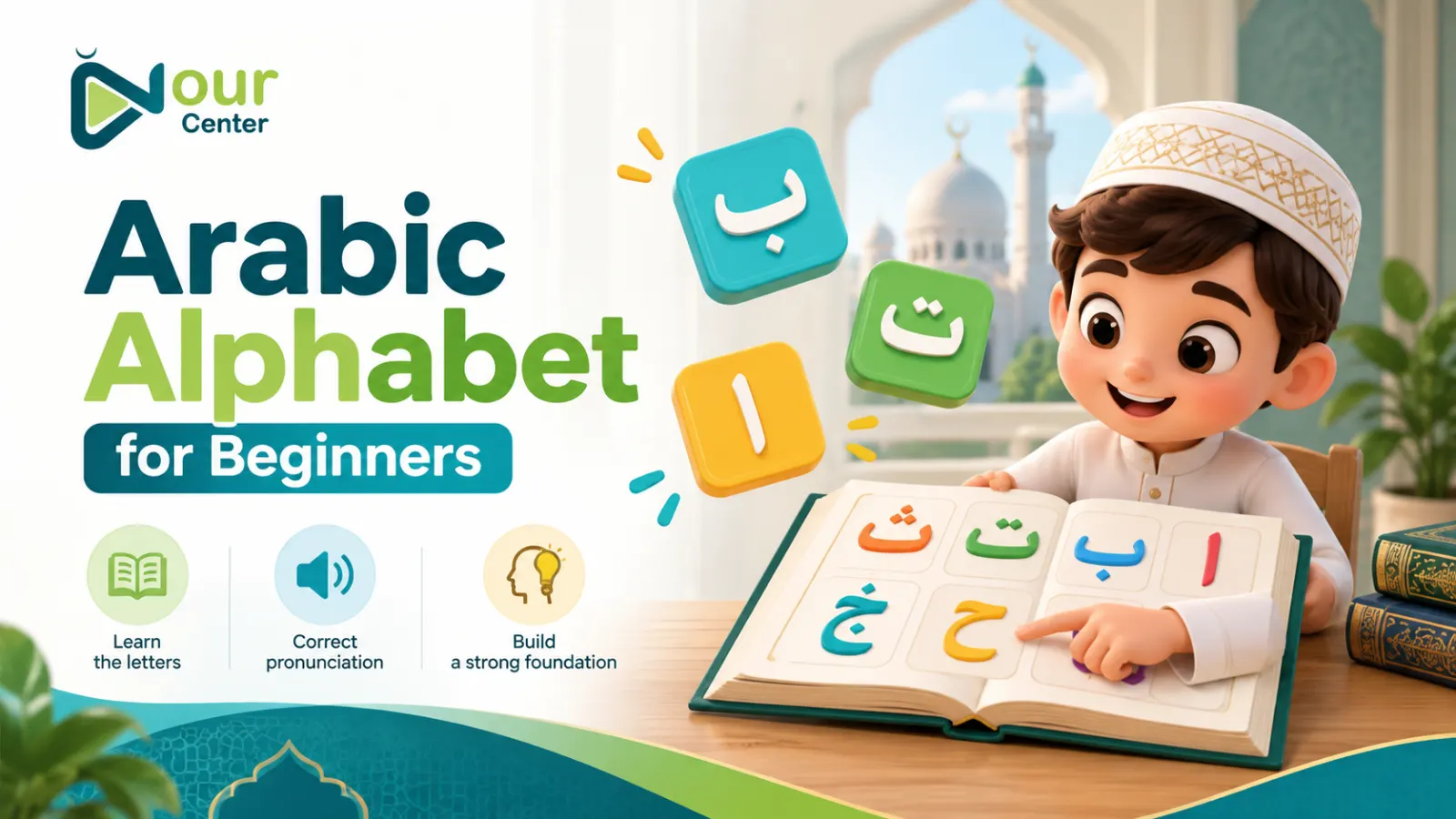
Learn the Arabic alphabet for beginners step by step, discover all 28 Arabic letters, understand their shapes and sounds...
Read Article →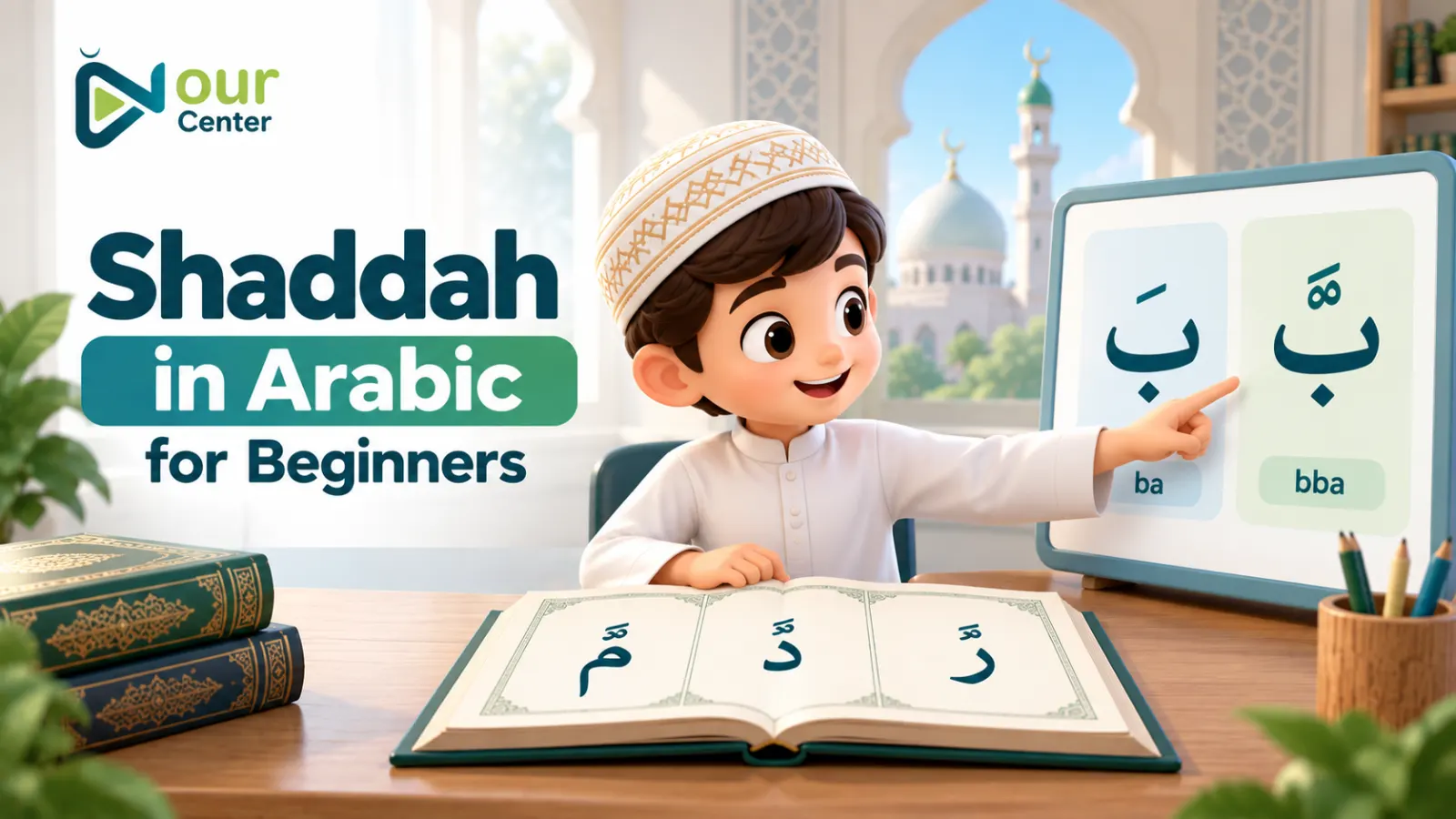
Learn Shaddah in Arabic for beginners, understand how doubled consonants are pronounced, how Shaddah works with Harakat...
Read Article →