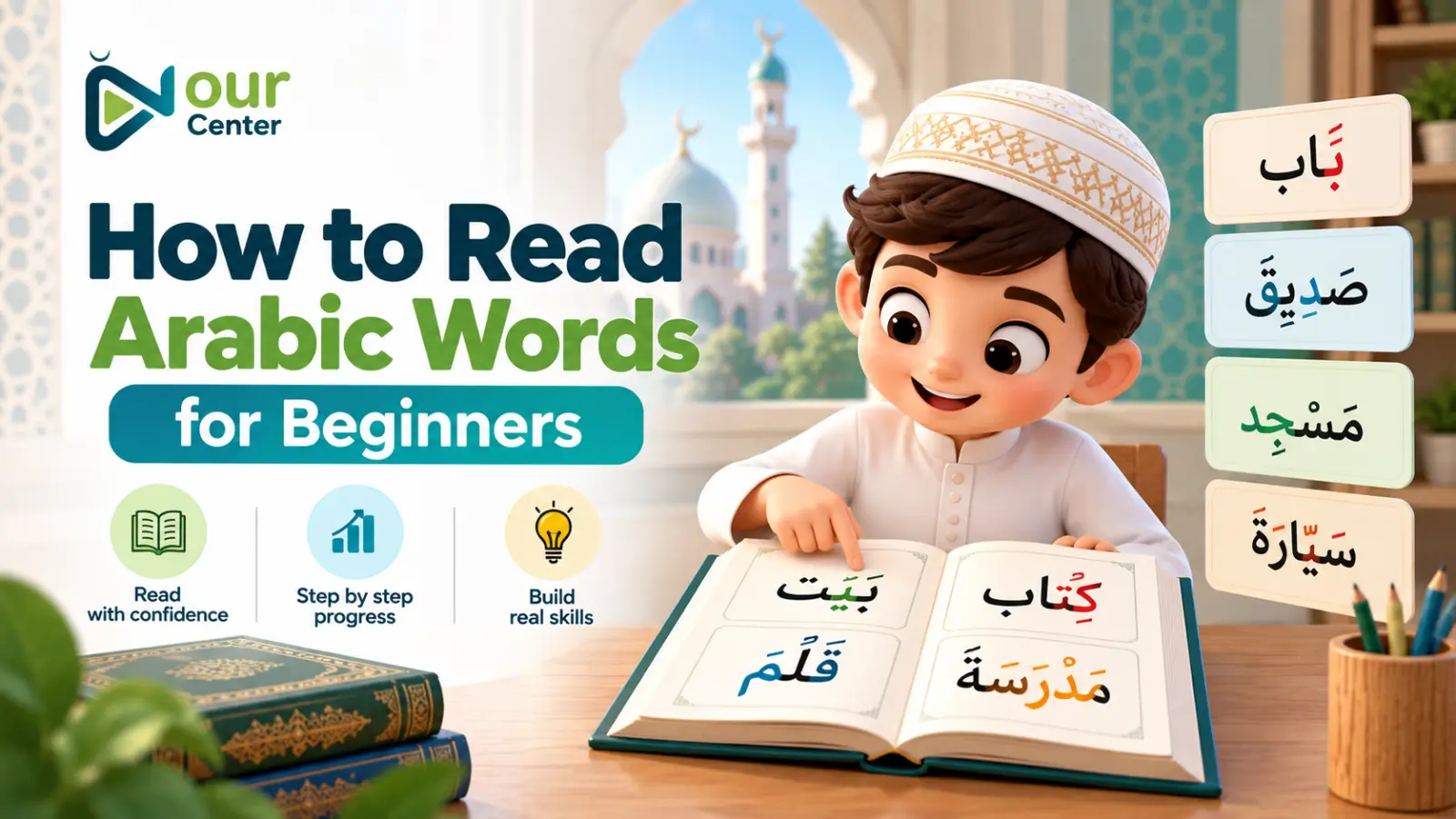
How to Read Arabic Words for Beginners Step by Step
Learn how to read Arabic words for beginners step by step by combining connected letters, Harakat, Sukoon, Shaddah, and...
Read Article →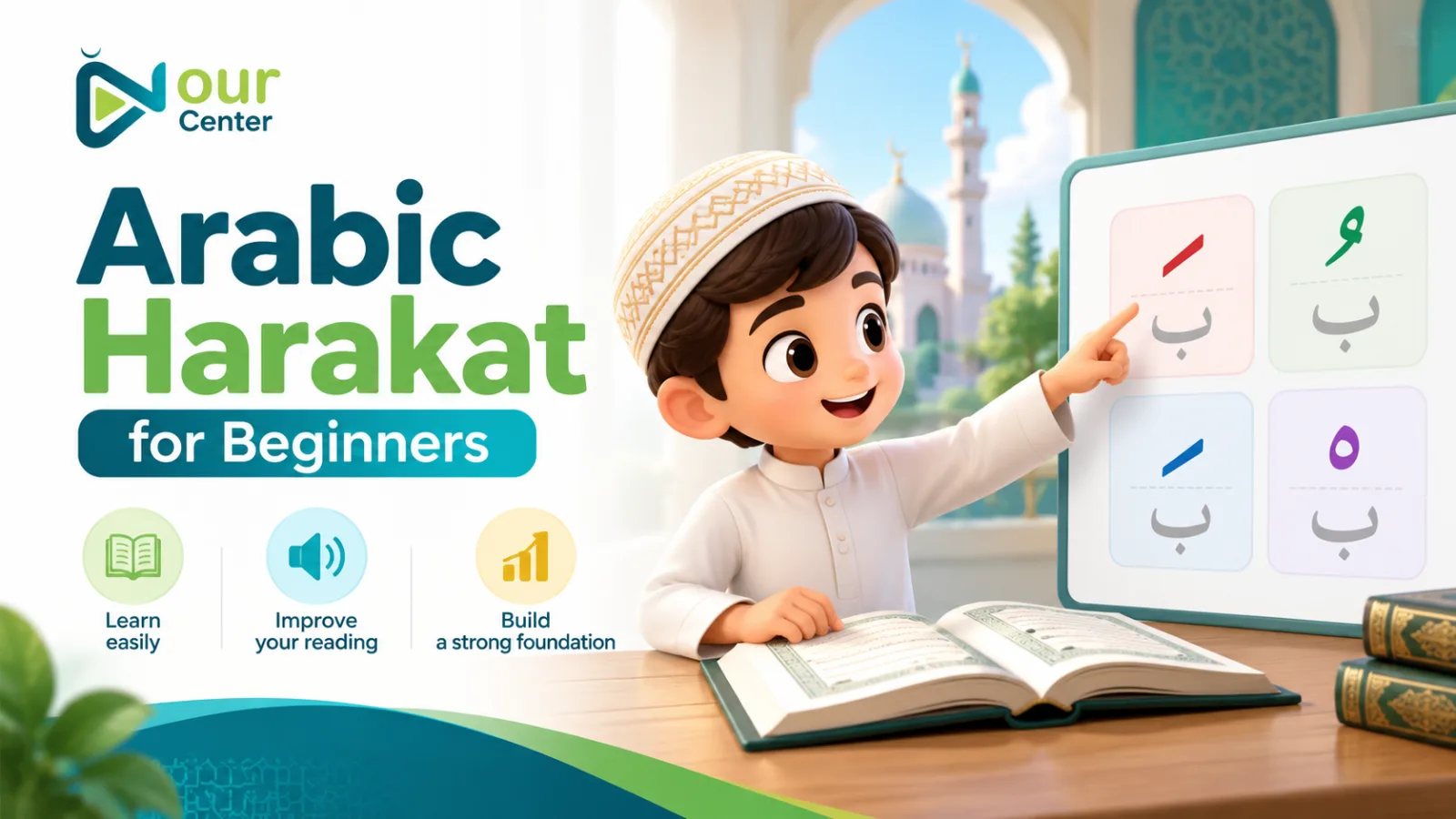
Fathah, Kasrah, and Dammah
Arabic Harakat for Beginners is one of the most important lessons after learning the Arabic alphabet and the basic sounds of the letters. Recognizing Arabic letters is the first step. Knowing how those letters sound is the second. Harakat are what allow beginners to start combining those letters into readable syllables and words.
Fathah. Kasrah. Dammah. In Arabic, they are written as small marks above or below a consonant. They tell the reader which short vowel sound should follow that consonant.
بَ بِ بُ The consonant remains the same letter. But the Harakah changes the sound. بَ = ba بِ = bi بُ = bu This simple idea is the foundation of Arabic decoding. Students who completed Arabic Alphabet for Beginners can now move from recognizing individual letters to reading them with short vowels through Fathah, Kasrah, and Dammah.
Students who have studied Arabic Letter Sounds for Beginners will also find Harakat easier because they already know the consonant sound and only need to add the correct short vowel.
This guide explains Arabic Harakat for beginners step by step, including Fathah, Kasrah, and Dammah, how they are written, how they affect pronunciation, how to practice them, and which mistakes beginners should avoid. What Are Harakat in Arabic? Harakat are vowel marks used with Arabic letters. The singular form is Harakah. Unlike English, Arabic does not always use separate letters to represent every short vowel. Instead, small marks can be placed above or below consonants.
Fathah. Kasrah. Dammah. They represent the basic short vowel sounds commonly introduced at the beginning of Arabic reading instruction. A learner who understands these three marks can begin transforming isolated consonants into readable sounds. Why Are Harakat Important?
ب By itself, you recognize it as Ba.
بَ
بِ
بُ The Harakah tells you how to vocalize the letter.
Beginning Arabic reading. Learning Quran reading. Building pronunciation skills. Reading children's Arabic books. Learning Quranic Arabic. Studying Noorani Qaida. Preparing for Sukoon. Preparing for Shaddah. Preparing for Tanween. Joining letters into words. Without Harakat, a complete beginner may recognize the consonants but still not know how to read the word. Are Harakat Arabic Letters? No. Harakat are not independent alphabet letters. They are marks attached to letters. The consonant provides the main letter sound.
The Harakah adds a short vowel.
مَ The letter is Meem.
ma
مِ the letter is still Meem.
mi
مُ
mu The identity of the consonant does not change. Only the short vowel changes. What Is Fathah? Fathah is one of the three basic Arabic Harakat.
َ When Fathah is placed on a consonant, beginners are commonly taught to produce a short “a” sound.
بَ = ba تَ = ta مَ = ma نَ = na لَ = la The vowel should remain short. Fathah is not automatically a long “aa” sound. This distinction becomes important when students later learn Madd.
Look above the Arabic letter.
َ
كَ The mark above Kaf is Fathah. This tells the reader to pronounce the consonant with a short vowel. A beginner should train the eye to recognize the mark immediately.
“What is that symbol?” The long-term goal is automatic recognition. How Does Fathah Sound? For basic learning, Fathah is usually introduced as a short “a” sound. However, the exact acoustic quality can be affected by surrounding Arabic consonants. Heavy letters can make the vowel sound fuller. Light letters may make it sound lighter. Beginners do not need advanced phonetic analysis immediately.
Recognize Fathah. Keep it short. Follow the teacher's pronunciation model. Do not replace it with a long vowel.
Practice Fathah across the alphabet.
بَ تَ ثَ جَ حَ خَ دَ رَ سَ شَ صَ طَ عَ فَ قَ كَ لَ مَ نَ هَ وَ يَ You do not need to read them quickly at first. Point to each letter. Recognize it. Pronounce the consonant. Add the short Fathah. Then move to the next one.
Making It Too Long
بَ
baa This is incorrect when only a short Fathah is written. The sound should remain short. Later, students learn that long vowel patterns use different structures.
Fathah = short vowel. Do not automatically stretch it.
Adding an English-Style Vowel
Learners sometimes pronounce Arabic through their native language. The result can make Fathah too broad, too narrow, or inconsistent. Listen to an Arabic model instead of depending only on English spelling. Writing “ba” is merely a learning aid. The Arabic sound itself should become the reference. What Is Kasrah? Kasrah is the second basic short vowel.
It appears as a small diagonal stroke below the Arabic letter: ِ For beginners, it is commonly introduced as a short “i” sound.
بِ = bi تِ = ti مِ = mi نِ = ni لِ = li
Fathah appears above. Kasrah appears below.
Look underneath the Arabic consonant.
كِ The mark below Kaf is Kasrah. This is one reason students should pay attention to the full shape of a written Arabic letter rather than only looking at its dots.
Above. Below. Around. Or alongside letters. Training the eye to scan the whole character is important. How Does Kasrah Sound? Kasrah is commonly introduced as a short “i” sound. It should remain short.
مِ
mee The difference between a short Kasrah and a long Ya-based vowel is introduced later.
Keep Kasrah short. Listen carefully. Do not stretch it unnecessarily.
بِ تِ جِ حِ خِ دِ رِ سِ شِ صِ ضِ طِ عِ غِ فِ قِ كِ لِ مِ نِ هِ يِ Again, difficult consonants should keep their correct articulation. The Kasrah does not replace or weaken the consonant.
Turning It Into “ee”
This is similar to the Fathah mistake.
بِ for too long.
bee
bi This confuses short vowel reading with long vowel reading. Keep the sound short unless the word contains the structure that requires lengthening.
Losing Heavy Letter Quality
When Kasrah appears with a heavy consonant, beginners may make the consonant too light. The vowel and consonant must both remain correct. Do not distort the consonant just because Kasrah is present. Likewise, do not distort the Kasrah because the consonant is heavy. This balance develops through listening. What Is Dammah? Dammah is the third basic short vowel. It appears above the letter and resembles a small Waw-like shape: ُ
For beginners, Dammah is commonly taught as a short “u” sound.
بُ = bu تُ = tu مُ = mu نُ = nu لُ = lu Like Fathah and Kasrah, it should normally remain short when used as a basic Harakah.
Dammah appears above the consonant. Its shape is different from Fathah.
بَ بُ Both marks are above the letter.
بَ has Fathah. بُ has Dammah. Students who read too quickly may confuse the two. Slow visual recognition exercises help. How Does Dammah Sound? For beginner instruction, Dammah is commonly represented by a short “u” sound. The lips normally become rounded. However, do not exaggerate the rounding. The consonant itself still needs to be articulated correctly. For example, Qaf with Dammah should remain Qaf. Kaf with Dammah should remain Kaf.
The vowel does not erase the difference between consonants.
بُ تُ ثُ جُ حُ خُ دُ رُ سُ شُ صُ ضُ طُ عُ غُ فُ قُ كُ لُ مُ نُ هُ وُ Speak slowly. Do not rush the transition between consonant and vowel.
Making It Too Long
oo
بُ should remain short. Later, the learner will study long vowel structures involving Waw. At that stage, the distinction becomes clearer.
Dammah = short vowel.
Excessive Lip Rounding
Dammah involves lip rounding, but students sometimes exaggerate it dramatically. This can slow reading and distort the sound. Use natural Arabic pronunciation. The lips move enough for the vowel without unnecessary tension. Fathah vs Kasrah vs Dammah The easiest beginner comparison is to take one consonant and change only the Harakah.
بَ بِ بُ
ba bi bu
مَ مِ مُ
ma mi mu
كَ كِ كُ
ka ki ku This teaches the learner that the consonant stays stable while the vowel changes.
Choose any familiar Arabic consonant.
With Fathah. With Kasrah. With Dammah.
نَ نِ نُ
فَ فِ فُ Continue until the process becomes automatic. This is one of the best exercises for new Arabic readers.
Fathah. Kasrah. Dammah. in that exact order, you may memorize the sequence instead of reading the marks.
بُ بَ بِ مِ مُ مَ The learner then has to look at the Harakah rather than predict the next one. This is closer to real reading.
بَ
That terminology may be used temporarily while explaining the rule.
ba
بِ = bi بُ = bu The goal is to see the letter and Harakah and immediately pronounce the combined sound. This is called decoding.
“What letter is this?” “Ba.” “What mark is this?” “Fathah.” “So the sound is ba.” That is normal.
بَ → ba instantly. This automatic recognition is what eventually allows word reading.
Once you can read consonant-vowel combinations, you can begin combining them. Instead of reading individual letters, you read sequences. For example, a beginner may encounter a simple fully vocalized pattern consisting of several consonants with Harakat. Rather than saying each letter name, decode each sound in order. This gradually trains the brain to blend Arabic sounds together.
Letter recognition. Letter + Harakah. Sound combinations. Words. Sentences. Fluent reading.
Arabic letters often change their visual form when connected.
Recognize the connected letter. Read the Harakah attached to it. This may initially feel difficult.
ب in isolation may hesitate when Ba appears in the middle of a connected word. Regular connected-form practice solves this problem.
What is the consonant? What is its Harakah? Then pronounce the sound. Students who completed Arabic Alphabet for Beginners should now move from recognizing individual letters to reading them with short vowels through Fathah, Kasrah, and Dammah. This is the bridge between alphabet knowledge and actual Arabic reading.
Harakat do not fix an incorrectly pronounced consonant.
قَ If Qaf is pronounced like Kaf, correctly recognizing Fathah does not fix the consonant error.
صِ needs a correct Sad plus Kasrah. This is why pronunciation practice remains important even while reading improves. Students who have studied Arabic Letter Sounds for Beginners will also find Harakat easier because they already know the consonant sound and only need to add the correct short vowel. Keep reviewing difficult Arabic consonants while adding the three short vowels.
Makharij remain the foundation of accurate consonant pronunciation. The Harakah tells you which short vowel follows. The Makhrij determines how the consonant itself is formed.
حَ خَ هَ all contain Fathah. But the three consonants are different. The vowel should not make them sound identical.
Correct consonant. Correct vowel.
Heavy Arabic consonants can affect the overall sound quality heard around a vowel. Beginners may notice that Fathah sounds somewhat fuller near certain heavy letters. However, the learner should not intentionally change Fathah into a completely different vowel.
The heavy consonant. The correct short vowel.
ص ض ط ظ ق and other heavy-letter contexts.
Light letters should remain light. A common mistake is allowing heaviness from a nearby consonant to spread through the whole word. Each letter should preserve its own pronunciation. The Harakah belongs to its consonant. Practice slowly until each sound remains clear.
Short vowels are not long vowels. Fathah is short. Kasrah is short. Dammah is short.
Alif. Ya. Waw. Those patterns have different timing. Do not stretch every vowel simply because Arabic pronunciation feels unfamiliar. Short vowels need to remain short.
Short Fathah. Long vowel involving Alif. The short sound should be brief. The long sound is extended according to the relevant reading rule. This difference becomes especially important in Quran reading. But at the beginner Arabic stage, the first task is simply to stop stretching Fathah unnecessarily.
Kasrah is short. A long vowel involving Ya has a longer duration. Do not pronounce every Kasrah like a long “ee.” Keeping the distinction early makes later Madd lessons much easier.
Dammah is short. A long Waw vowel has extended duration. Do not read every Dammah like a long “oo.” The written pattern determines the correct sound.
Beginning Quran texts and teaching materials often use vowel marks extensively because they guide accurate reading. Harakat help the learner know how to pronounce each consonant before advanced Tajweed rules are applied. Basic Tajweed Rules become much easier when a learner can already recognize Arabic letters and Harakat automatically instead of stopping to decode every basic vowel. This is why foundational Arabic reading should not be skipped. Tajweed refines Quran recitation.
Harakat help make that recitation readable in the first place.
Noorani Qaida and similar structured reading methods often teach Harakat very early. Students first learn letters. Then they learn how those letters behave with vowel marks. Students who need structured repetition of Fathah, Kasrah, and Dammah may benefit from Noorani Qaida for Kids because the method gradually combines Arabic letters with vowel marks and increasingly complex reading patterns. The principle is useful for children and complete adult beginners. Repeated structured decoding creates fluency.
What Comes After Harakat? After mastering the three basic short vowels, the next major topic is Sukoon. Sukoon tells the reader that a consonant does not carry a short vowel after it. This introduces a new challenge.
ba bi bu With Sukoon, they need to pronounce a consonant cleanly without adding an extra vowel. That skill is essential for reading Arabic words correctly.
Shaddah. Tanween. More complex joining patterns. Word reading.
Confusing Fathah and Kasrah
Fathah is above. Kasrah is below. Beginners sometimes focus so strongly on the consonant that they miss the location of the vowel mark.
بَ بِ Look carefully before reading.
Confusing Fathah and Dammah
Both marks appear above the consonant. Their shapes are different. Practice random examples rather than memorized sequences.
تُ تَ تِ This forces visual recognition.
Stretching Every Harakah
Short vowels should remain short.
ba into baa. bi into bee. bu into boo. Long vowels are studied separately.
Saying the Letter Name Instead of Reading
مَ
That may be useful during explanation.
ma Practice moving directly from symbol to sound.
Reading Harakat Without Correct Consonants
A learner correctly identifies Kasrah but pronounces the consonant incorrectly. Continue reviewing letter sounds and Makharij. Harakat and consonants must be learned together.
Ignoring Harakat
Some learners try to guess Arabic words from letter shapes. This is risky for beginners. When Harakat are written, use them. They provide pronunciation information. Do not guess.
Looking Only at Dots
Dots identify many Arabic letters. But Harakat may appear near those dots.
Letter identity. Vowel mark. This becomes easier with experience.
Moving the Whole Jaw Too Much
Short vowels require natural mouth changes. They do not require dramatic jaw movement. Exaggeration slows reading and creates tension. Keep the articulation controlled.
Learning Only One Harakah at a Time for Too Long
It is useful to isolate Fathah initially. But once the learner understands all three marks, mix them frequently. Real Arabic text contains changing vowels. Random practice develops actual reading ability.
Depending on Latin Letters
بِ
bi before speaking. Temporary transliteration may help. But gradually aim to recognize the Arabic directly. Arabic script should become the primary reading system.
Trying to Read Too Fast
Accuracy comes before speed.
The consonant. The dots. The Harakah. Then increase speed gradually.
Never Practicing Connected Forms
Harakat appear inside connected Arabic words. Do not practice only isolated letters. After basic recognition, move into connected examples.
Forgetting Difficult Consonants
ب م ن
عَ قِ ضُ Use difficult letters too. This develops both pronunciation and reading skill.
Confusing Short and Long Vowels
This is one of the biggest early reading problems. The learner needs to hear and feel the timing distinction. Use teacher comparison. Short. Long. Short. Long. The ear gradually becomes more accurate.
Memorizing Examples Instead of Reading Marks
If the same worksheet is repeated many times, the learner may memorize the sequence. Use fresh examples. Randomize letters. Randomize Harakat. The learner should read, not recite from memory.
Choose ten familiar consonants. Place Fathah on each. Read them slowly. Then shuffle their order. Try to read without saying the letter names. Your goal is instant consonant + vowel recognition.
Repeat the same method with Kasrah. Pay special attention to the fact that Kasrah appears below the consonant. Keep every vowel short.
Practice ten consonants with Dammah. Focus on natural lip rounding. Do not extend the vowel. Then mix Dammah examples with Fathah and Kasrah.
Choose one letter.
ف
فَ فِ فُ
ق
قَ قِ قُ
ع
عَ عِ عُ This combines Harakat training with pronunciation practice.
Ask a teacher or parent to prepare random patterns such as: بُ مَ تِ قَ نُ فِ رَ حُ كِ The learner should read each directly. Do not follow a predictable order. This is one of the fastest ways to build automatic recognition.
Once individual sounds are easy, combine two vocalized consonants. Read the first sound. Move immediately into the second. Do not pause to name the letters. The goal is smooth decoding. Then move into three-letter combinations. This gradually prepares the learner for real words.
Children and complete beginners can benefit from using a finger or pointer. Point under each letter. Read its consonant and Harakah. Move to the next letter.
Skipping letters. Reading from the wrong direction. Missing Harakat. As fluency improves, the pointer becomes unnecessary.
Review Fathah.
Review Kasrah.
Review Dammah.
Mix all three randomly.
Read short combinations. This routine is excellent for daily revision.
Read Fathah examples.
Read Kasrah examples.
Read Dammah examples.
Mix the three Harakat.
Read connected combinations.
Review mistakes. Daily practice is more effective than occasional long sessions.
Learn its position and short sound. Practice familiar letters.
Mix easy and difficult consonants.
Learn the mark below the letter and practice short sounds.
Practice the mark above the letter and natural lip rounding.
Three-Way Comparison
Read the same consonants with Fathah, Kasrah, and Dammah.
Mix all three without a predictable order.
Blend two-letter and three-letter vocalized patterns. Then continue reviewing while beginning Sukoon.
Children often learn Harakat quickly when lessons are visual and repetitive.
Its position. Its sound. A clear gesture or visual cue. The most important point is consistency. Do not teach one Fathah pronunciation in one lesson and a different exaggerated version in another. Children imitate what they hear. Use a reliable sound model.
Simple activities can make practice easier.
Show a letter with a random Harakah. Ask the child to read it. Match three forms of the same letter. Sort cards into Fathah, Kasrah, and Dammah groups. Find a requested Harakah in a page of beginner Arabic. Short games prevent repetition from becoming boring. Should Children Memorize the Names Fathah, Kasrah, and Dammah? Yes, the names are useful. But producing the sounds is more important than reciting terminology.
بُ and read it correctly. Terminology supports reading. It should not replace reading.
Adults can usually understand the system quickly. The challenge is making recognition automatic. Adults should avoid spending too long discussing theory.
Read. Repeat. Randomize. Blend. Move into words. Frequent decoding builds fluency faster than repeatedly rereading definitions. Can I Learn Harakat Without a Teacher? The basic symbols are simple enough to learn independently.
Short vowel duration. Consonant pronunciation. Heavy and light sound quality. Difficult Arabic letters. Reading fluency. Native-language interference. You may identify Fathah correctly but still pronounce the consonant inaccurately. Feedback prevents those errors from becoming habits. How Long Does It Take to Learn Harakat? Many beginners understand the basic concept quickly. But understanding and automatic reading are different.
Fathah = short a. Kasrah = short i. Dammah = short u. in one lesson. Reading them instantly across all 28 letters can take longer. The goal is not simply to know the definitions. The goal is automatic decoding. Practice until you no longer hesitate. How Do I Know I Have Mastered Basic Harakat?
Recognize Fathah immediately. Recognize Kasrah immediately. Recognize Dammah immediately. Read them in random order. Use them with many different Arabic letters. Keep the vowels short. Avoid saying the letter name first. Read difficult consonants with Harakat. Blend two or more vocalized letters. Distinguish short vowels from long vowels at a beginner level. You do not need perfect reading speed before moving to Sukoon. Keep practicing Harakat while adding new skills.
Understanding Harakat helps students not only read but also begin noticing Arabic word patterns. Later, when learners study vocabulary and grammar, vowel changes become increasingly meaningful. But beginners should not overload themselves with grammar explanations too early. First build automatic reading. Then language analysis becomes easier because the script no longer consumes all of your attention.
At Nour Center, one-to-one online Arabic lessons can teach Harakat through structured reading practice.
Letter recognition. Letter sounds. Fathah. Kasrah. Dammah. Difficult consonants. Short-vowel timing. Connected forms. Simple blending. Preparation for Sukoon. Preparation for Shaddah. Preparation for Quran reading. Students who need structured repetition of Fathah, Kasrah, and Dammah may benefit from Noorani Qaida for Kids because the method gradually combines Arabic letters with vowel marks and increasingly complex reading patterns. The teacher can adjust the lesson according to the student's age and existing reading ability.
Different students make different mistakes.
Fathah and Dammah. Another may stretch every Kasrah.
ع ح ق ض A one-to-one teacher can spend more time on the exact problem instead of repeating skills the student already understands.
Harakat are not an isolated topic. They are the bridge to the rest of beginner Arabic reading. Once the student can read short vowels automatically, they can begin understanding patterns involving: Sukoon. Shaddah. Tanween. Long vowels. Connected words. More advanced reading marks.
“I know the alphabet.”
“I can read Arabic.” That is a major milestone. What Should You Study After Arabic Harakat?
How to Read Letters Without Vowels.
Sukoon changes the reading pattern because the consonant no longer receives Fathah, Kasrah, or Dammah. Instead, it connects directly with the sound before or after it according to the word structure. This makes Sukoon the natural next step after mastering the three basic Harakat.
Shaddah. Tanween. Joining Arabic letters. Reading Arabic words. Quranic Arabic.
Arabic Harakat for Beginners are the foundation of real Arabic decoding.
Fathah. Kasrah. Dammah. Fathah appears above the letter and gives a short vowel commonly introduced as “a.” Kasrah appears below the letter and gives a short vowel commonly introduced as “i.” Dammah appears above the letter and gives a short vowel commonly introduced as “u.”
Keep the vowels short. Do not confuse them with long vowels. Do not say the letter name instead of reading the sound. Do not ignore consonant pronunciation. Practice Harakat with easy and difficult Arabic letters. Mix the three marks randomly. Move from isolated letters into combinations. Use connected forms. Listen to correct pronunciation. Practice frequently. With consistent repetition, Fathah, Kasrah, and Dammah stop feeling like extra marks that need to be decoded consciously.
They become automatic parts of Arabic reading. That automatic recognition prepares the learner for Sukoon, Shaddah, Tanween, connected words, Quranic Arabic, and fluent Quran reading.
Note: Comments may require approval before appearing publicly.
Learn how to read Arabic words for beginners step by step by combining connected letters, Harakat, Sukoon, Shaddah, and...
Read Article →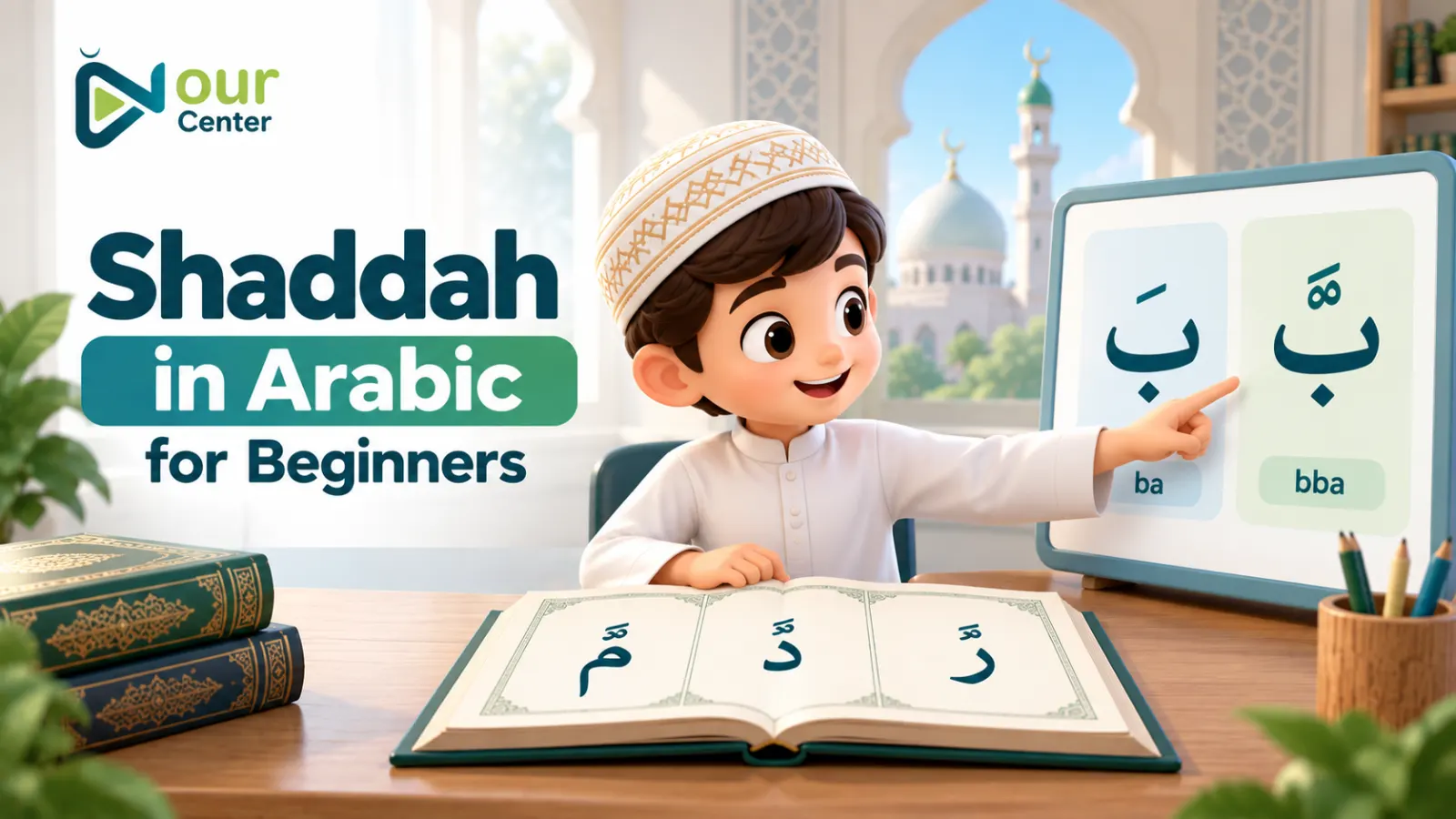
Learn Shaddah in Arabic for beginners, understand how doubled consonants are pronounced, how Shaddah works with Harakat...
Read Article →
Learn how to learn Arabic online with a practical step-by-step plan covering the alphabet, pronunciation, reading, vocab...
Read Article →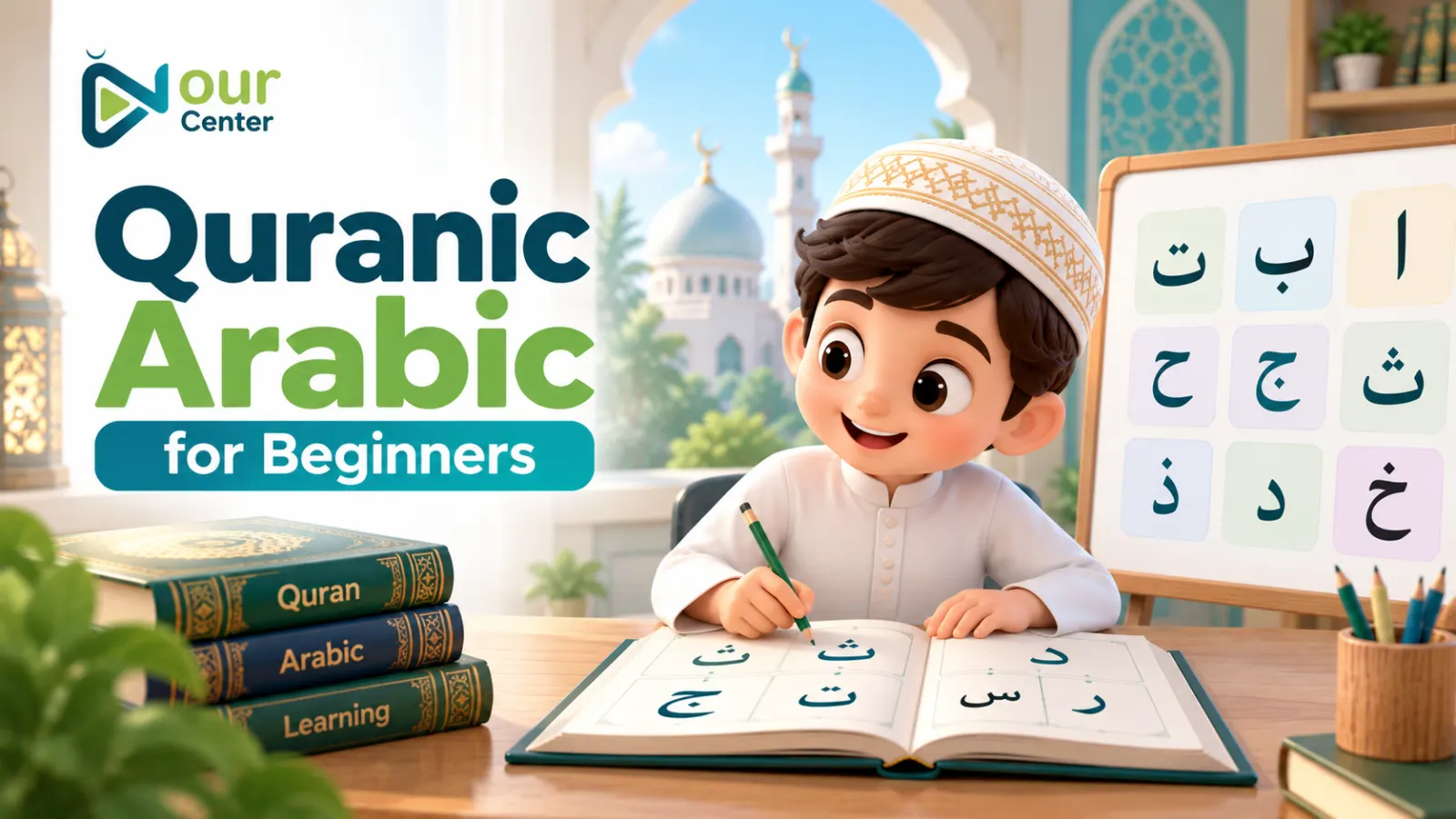
Learn Quranic Arabic for beginners step by step, build essential Quran vocabulary, understand common word patterns, reco...
Read Article →