
quranic-arabic-for-beginners
Learn how to learn Arabic online with a practical step-by-step plan covering the alphabet, pronunciation, reading, vocab...
Read Article →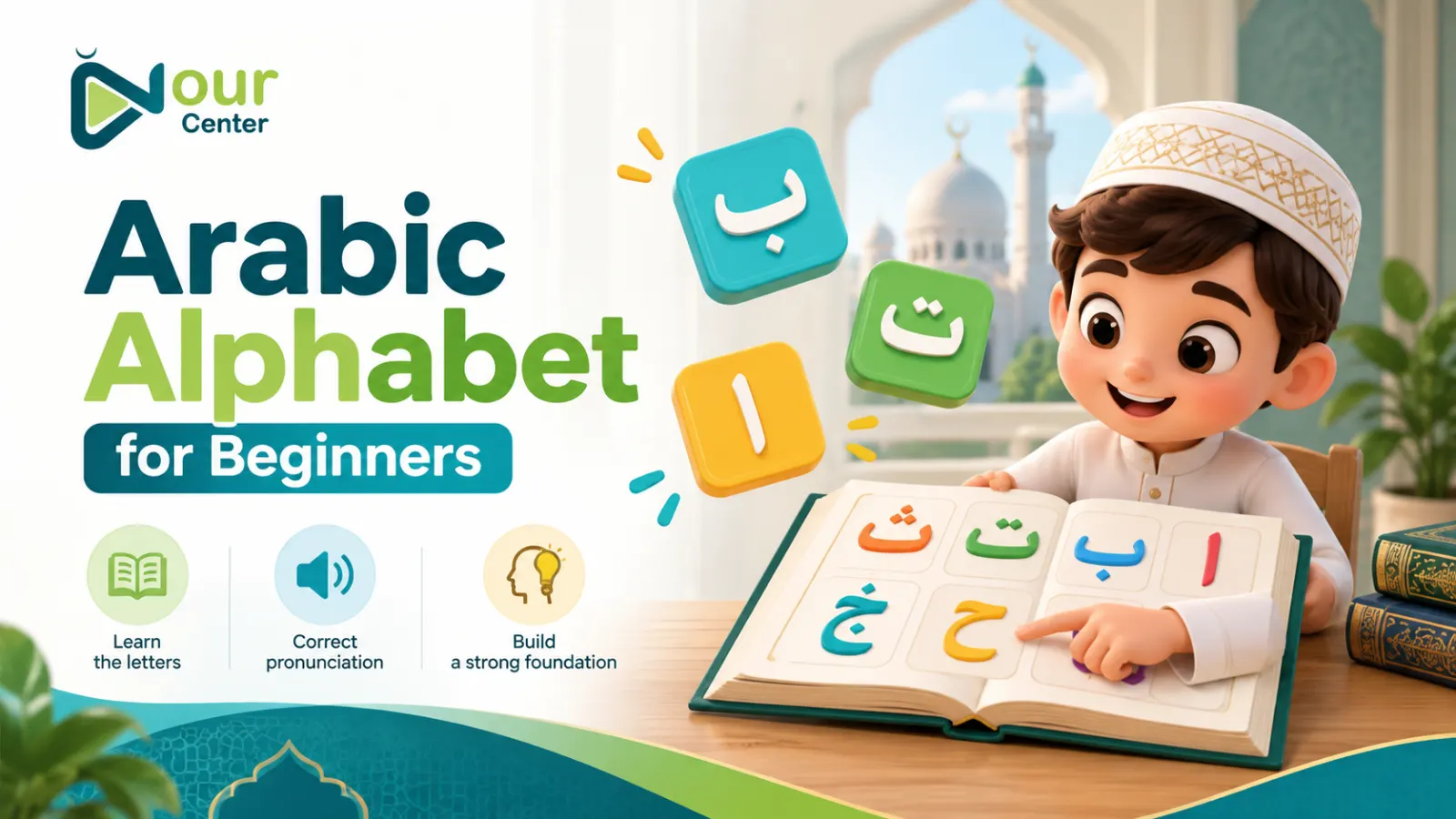
Learn Arabic Letters Step by Step
Learning the Arabic alphabet for beginners is the first major step toward reading, writing, and understanding Arabic. Whether your goal is to read the Quran, learn Quranic Arabic, communicate in Arabic, or help your child begin Arabic lessons, everything starts with recognizing the Arabic letters and understanding how they work. Arabic may look unfamiliar at first. The writing direction is different from English. Letters can change shape depending on their position inside a word.
Some sounds may not exist in your native language. Several letters may also look very similar. But the Arabic alphabet becomes much easier when it is learned in a clear order. Instead of trying to memorize everything at once, beginners should build their skills gradually: Recognize the letters. Learn their basic sounds. Understand how letters change shape. Practice the short vowels. Join letters together. Read simple words. Build fluency through regular practice.
This guide explains the Arabic alphabet for beginners step by step and provides a practical learning path for children, adults, non-Arabic speakers, and students preparing to read the Quran. How Many Letters Are in the Arabic Alphabet? The Arabic alphabet has 28 basic letters.
ا — Alif ب — Ba ت — Ta ث — Tha ج — Jeem ح — Ha خ — Kha د — Dal ذ — Dhal ر — Ra ز — Zay س — Seen ش — Sheen ص — Sad ض — Dad
ع — Ayn غ — Ghayn ف — Fa ق — Qaf ك — Kaf ل — Lam م — Meem ن — Noon ه — Ha و — Waw ي — Ya These 28 letters form the foundation of Arabic reading and writing. A beginner does not need to master every sound perfectly on the first day. The first goal is recognition. After that, pronunciation and reading can gradually become more accurate.
The alphabet is the foundation of nearly every later Arabic skill.
Reading words. Understanding Harakat. Joining letters. Distinguishing similar sounds. Reading Arabic sentences. Recognizing Quranic vocabulary. Following Tajweed lessons. Writing Arabic. Learning grammar. A strong beginning therefore saves time later. Students who rush through the alphabet often have to return and correct basic letter recognition or pronunciation problems. A better approach is to build the foundation carefully.
One of the first differences beginners notice is writing direction.
Right to left. This may feel unusual for learners who normally read English or other left-to-right languages. At first, the eyes may naturally try to move in the wrong direction. Regular practice solves this quickly. When studying Arabic, train yourself to begin on the right side of the word or line and move toward the left. Numbers can follow different conventions depending on context, but ordinary Arabic text is read from right to left.
Do Arabic Letters Have Uppercase and Lowercase Forms? Arabic does not use uppercase and lowercase letters in the same way English does. Instead, many Arabic letters change shape depending on where they appear in a word.
Isolated. Initial. Medial. Final. This is one of the most important concepts for beginners. The letter is still the same letter. Only its written form changes because it connects to neighboring letters.
Arabic is a connected script. Many letters join with the letters before or after them. Because of these connections, the visual form of a letter may change.
ب Then later see a slightly different form inside a word. The sound and identity remain Ba. The shape changes because it is connected. This is why students should not memorize only isolated letters.
On its own. At the beginning of a word. In the middle. At the end. Do All Arabic Letters Connect? No. Most Arabic letters can connect with neighboring letters, but some letters do not connect to the following letter on the left.
ا د ذ ر ز و These letters can connect from one side but break the connection that follows them. Beginners often find this confusing at first.
A break in the writing does not necessarily mean a new word. It may simply be caused by a letter that does not connect on both sides. Learning this early makes Arabic words much easier to read.
Learn the Letters by Shape
The first stage should focus on visual recognition. Do not worry about reading full words immediately. Look at each letter and learn its basic shape. Useful beginner groups include letters that share similar shapes.
ب ت ث These letters have a similar body. The dots distinguish them.
ب One dot below.
ت Two dots above.
ث Three dots above. Learning similar letters together can make memorization much faster.
ج ح خ These letters share a basic shape.
ج One dot below.
ح No dot.
خ One dot above. The student should learn to notice the dot position immediately.
د ذ
د No dot.
ذ One dot above. The overall shape is very similar. The dot creates the distinction.
ر ز
ر No dot.
ز One dot above. Again, careful attention to dots is essential.
س ش Seen has no dots. Sheen has three dots above. Their sounds are also different. Learning them as a pair helps beginners recognize the visual distinction quickly.
ص ض share a similar shape. Sad has no dot. Dad has one dot above. These letters also have deeper pronunciation characteristics than some of the lighter Arabic letters. Beginners should first recognize the visual difference, then refine the pronunciation.
ط ظ also shares a similar structure. The emphatic Dha has a dot. The emphatic Ta does not. Learning paired shapes reduces the amount of information the student has to memorize separately.
ع غ
ع No dot.
غ One dot above. These sounds may be unfamiliar to many non-Arabic speakers. Do not worry if perfect pronunciation takes time. The first task is recognition. The second task is correct articulation.
ف ق can also look similar to beginners. Fa usually has one dot above. Qaf has two dots above in the commonly taught modern script. Their articulation is different, so both the eye and the ear need training.
Learn the Correct Letter Sounds
Recognizing a letter visually is only half the task. The student also needs to hear and reproduce its sound. This is particularly important for Arabic because some letters do not have exact equivalents in English.
ح خ ع غ ق ص ض ط ظ A learner should avoid replacing them permanently with the nearest English sound. Approximate comparisons may help during the first lesson, but proper Arabic pronunciation should gradually replace them. Correct Makharij for Beginners provides an excellent next step because learning where Arabic letters are articulated helps beginners avoid replacing unfamiliar sounds with letters from their native language. What Are Makharij?
Makharij are the articulation points of Arabic letters.
They describe where the sound of each letter is produced.
The throat. The tongue. The lips. The nasal passage. The oral cavity. For a complete beginner, there is no need to memorize advanced Makharij terminology immediately. But learning the correct sound directly from a qualified teacher is extremely useful.
Visual practice. Audio practice. Seeing the letter teaches recognition. Hearing the letter teaches pronunciation. A student who only studies written charts may know the alphabet but pronounce several letters incorrectly. A student who only listens may struggle to identify the letters on the page. The best method combines both. Listen. Repeat. Look at the letter. Say the sound. Then find it again in different words.
Learn Similar-Sounding Letters Carefully
Some Arabic sounds can be difficult to distinguish.
س and ص ت and ط د and ض ه and ح ك and ق ا or ء and ع ح and خ ع and غ A beginner does not need to master these differences instantly. But they should know that the letters are not interchangeable. For Quran reading in particular, preserving the difference between letters becomes very important.
Choose two letters. Listen to each one. Repeat slowly. Alternate between them.
Seen. Sad. Seen. Sad.
س ص This trains both visual and auditory recognition. Do not practice ten difficult contrasts at the same time. Work with one pair until the difference becomes clearer.
Understand Harakat
Once the student recognizes the letters, the next major stage is learning short vowels. Arabic uses vowel marks called Harakat.
Fathah. Kasrah. Dammah. These marks change the sound attached to a consonant. For example, the same Arabic consonant can be read differently depending on the Harakah written with it. The alphabet gives you the consonant. The Harakah tells you how to vocalize it. Later in this Arabic learning series, Harakat should be studied in detail.
The name of a letter. The sound of a letter inside a word.
Ba is useful. But when reading Arabic, the actual pronunciation depends on the Harakah.
Letter name.
Letter sound.
Letter plus vowel.
Connected word. This transition is essential for real reading.
Fathah is a small mark written above a letter. It produces a short vowel sound. For beginner practice, a teacher may use simple combinations such as: بَ تَ جَ Students can then practice reading sequences of consonants with the same vowel. The purpose is not vocabulary yet. The goal is automatic decoding. See the letter. See the Harakah. Produce the sound.
Kasrah appears below the letter. It creates another short vowel sound. Again, beginners can practice simple combinations before reading real words. This builds decoding skill without the extra difficulty of vocabulary or grammar.
Dammah appears above the letter and creates another short vowel.
Fathah. Kasrah. Dammah. they can read many basic letter-vowel combinations. This is a major milestone.
Sukoon indicates that a consonant does not carry a short vowel after it. This changes the way letters combine inside words. Beginners often find Sukoon difficult because they are used to adding a vowel after every consonant. Learning Sukoon teaches the reader to stop the vowel cleanly and connect sounds correctly. A later article in this series will explain Sukoon in detail.
Shaddah indicates a strengthened or doubled consonant. It is extremely important in Arabic reading. A beginner who ignores Shaddah may change the pronunciation of a word.
Letters. Short vowels. Sukoon. The sequence matters. Building one skill on another keeps learning manageable.
Tanween introduces additional vowel endings commonly written with doubled vowel marks.
Fathatain. Kasratain. Dammatain. At this stage, learners begin seeing Arabic reading as a system rather than isolated letters. Each new mark modifies the basic letters they already know.
Once the learner recognizes individual letters and basic Harakat, they can start joining letters. This is where Arabic reading begins to feel exciting.
Individual symbols.
Words. Start with two-letter combinations. Then three-letter combinations. Then short words. Do not jump directly from alphabet memorization to long Quran verses. Small steps produce stronger fluency.
A letter may look different in a word than it did on the alphabet chart. This is normal.
“I knew the letter by itself, but I didn't recognize it inside the word.” The solution is not to memorize the alphabet again.
Initial forms. Medial forms. Final forms. Connected examples. Over time, the different forms begin to look like variations of one familiar letter.
Remember that some letters interrupt the visual connection.
Alif. Dal. Dhal. Ra. Zay. Waw. The learner should recognize these letters so a broken connection does not cause confusion. A word can still continue after them even if the written line is interrupted. How Long Does It Take to Learn the Arabic Alphabet? There is no single timeline for everyone. A motivated adult may recognize the letters fairly quickly. A child may learn them gradually through repeated short lessons.
But recognizing letters is not the same as reading fluently.
Recognition. Pronunciation. Harakat. Sukoon. Shaddah. Tanween. Connections. Words. Sentences. Fluency. The best goal is steady progress rather than rushing through the alphabet. Can I Learn the Arabic Alphabet in One Week? Some learners can memorize the basic letter shapes and names within a week. That can be a useful beginning. But complete reading ability usually requires additional practice. After seven days, a learner may still need to work on: Similar letters.
Correct pronunciation. Connected forms. Vowels. Reading speed. Do not treat one-week alphabet challenges as a promise of complete Arabic fluency. Use them as motivation to begin. Should I Learn the Alphabet in Alphabetical Order? Alphabetical order is useful for memorization. However, it is not the only effective teaching method.
Similar shape. Articulation point. Difficulty. Connection pattern. Learning goal.
ب ت ث can be studied together because the shape is similar.
ج ح خ can form another group. A well-designed course may therefore combine alphabetical order with visual grouping. Should Beginners Learn Arabic Writing at the Same Time? Basic writing practice can greatly improve recognition. When you write a letter by hand, you become more aware of: Its direction. Its proportions. Its dots. Its connections. However, handwriting should not prevent progress in reading.
Reading. Listening. Pronunciation. Tracing. Writing. Recognition games. This creates several memory connections at once.
Printed Arabic can look slightly different from handwriting. Different fonts can also change letter appearance. Beginners should first become comfortable with one clear educational font. After recognition improves, expose yourself gradually to other fonts and handwriting styles. This prevents confusion during the first stage.
Transliteration writes Arabic sounds using Latin letters. For example, a beginner course may temporarily represent an Arabic sound using English characters. This can help during the very first lessons. But it should not become a permanent dependency. If students continue reading transliteration instead of Arabic script, they may delay genuine Arabic literacy.
See Arabic. Read Arabic. Pronounce Arabic. Use transliteration only as a temporary support when needed.
Many learners study the Arabic alphabet because they want to read the Quran. This is an excellent motivation. However, Quran reading eventually requires more than knowing the alphabet.
Harakat. Sukoon. Shaddah. Tanween. Madd. Correct Makharij. Basic Tajweed. Smooth joining of letters. Stopping and starting. Fluency. Basic Tajweed Rules should be studied after a learner can recognize Arabic letters and read basic vowel patterns, because Tajweed refines Quran pronunciation rather than replacing foundational reading skills. This creates a sensible progression. First learn to decode Arabic. Then refine the recitation.
Many children and beginner Quran students learn Arabic letters through a structured Qaida method. Noorani Qaida is one such approach.
Letters. Vowels. Combinations. Sukoon. Shaddah. Madd. Other reading patterns. Students who need a structured bridge from individual Arabic letters to Quran reading may benefit from Noorani Qaida for Kids because it organizes letter recognition and reading patterns into progressive lessons. This can be particularly useful for children or complete beginners who need guided repetition.
The alphabet is not separate from later Tajweed learning. The Arabic letter you recognize today will later have characteristics such as: Makhrij. Hams or Jahr. Shiddah or Rikhwah. Isti'la or Istifal. Other Sifat. But beginners should not overload themselves with all of this immediately.
Recognize the letter.
Pronounce it correctly.
Read it with vowels.
Connect it.
Refine pronunciation. Students who later study Sifat al-Huruf for Beginners can build on their alphabet foundation by learning how specific characteristics help distinguish Arabic letters during Quran recitation. This progression is much easier than beginning with advanced terminology before letter recognition is secure.
Use several methods together.
Look at the letter frequently.
Hear and repeat the sound. Handwriting Write the letter. Flashcards Test recognition randomly rather than only in alphabet order.
Compare letters with similar shapes.
Find the letter in real Arabic words.
Short daily sessions are more effective than occasional long sessions.
Review five previously learned letters.
Learn two new letters.
Listen and repeat their sounds.
Write the letters and identify their dots.
Find the letters inside simple Arabic examples.
Test yourself without looking at the answers. This routine is simple enough to repeat consistently.
Review old letters.
Learn new letters.
Pronunciation practice.
Writing practice.
Connected-form recognition.
Quick reading challenge. Consistency matters more than doing everything perfectly.
Understand the System
Learn that Arabic has 28 basic letters and is written from right to left. Begin with a small group of letters.
ب ت ث
ج ح خ
More Letter Families
د ذ ر ز س ش
Remaining Shapes
Continue learning the alphabet without worrying about perfect fluency.
Review and Listening
Test all learned letters randomly and practice their sounds.
Connected Forms
Look at how familiar letters change inside words.
Introduction to Harakat
Begin combining known letters with Fathah, Kasrah, and Dammah. This is only a starter plan. Continue reviewing after the first week.
Children usually learn best through short, varied activities.
Flashcards. Letter matching. Tracing. Coloring. Sound repetition. Simple games. Short online lessons. Finding letters in words. Positive review. Avoid forcing a young child to memorize all 28 letters in one session. Small groups create better retention.
ع before they can pronounce Ayn perfectly. That is okay during the early stage. Recognition and pronunciation can improve together over time. Do not delay all progress until every difficult sound is perfect. At the same time, do not permanently ignore pronunciation errors. Gradual correction is the best approach.
Adult beginners often want to move faster. They may understand patterns more quickly than children.
Learn visual groups. Study pronunciation carefully. Practice writing briefly. Move into Harakat quickly. Begin decoding simple words. Adults should avoid spending weeks only reciting the alphabet names. The goal is reading, not merely reciting the letter list.
Memorizing Only the Alphabet Song or Order
Alif, Ba, Ta, Tha... but fail to identify a random letter on the page. Test letters out of order. Real reading does not present them alphabetically.
Ignoring the Dots
Dots are essential. They can distinguish completely different letters.
ب ت ث ج ح خ د ذ ر ز س ش ص ض ط ظ ع غ ف ق
Number of dots. Position of dots.
Learning Only Isolated Forms
The student recognizes the alphabet chart but cannot read connected Arabic. Introduce connected forms early.
Isolated. Beginning. Middle. End.
Using English Sounds Permanently
Approximation can help on day one. But several Arabic letters require their own articulation.
ع ح خ غ ق ض and other letters with English substitutes.
Depending on Transliteration
If the student reads Latin letters every time, the brain has less reason to learn Arabic script. Gradually remove transliteration.
Trying to Learn Everything at Once
Alphabet. Harakat. Grammar. Vocabulary. Writing. Tajweed. All in one week can overwhelm a beginner. Use a sequence. Master one layer, then add another.
Avoiding Difficult Letters
Beginners may repeatedly practice easy letters while ignoring unfamiliar throat or emphatic sounds. Include difficult letters regularly in small doses. They improve through repetition.
Practicing Too Infrequently
One long lesson every two weeks is usually less useful than short, frequent practice. Arabic recognition develops through repetition. Even ten minutes daily can build momentum.
Rushing Into Long Words
A student who has just learned the alphabet should not expect to read complex sentences fluently.
Letter. Letter with vowel. Two-letter combination. Short word. Longer word. Sentence.
Comparing Yourself With Other Learners
Different learners have different advantages. Someone who already speaks another Semitic language may learn faster. A child may recognize sounds differently from an adult. A person familiar with Quran recitation may already know some sounds. Focus on your own progress.
Recognize all 28 letters randomly. Name most letters without hesitation. Produce their basic sounds. Distinguish common similar shapes. Recognize letters in connected forms. Understand right-to-left reading. Identify basic Harakat. Begin joining letters. Read simple combinations without transliteration. You do not need perfect fluency before moving forward. Reading ability develops through later stages. What Comes After the Arabic Alphabet?
Once you recognize the letters, the best next step is learning their sounds more precisely and practicing the three basic short vowels.
Arabic Letter Sounds for Beginners. Arabic Harakat for Beginners. Sukoon in Arabic. Shaddah in Arabic. Tanween in Arabic. Joining Arabic letters. Reading Arabic words. Quranic Arabic vocabulary. A structured online Arabic learning plan. Each topic builds on the previous one.
At Nour Center, online Arabic lessons can help beginners move from letter recognition to actual reading through guided one-to-one instruction.
The 28 Arabic letters. Correct letter sounds. Similar-looking letters. Difficult pronunciation. Connected forms. Harakat. Sukoon. Shaddah. Tanween. Joining letters. Reading words. Quranic Arabic foundations. Children and adults can progress at different speeds. One-to-one lessons make it easier to repeat difficult letters while moving faster through skills the learner already understands.
Some mistakes are difficult to notice independently.
ح
ه sound sufficiently different.
ق
ك A teacher can identify the problem immediately. This prevents incorrect pronunciation from becoming a long-term habit. Can You Learn the Arabic Alphabet Online? Yes. The alphabet is well suited to online learning because a student can: See the letter clearly. Hear the teacher. Repeat the sound. Watch demonstrations. Share reading exercises. Receive immediate correction. Practice between lessons. The key is not simply watching videos. Active repetition and feedback produce stronger results.
Parents do not need to be Arabic teachers to support progress.
Reviewing flashcards. Encouraging short practice. Asking the child to identify letters. Celebrating progress. Playing teacher audio. Maintaining a regular lesson schedule. Avoid correcting pronunciation aggressively if you are unsure of the correct sound. Let the teacher handle detailed articulation.
Learning a new writing system can feel slow during the first days. Progress becomes much more visible when you track small milestones.
Today I recognized five letters. Now I know ten. I can distinguish Ba, Ta, and Tha. I can read letters with Fathah. I recognized my first connected word. These small achievements eventually become real Arabic reading ability.
Recognize Alif through Ya. Read from right to left. Distinguish dot patterns. Recognize common connected forms. Hear basic differences between similar letters. Use Fathah, Kasrah, and Dammah at a beginner level. Recognize Sukoon when introduced. Begin joining simple letters. If several areas still feel difficult, continue reviewing them while moving forward gradually. You do not need to wait for perfection.
Memorizing the 28 letters is only the beginning. The real goal is to reach a stage where you no longer think: “What letter is this?”
ب and recognize it instantly. Then you see it inside a word and still recognize it. Eventually, you stop decoding each letter separately and begin reading complete words. That transition comes from repetition. The Arabic alphabet becomes automatic through use.
Learning the Arabic Alphabet for Beginners is the foundation of Arabic reading, writing, Quranic Arabic, and Quran recitation. Arabic has 28 basic letters. The language is written from right to left. Many letters connect. Several letters change shape depending on their position. Some letters look similar and are distinguished by dots. Some Arabic sounds may be unfamiliar to non-native speakers. But none of these challenges need to be mastered at once.
Recognize the letters. Learn their sounds. Practice similar letters. Understand connected forms. Learn Fathah, Kasrah, and Dammah. Study Sukoon. Study Shaddah. Learn Tanween. Join letters. Read words. Build fluency. Avoid relying permanently on transliteration. Do not rush into advanced grammar before you can read the script. Do not worry if difficult sounds take longer. Consistent practice is more important than speed.
With regular lessons, listening, repetition, writing practice, and teacher correction, the Arabic alphabet gradually stops looking unfamiliar and becomes a readable system.
That is the first major step toward reading Arabic confidently and building a strong foundation for Quranic Arabic and Quran recitation.
Note: Comments may require approval before appearing publicly.
Learn how to learn Arabic online with a practical step-by-step plan covering the alphabet, pronunciation, reading, vocab...
Read Article →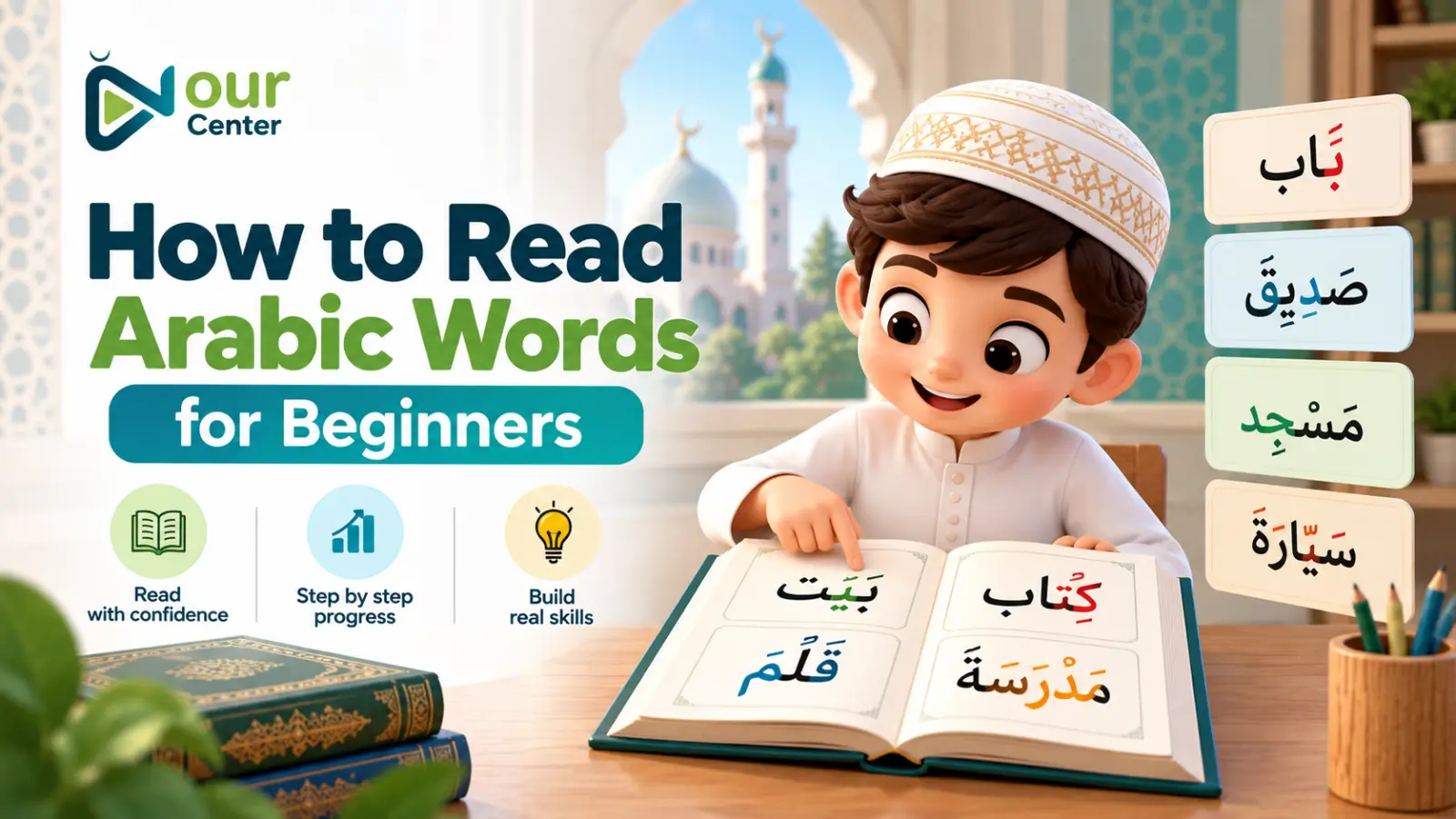
Learn how to read Arabic words for beginners step by step by combining connected letters, Harakat, Sukoon, Shaddah, and...
Read Article →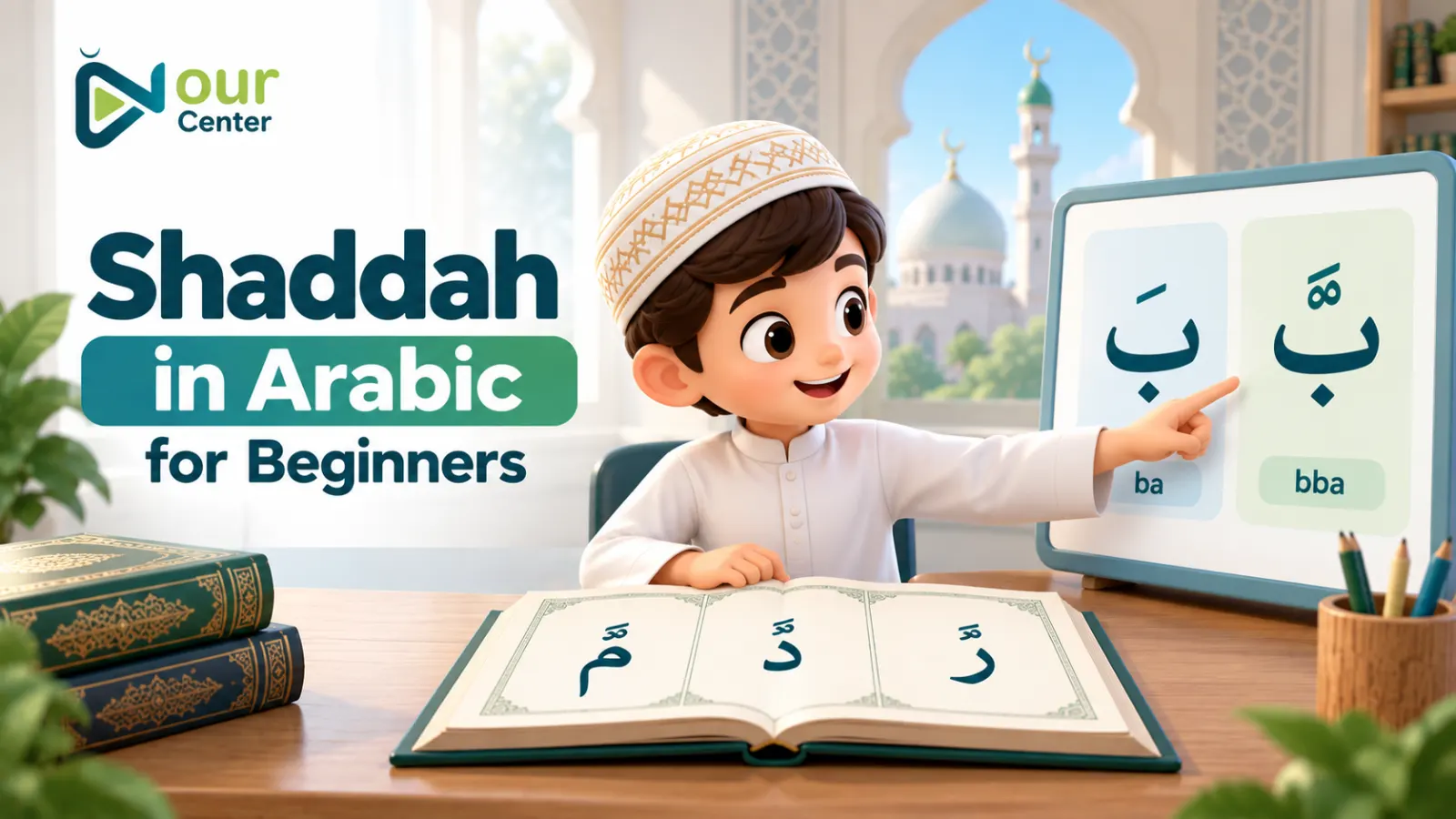
Learn Shaddah in Arabic for beginners, understand how doubled consonants are pronounced, how Shaddah works with Harakat...
Read Article →
Learn Sukoon in Arabic for beginners, understand how to read consonants without short vowels, join Arabic sounds correct...
Read Article →