
Islamic Studies for Kids: A Complete Beginner's Guide
Discover Islamic Studies for Kids with a clear beginner guide covering faith, the Five Pillars, Quran learning, Salah, S...
Read Article →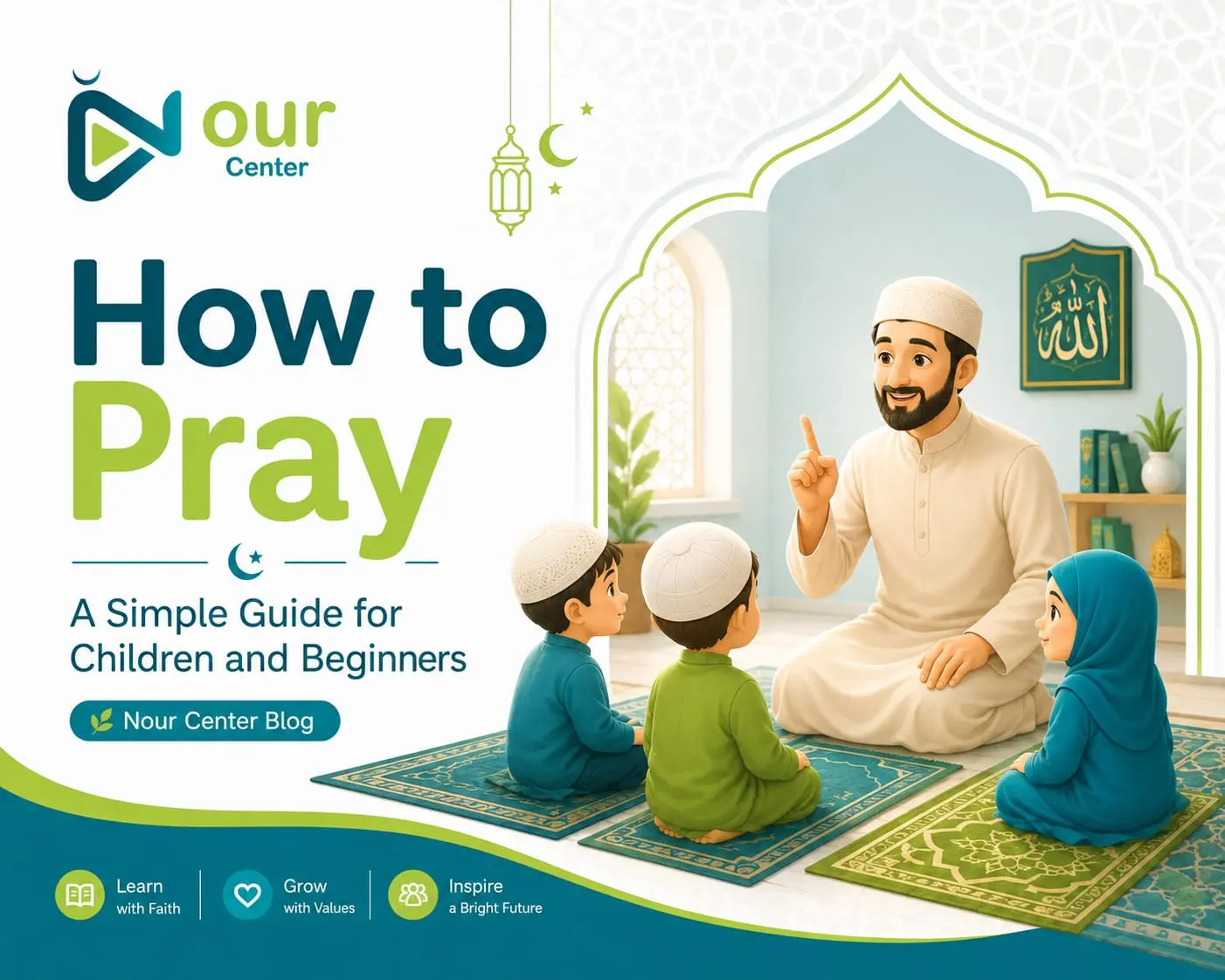
For children and beginners, learning how to pray may feel difficult at first. There are movements to remember, Arabic words to learn, and steps to follow in the correct order. However, with patient teaching, regular practice, and simple explanations, Salah becomes easier and more meaningful.
Arabic: الله أكبر
English pronunciation: Allahu Akbar
Meaning: Allah is the Greatest
Then go into Sujood again and say:
Arabic: سُبْحَانَ رَبِّيَ الأَعْلَى
English pronunciation: Subhana Rabbiyal-A‘la
Meaning: Glory be to my Lord, the Most High
This completes one Rak‘ah of Salah.
Step 8: Stand for the Next Rak‘ah
After the second Sujood, say:
Arabic: الله أكبر
English pronunciation: Allahu Akbar
Meaning: Allah is the Greatest
Then stand up for the next Rak‘ah and repeat the steps: recite Al-Fatihah, recite another Surah or verses if required, perform Ruku, stand again, and perform two Sujoods.
The Sitting Position: Tashahhud
In the final sitting of the prayer, Muslims recite At-Tashahhud.
Arabic: التَّحِيَّاتُ لِلَّهِ وَالصَّلَوَاتُ وَالطَّيِّبَاتُ
English pronunciation: At-tahiyyatu lillahi was-salawatu wat-tayyibat
Meaning: All greetings, prayers, and good words are for Allah
Then continue:
Arabic: السَّلَامُ عَلَيْكَ أَيُّهَا النَّبِيُّ وَرَحْمَةُ اللَّهِ وَبَرَكَاتُهُ
English pronunciation: As-salamu ‘alayka ayyuhan-nabiyyu wa rahmatullahi wa barakatuh
Meaning: Peace be upon you, O Prophet, and the mercy of Allah and His blessings
Then say:
Arabic: السَّلَامُ عَلَيْنَا وَعَلَىٰ عِبَادِ اللَّهِ الصَّالِحِينَ
English pronunciation: As-salamu ‘alayna wa ‘ala ‘ibadillahis-saliheen
Meaning: Peace be upon us and upon the righteous servants of Allah
Then say the testimony of faith:
Arabic: أَشْهَدُ أَنْ لَا إِلَٰهَ إِلَّا اللَّهُ وَأَشْهَدُ أَنَّ مُحَمَّدًا رَسُولُ اللَّهِ
English pronunciation: Ashhadu an la ilaha illa Allah, wa ashhadu anna Muhammadan rasulullah
Meaning: I bear witness that there is no god worthy of worship except Allah, and I bear witness that Muhammad is the Messenger of Allah
Sending Blessings upon the Prophet
In the final sitting, Muslims also send blessings upon Prophet Muhammad ﷺ.
Arabic: اللَّهُمَّ صَلِّ عَلَىٰ مُحَمَّدٍ وَعَلَىٰ آلِ مُحَمَّدٍ
English pronunciation: Allahumma salli ‘ala Muhammad wa ‘ala ali Muhammad
Meaning: O Allah, send blessings upon Muhammad and upon the family of Muhammad
This part teaches love and respect for the Prophet Muhammad ﷺ.
Ending the Prayer with Tasleem
To end the prayer, turn the head to the right and say:
Arabic: السَّلَامُ عَلَيْكُمْ وَرَحْمَةُ اللَّهِ
English pronunciation: As-salamu ‘alaykum wa rahmatullah
Meaning: Peace and mercy of Allah be upon you
Then turn the head to the left and say the same:
Arabic: السَّلَامُ عَلَيْكُمْ وَرَحْمَةُ اللَّهِ
English pronunciation: As-salamu ‘alaykum wa rahmatullah
Meaning: Peace and mercy of Allah be upon you
This ending is called Tasleem. It completes the Salah.
Important Words Said in Salah
Here is a simple table of common words and phrases used in prayer.
Arabic Phrase| English Pronunciation| Meaning
الله أكبر| Allahu Akbar| Allah is the Greatest
سُبْحَانَ رَبِّيَ الْعَظِيمِ| Subhana Rabbiyal-‘Azeem| Glory be to my Lord, the Most Great
سَمِعَ اللَّهُ لِمَنْ حَمِدَهُ| Sami‘a Allahu liman hamidah| Allah hears the one who praises Him
رَبَّنَا وَلَكَ الْحَمْدُ| Rabbana wa lakal-hamd| Our Lord, to You belongs all praise
سُبْحَانَ رَبِّيَ الأَعْلَى| Subhana Rabbiyal-A‘la| Glory be to my Lord, the Most High
رَبِّ اغْفِرْ لِي| Rabbighfir li| My Lord, forgive me
السَّلَامُ عَلَيْكُمْ وَرَحْمَةُ اللَّهِ| As-salamu ‘alaykum wa rahmatullah| Peace and mercy of Allah be upon you
How Many Rak‘ahs Are in Each Prayer?
The five daily prayers have different numbers of obligatory Rak‘ahs.
Prayer| Time| Obligatory Rak‘ahs
Fajr| Dawn| 2 Rak‘ahs
Dhuhr| Noon| 4 Rak‘ahs
Asr| Afternoon| 4 Rak‘ahs
Maghrib| Sunset| 3 Rak‘ahs
Isha| Night| 4 Rak‘ahs
Children and beginners should first learn the basic structure of one Rak‘ah, then gradually practice the full prayers with the help of a teacher or parent.
Simple Tips for Teaching Children How to Pray
Teaching Salah to children should be gentle and encouraging. The goal is to help them love prayer and understand its beauty.
1. Start with Love, Not Pressure
Children learn better when they feel safe and encouraged. Explain that Salah is a special time to speak to Allah and remember Him.
2. Teach One Step at a Time
Do not teach everything in one lesson. Start with Allahu Akbar, then teach standing, bowing, and prostration. Add the Arabic phrases gradually.
3. Use Repetition
Children need repetition to remember. Practice the same words and movements daily in a calm way.
4. Explain the Meanings
When children understand what they are saying, prayer becomes more meaningful. For example, explain that الله أكبر / Allahu Akbar means Allah is greater than everything.
5. Pray Together
Children learn by watching adults. When parents pray regularly, children naturally become interested in Salah.
6. Praise Their Effort
Encourage children when they try. A kind word can make them more confident and motivated.
Common Mistakes Beginners Should Avoid
Beginners may make mistakes while learning Salah, and that is normal. The important thing is to keep learning and improving.
Common mistakes include:
- Moving too quickly without focus
- Forgetting the order of prayer steps
- Not learning the meanings of the Arabic words
- Incorrect pronunciation of important phrases
- Lack of calmness in Ruku and Sujood
- Treating prayer as a habit without understanding
A qualified teacher can help beginners correct mistakes step by step.
Why Learn Salah with Nour Center?
At Nour Center, we provide online Islamic learning for children and beginners in a simple and supportive way. Our teachers help students learn Salah, Quran, Arabic, Islamic manners, and basic Islamic knowledge with patience and care.
Learning how to pray with a teacher helps students:
- Understand the correct order of Salah
- Improve Arabic pronunciation
- Learn the meanings of prayer phrases
- Build confidence in worship
- Develop love for Allah and Islam
- Practice regularly with guidance
Whether your child is just starting to learn Salah or needs support improving their prayer, Nour Center offers a structured and friendly learning environment.
Learning how to pray in Islam is one of the most important steps in a Muslim’s life. Salah connects the heart to Allah, teaches discipline, and builds faith. For children and beginners, the best way to learn prayer is through patience, practice, and clear guidance.
By learning the steps of Salah, understanding the Arabic words, and practicing regularly, every Muslim can build a stronger relationship with Allah.
At Nour Center, we are dedicated to helping children and beginners learn Salah, Quran, Arabic, and Islamic values in a simple, warm, and professional online environment.
Start learning with Nour Center today and help your child build a strong foundation in faith, prayer, and Islamic knowledge.
Watch this simple English video guide to learn how to pray Salah step by step
How to pray in Islam
Note: Comments may require approval before appearing publicly.
Discover Islamic Studies for Kids with a clear beginner guide covering faith, the Five Pillars, Quran learning, Salah, S...
Read Article →
ajj is one of the Five Pillars of Islam and a journey of worship, repentance, unity, and devotion to Allah. Learn what H...
Read Article →
Discover the most common Quran reading mistakes beginners and children make, including pronunciation, Makharij, vowels,...
Read Article →
Learn Tajweed for kids step by step, from correct Arabic pronunciation and Makharij to Madd, Ghunnah, Qalqalah, stopping...
Read Article →