Islamic Studies for Kids: A Complete Beginner's Guide
Discover Islamic Studies for Kids with a clear beginner guide covering faith, the Five Pillars, Quran learning, Salah, S...
Read Article →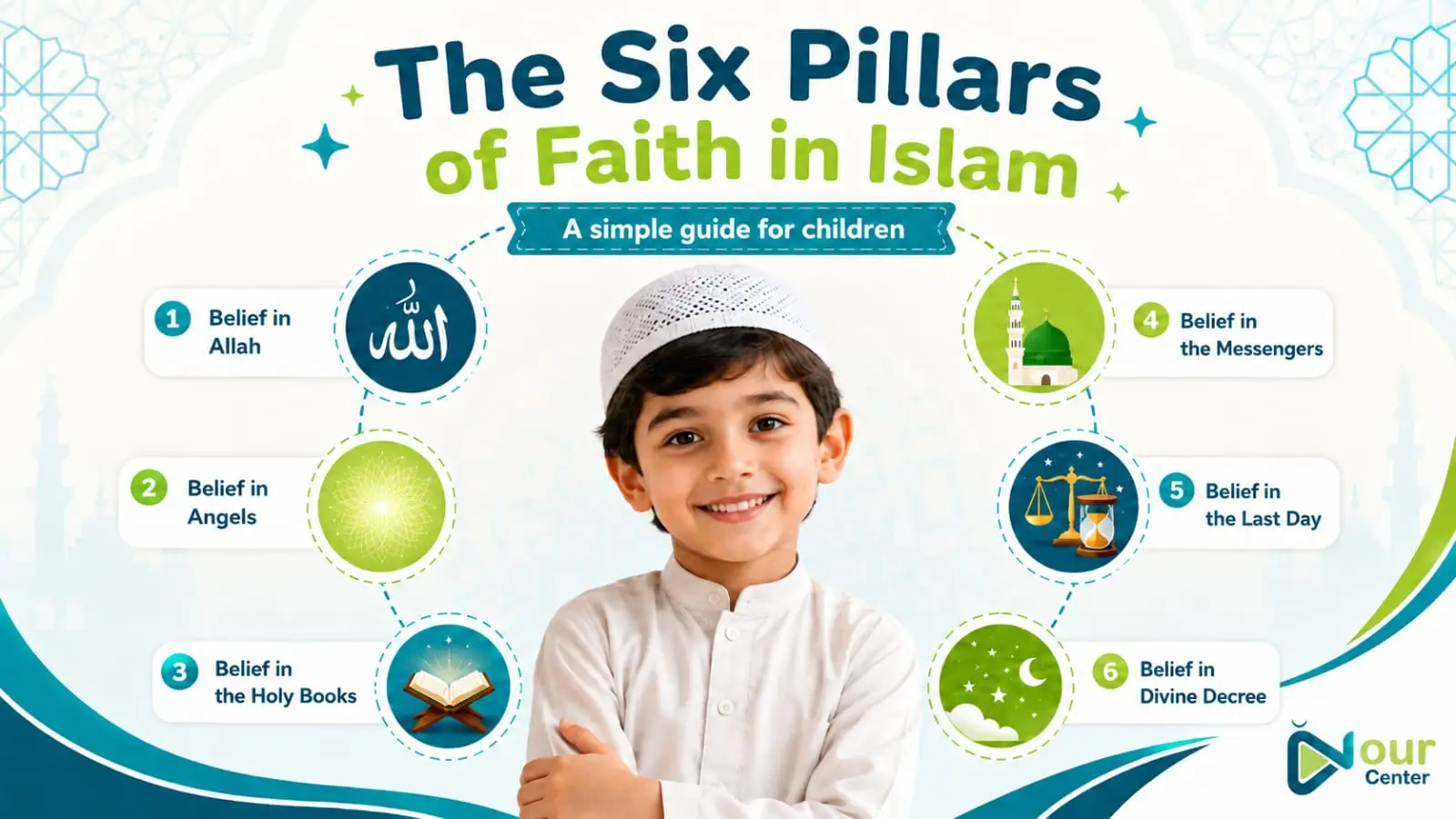
The Six Pillars of Faith in Islam: Meaning and Importance
Faith is the foundation of a Muslim’s relationship with Allah. The Six Pillars of Faith in Islam, also known as the Six Pillars of Iman, explain the essential beliefs that every Muslim should understand and accept.
These pillars are belief in Allah, His angels, His revealed books, His messengers, the Last Day, and divine decree. Together, they form the basis of Islamic belief and help Muslims understand their purpose, responsibilities, and final destination.
At Nour Center, we help children and adults learn Islamic beliefs in a clear, authentic, and engaging way through online Islamic studies and Quran classes.
What Are the Six Pillars of Faith in Islam?
The Six Pillars of Faith in Islam are:
Belief in Allah
Belief in the angels
Belief in the revealed books
Belief in the messengers
Belief in the Last Day
Belief in divine decree
A Muslim’s faith is built upon accepting all six pillars. They are connected and cannot be separated from one another.
1. Belief in Allah
The first and greatest pillar of faith is believing in Allah. Muslims believe that Allah is the only true God and that He has no partner, child, or equal.
Allah is the Creator of the heavens, the earth, and everything that exists. He alone deserves worship. Muslims pray to Him, depend on Him, ask Him for help, and trust His wisdom.
Belief in Allah also includes believing in His beautiful names and perfect attributes. Allah is the Most Merciful, the All-Knowing, the All-Powerful, and the Creator of all things.
This belief is known as Tawheed, or the oneness of Allah. Tawheed is the central message taught by every prophet.
When Muslims understand Tawheed, they learn to worship Allah sincerely and avoid directing acts of worship to anyone besides Him.
2. Belief in the Angels
The second pillar is belief in the angels. Angels are creations of Allah who always obey Him and never disobey His commands.
Allah created the angels from light. They perform different duties according to His instructions. Muslims do not worship angels, but they believe in their existence and the responsibilities Allah has given them.
Among the well-known angels is Jibreel, who delivered Allah’s revelations to the prophets. Other angels record people’s deeds, guard certain places, carry out Allah’s commands, and perform duties known only to Him.
Belief in the angels reminds Muslims that their actions are known and recorded. This encourages them to speak kindly, behave honestly, and avoid sinful actions.
3. Belief in the Revealed Books
The third pillar of faith is belief in the books that Allah revealed to His messengers.
Allah sent divine guidance to humanity so that people could know how to worship Him and live righteous lives. Muslims believe in all the original revelations sent by Allah.
These include the Tawrah given to Prophet Musa, the Zabur given to Prophet Dawud, the Injil given to Prophet Isa, and the Quran revealed to Prophet Muhammad, peace and blessings be upon them all.
The Quran is the final revelation from Allah. Muslims believe that it confirms the truth found in earlier revelations and provides complete guidance for humanity.
The Quran teaches Muslims about worship, character, family life, justice, patience, mercy, and the purpose of creation.
Learning to read, understand, and apply the Quran is an important part of strengthening Islamic faith.
4. Belief in the Messengers
The fourth pillar is belief in Allah’s prophets and messengers.
Allah chose messengers from among humanity to teach people the truth. Every messenger called people to worship Allah alone and to avoid false worship.
Muslims believe in all the prophets mentioned in the Quran, including Adam, Nuh, Ibrahim, Musa, Dawud, Isa, and Muhammad, peace be upon them.
Prophet Muhammad, peace and blessings be upon him, is the final Messenger of Allah. He delivered the Quran and demonstrated how Muslims should worship Allah and live according to Islamic teachings.
Muslims respect and love all of Allah’s messengers. They do not reject any prophet or make insulting statements about them.
Learning the stories of the prophets helps children and adults understand patience, courage, trust in Allah, honesty, and good character.
5. Belief in the Last Day
The fifth pillar is belief in the Last Day, also known as the Day of Judgment.
Muslims believe that life in this world is temporary. Every person will die and will later be brought back to life by Allah.
On the Day of Judgment, people will be held accountable for their beliefs, words, and actions. Every good and bad deed will be known.
Those who believed in Allah and lived righteously will receive Allah’s reward. Those who rejected the truth and refused to repent will face the consequences of their choices.
Belief in the Last Day encourages Muslims to live responsibly. It reminds them that success is not measured only by money, possessions, or social position. True success is earning Allah’s pleasure and entering Paradise.
This belief also gives Muslims hope. Difficulties, injustice, and suffering in this world will not continue forever. Allah will judge every person with complete justice.
6. Belief in Divine Decree
The sixth pillar is belief in divine decree, known in Arabic as Al-Qadr.
Muslims believe that Allah has complete knowledge of everything. He knows what happened in the past, what is happening now, and what will happen in the future.
Nothing occurs without Allah’s knowledge and permission. However, human beings are still responsible for the choices they make.
Believing in divine decree does not mean that Muslims should stop working or making decisions. Islam teaches Muslims to make effort, choose what is right, ask Allah for guidance, and then trust His decision.
This belief helps Muslims remain grateful during good times and patient during difficult times. They understand that Allah’s wisdom is greater than human understanding.
When something good happens, a Muslim thanks Allah. When hardship occurs, a Muslim remains patient, makes Dua, and continues to take the correct steps.
The Difference Between the Pillars of Islam and the Pillars of Faith
The Five Pillars of Islam describe the main outward acts of worship:
Shahadah
Salah
Zakat
Sawm
Hajj
The Six Pillars of Faith describe the beliefs held in a Muslim’s heart.
The pillars of Islam focus mainly on actions, while the pillars of faith focus mainly on belief. However, both are connected. True Islamic faith should be reflected in worship, character, and daily behavior.
A Muslim believes in the heart, speaks truthfully, and follows faith with righteous actions.
Why Are the Six Pillars of Faith Important?
The Six Pillars of Faith in Islam give Muslims a clear understanding of life.
They teach Muslims who created them, why they were created, how divine guidance reached humanity, and what will happen after death.
These beliefs also develop important qualities, including:
Trust in Allah
Patience during hardship
Gratitude during ease
Awareness of personal responsibility
Love for the prophets
Respect for the Quran
Hope in Allah’s mercy
Preparation for the Hereafter
Strong faith helps Muslims make better decisions and remain connected to Allah in every situation.
How Can Parents Teach the Pillars of Faith to Children?
Parents should teach Islamic beliefs gradually, using language suitable for the child’s age.
Young children can begin by memorizing the names of the six pillars. Parents can then explain each pillar using simple examples, Quranic stories, educational activities, and regular conversations.
Parents can teach children by:
Reading stories about the prophets
Explaining Allah’s names and attributes
Teaching short Quranic chapters
Discussing the angels and their duties
Encouraging gratitude and patience
Explaining Paradise and the Day of Judgment appropriately
Connecting Islamic beliefs to daily life
Children should learn Islam in a positive environment filled with mercy, patience, and encouragement.
Learn Islamic Studies Online with Nour Center
At Nour Center, students can learn the Quran, Arabic language, Islamic manners, Salah, stories of the prophets, and the foundations of Islamic belief.
Our online Islamic studies classes are designed for children and adults at different learning levels. Students can study from home with qualified teachers and follow a structured learning plan.
Understanding the Six Pillars of Faith in Islam is an important step toward developing a strong Muslim identity and a lifelong relationship with Allah.
Note: Comments may require approval before appearing publicly.
Discover Islamic Studies for Kids with a clear beginner guide covering faith, the Five Pillars, Quran learning, Salah, S...
Read Article →
ajj is one of the Five Pillars of Islam and a journey of worship, repentance, unity, and devotion to Allah. Learn what H...
Read Article →
Learn Quranic Arabic for beginners step by step, build essential Quran vocabulary, understand common word patterns, reco...
Read Article →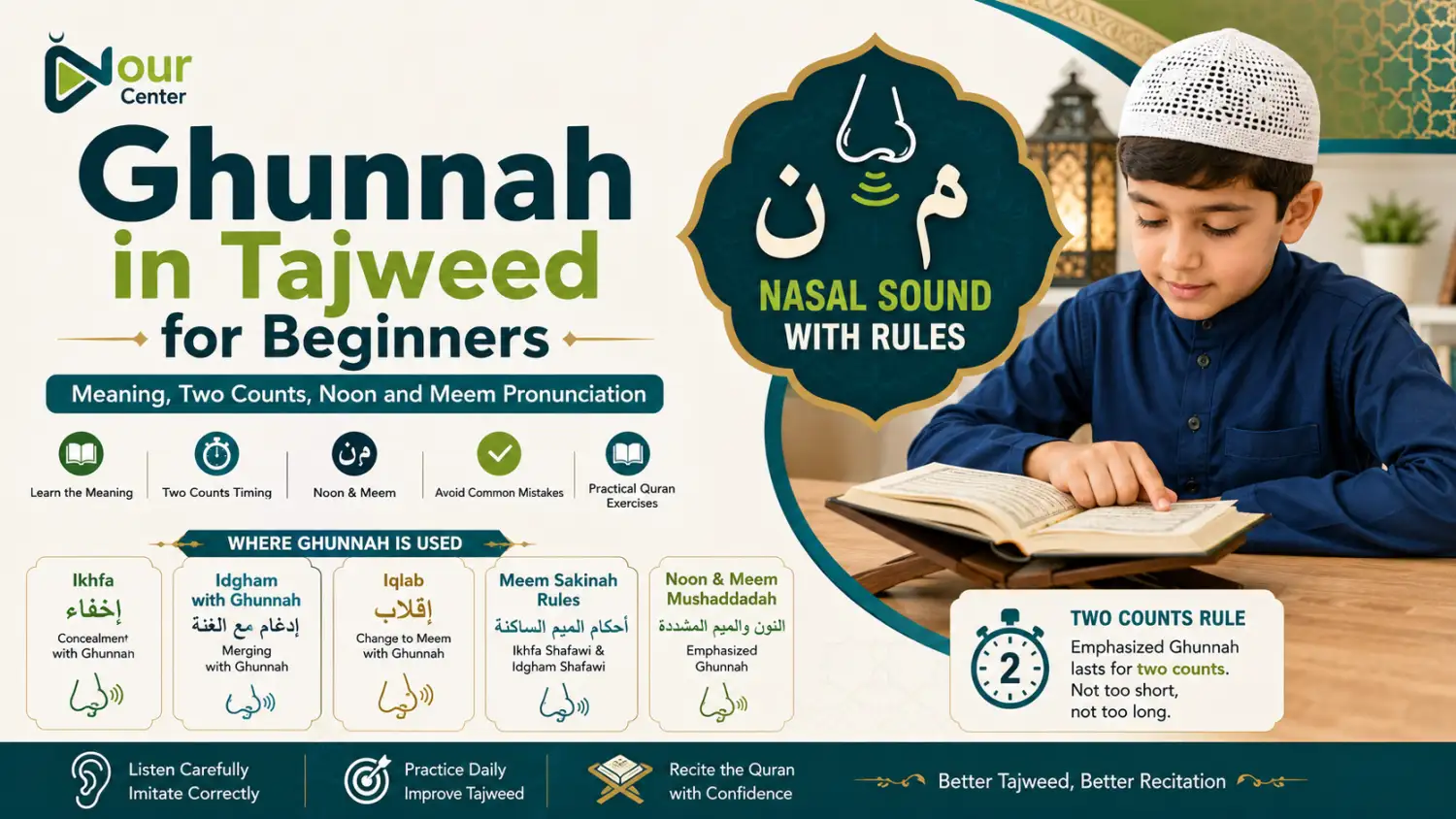
Learn Ghunnah in Tajweed for beginners, including its meaning, two-count timing, Noon and Meem pronunciation, common mis...
Read Article →