
quranic-arabic-for-beginners
Learn how to learn Arabic online with a practical step-by-step plan covering the alphabet, pronunciation, reading, vocab...
Read Article →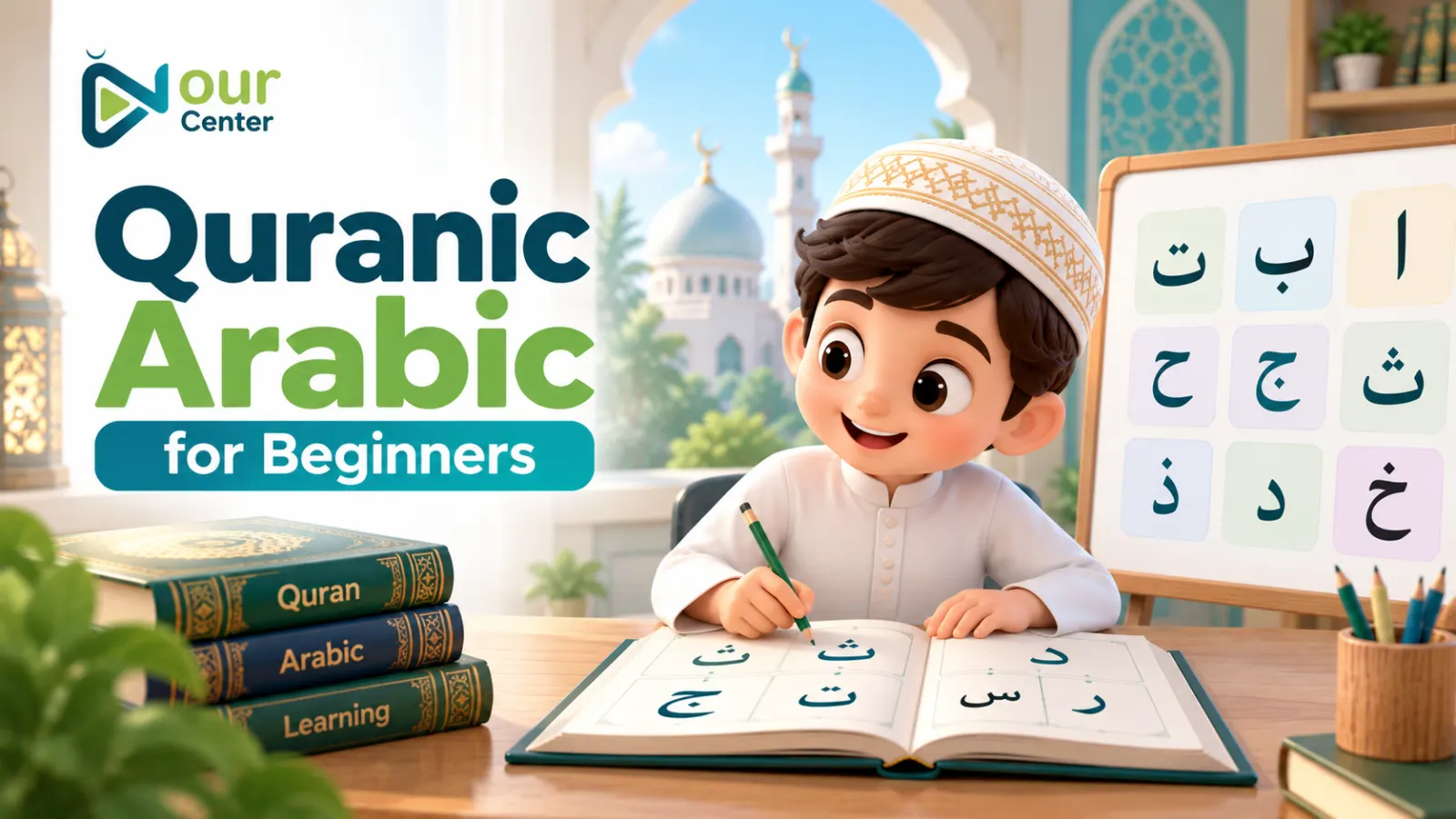
Start Understanding Quran Vocabulary
Quranic Arabic for Beginners is the natural next step for students who can already recognize Arabic letters and read basic Arabic words but want to understand more of what they are reading. Learning to pronounce Arabic is an important achievement. But many students eventually reach a new stage. They can look at Arabic text and read the sounds, yet they still ask: What does this word mean?
Why does this word look similar to another word?
Why does the ending change? How can I begin understanding Quranic vocabulary without becoming overwhelmed by advanced grammar? These are excellent questions. The transition from reading Arabic to understanding Quranic Arabic should be gradual. Beginners do not need to memorize an entire dictionary or master advanced Arabic grammar before they can start recognizing meaningful words.
Frequently recurring vocabulary. Common particles and prepositions. Simple pronouns. Basic verb patterns. Arabic roots. Word families. Repeated reading in context. Students who can already follow How to Read Arabic Words for Beginners are ready to shift part of their attention from decoding the script to recognizing recurring Quranic vocabulary and meaning.
This guide explains Quranic Arabic for beginners step by step and shows how to move from pronunciation toward vocabulary recognition, basic word analysis, and deeper understanding.
What Is Quranic Arabic? Quranic Arabic refers to the Arabic language of the Quran. It belongs to the Classical Arabic tradition and has close connections with the broader grammatical and vocabulary system studied in formal Arabic.
Vocabulary found in the Quran. Classical grammatical structures. Word roots. Verb forms. Pronouns. Particles. Sentence patterns. How meaning changes through word structure. The goal is not simply to speak conversational Arabic. The goal is to develop the language skills needed to understand the Quranic text more directly. Is Quranic Arabic Different From Modern Standard Arabic?
Quranic Arabic and Modern Standard Arabic are closely related, but they are not identical in every aspect of vocabulary, style, grammar, and usage.
Students who learn Modern Standard Arabic will recognize many structures and words that are useful for Quranic Arabic. Likewise, Quranic Arabic study provides a strong foundation for understanding formal Arabic. However, the Quran contains Classical Arabic vocabulary, grammatical constructions, rhetorical features, and expressions that deserve focused study. For a beginner, there is no need to become worried about these differences immediately.
Letters. Pronunciation. Vocabulary. Roots. Basic grammar. Then become more specialized as your understanding grows. Can You Learn Quranic Arabic Without Speaking Arabic? Yes. Many students begin Quranic Arabic because their main objective is Quran comprehension rather than everyday conversation.
Reading. Vocabulary. Grammar. Word analysis. Quranic expressions. without first becoming fluent in conversational Arabic. However, broader Arabic study can still strengthen your overall language ability. The key is to match the course with your goal. If your priority is understanding Quranic Arabic, focus your early vocabulary and grammar around the language that appears in the Quran. Can You Understand the Quran by Learning Vocabulary Alone?
Vocabulary is essential, but vocabulary alone is not enough for full understanding.
Imagine recognizing every individual word in an English sentence but not understanding: Who performed the action. Who received it. Whether the sentence is past or present. How pronouns connect to nouns. How words depend on one another. Arabic grammar performs these functions.
Vocabulary first. Simple grammar alongside vocabulary. More detailed grammar later. You do not need advanced grammar before learning your first Quranic words. But eventually vocabulary and grammar must work together.
Before focusing heavily on vocabulary, make sure you can decode Arabic reasonably well. If almost all your mental energy is spent identifying letters, there is very little attention left for meaning. Students who completed Arabic Alphabet for Beginners should already recognize the 28 Arabic letters automatically enough that vocabulary study does not become a second alphabet lesson. This does not mean your reading must be perfect. You can improve reading and vocabulary simultaneously.
But basic letter recognition should be stable.
Understanding meaning does not remove the need for correct pronunciation. Arabic words can contain letters that seem similar to beginners but are actually distinct.
س and ص ت and ط د and ض ه and ح ك and ق ء and ع ح and خ خ and غ Students who understand Arabic Letter Sounds for Beginners should continue preserving these pronunciation differences while learning Quranic vocabulary because recognizing meaning should not cause the learner to become careless with Arabic sounds.
Understanding. Pronunciation.
Quranic vocabulary appears inside connected Arabic script.
Initial forms. Medial forms. Final forms. Isolated forms. Students who have practiced How to Join Arabic Letters and Read Words will find Quranic vocabulary easier to recognize because familiar letters may appear in several connected forms inside the same word. Once connected forms become automatic, the student can focus much more easily on meaning.
Recognize Words, Not Translate Everything
“I want to understand every word immediately.”
Recognize more today than yesterday.
Allah. Lord. Day. People. Book. Earth. Heavens. Knowledge. Mercy. You may not understand the complete sentence yet. But that recognition is progress. Over time, familiar words begin forming a network. Then grammar helps connect the network into full meaning.
Vocabulary should be learned systematically. Start with words that occur repeatedly across Quranic Arabic rather than rare vocabulary.
Names and descriptions. People. Family. Creation. Time. Places. Actions. Belief. Worship. Guidance. Knowledge. Mercy. Reward. Accountability. Common grammatical words. The exact study order can vary. Frequency and usefulness matter more than alphabetical order.
Beginners often focus only on large nouns and verbs. But short grammatical words can be extremely valuable.
و commonly functioning as “and.” فِي commonly meaning “in.” مِن commonly meaning “from.” إِلَى commonly meaning “to” or “toward.” عَلَى commonly meaning “on” or “upon.” لَا often associated with negation. These short words appear frequently and help reveal sentence structure. A learner who recognizes common particles begins seeing relationships between larger vocabulary words.
Consider reading a sentence while recognizing only the large nouns.
book. people. earth. But the meaning remains unclear.
in. from. to. and. not. the structure becomes much easier to follow. This is why a beginner vocabulary list should include grammatical words, not only nouns.
Arabic pronouns are also extremely important.
I. We. You. He. She. They. But Arabic pronouns can also attach directly to words. A beginner may therefore encounter a familiar noun or verb with an additional ending.
Is there a pronoun attached here? This question becomes increasingly useful as you progress.
Nouns. Verbs. Prepositions.
his. their. your. them. The beginner does not need to memorize every possible ending on the first day. Learn the most common patterns gradually. When you see a familiar word with a new ending, compare it with the base form. This develops morphological awareness.
One of the most useful ideas in Quranic Arabic is the root system. Many Arabic words are built around a root consisting commonly of three consonants. Different patterns can build related words from the same root. For example, a root may relate broadly to an idea such as: Knowledge. Writing. Mercy. Worship. Guidance. The exact meaning depends on the pattern and context. But recognizing the root can help a student see relationships between unfamiliar words.
Root study is powerful. But beginners sometimes overuse it. They see a familiar root and assume every derived word has exactly the same meaning. That is not reliable. A root gives a family relationship. The actual word pattern and context determine the specific meaning.
Recognize the root. Identify the pattern when possible. Learn the actual vocabulary item. Check the context. Do not translate solely from the root.
Instead of memorizing unrelated words one by one, build word families. If you learn several words sharing a root, each new word becomes easier to remember. This creates connections in memory.
Word A. Word B. Word C.
These words belong to the same family. This is one reason morphology becomes so useful in Quranic Arabic. What Is Arabic Morphology? Arabic morphology, often associated with the study of Sarf, examines how words are built and how their forms change.
What is the root? Is this a verb? Is this a noun? Is something attached to the word? Does the form indicate a person or number? Advanced morphology contains much more detail. But beginners benefit from basic pattern awareness early. What Is Arabic Grammar? Grammar, often associated with Nahw, explains how words function together in sentences.
Who performed the action? What is being described? Which word belongs to another? What role does the noun play? How do prepositions affect words? Why does the ending change? Again, beginners should not start with the most advanced theory. Learn enough grammar to support comprehension. Then deepen it over time.
A learner with almost no vocabulary may struggle to appreciate grammar examples. If every word in an example is unfamiliar, the grammar rule becomes harder to see. Therefore, build a small vocabulary foundation first. Then use familiar vocabulary to learn grammar. This makes grammar more practical.
New vocabulary. A simple grammar rule. Reading practice. Word analysis. Review. Rather than studying grammar in isolation for months.
People. Places. Objects. Ideas. Qualities. Beginners can begin building Quranic vocabulary through familiar semantic categories.
Arabic spelling. Pronunciation. Basic meaning. Plural if useful. Related root if appropriate. A short example phrase if possible. Avoid trying to memorize ten grammatical properties of every new word.
Verbs are essential because they communicate actions and states.
said. created. knew. believed. guided. worshipped. gave. made. saw. heard. The Arabic forms vary by person, number, gender, tense, and pattern. At first, focus on recognizing the core verb family. Then learn how the forms change.
A useful early grammar milestone is distinguishing broad past and present verb patterns. You do not need complete conjugation mastery immediately.
How common past forms look. How common present forms often begin. How pronouns affect endings. This helps you identify whether a word is likely functioning as a verb. Once you recognize the structure, vocabulary becomes easier to organize.
Literal word-by-word translation is helpful during early analysis. But natural meaning does not always match one English word for every Arabic word. Arabic and English organize meaning differently.
First understand the individual vocabulary. Then understand the grammatical relationship. Then understand the phrase. Finally understand the sentence as a whole. Avoid forcing every Arabic structure into English word order.
Single-word flashcards are useful. But phrases provide context.
Word A = meaning A. learn short combinations.
Prepositions. Pronouns. Adjectives. Possessive structures. Verb relationships. Context improves memory and comprehension.
A vocabulary word becomes much easier to remember when you encounter it repeatedly.
Its shape. Its pronunciation. Its meaning. Its grammatical behavior. This is why consistent reading is valuable. Do not only memorize a list. Return to real Quranic text and try to find familiar words. Recognizing a studied word in context is a powerful learning experience.
Arabic word. Basic meaning. Root. Example or note.
Word type. Related word. Pronoun form. But keep the system manageable. A vocabulary notebook that takes ten minutes to update is useful. A complicated system that takes an hour may become difficult to maintain. How Many New Words Should a Beginner Learn? There is no perfect number. Five carefully reviewed words can be more valuable than fifty words memorized once and forgotten. Start with a sustainable amount.
A small daily group. Review yesterday's words. Add a few new ones. Use them in context. Test yourself later. The best vocabulary plan is one you can maintain consistently.
Vocabulary is forgotten when it is never revisited.
Soon after learning. Again later. Again after several days. Again after a longer interval. The exact schedule can vary.
Do not study a word once and assume it is permanently memorized. Repeated retrieval strengthens memory.
Arabic → meaning.
Meaning → Arabic. For Quran comprehension, Arabic-to-meaning recognition is especially important. When you see the word in a Quranic context, the meaning should begin appearing in your mind without requiring transliteration.
At this stage, transliteration should become increasingly unnecessary. You already know Arabic letters. You are learning Quranic Arabic. Your vocabulary cards should preferably use Arabic script directly.
Arabic word → pronunciation and meaning.
Arabic word → English spelling → pronunciation → meaning. Removing the extra step improves fluency.
Vocabulary is not only visual. Listen to the word correctly pronounced. Then repeat it.
Recognition. Pronunciation. Listening. Memory. For difficult Arabic letters, audio is particularly helpful. Do not memorize a vocabulary word using an incorrect pronunciation.
Suppose you learn a word.
Is it a noun? A verb? A particle? Can I see a root? Is there a prefix? Is there a suffix? Is a pronoun attached? You do not need to answer every question every time. The habit of looking at structure gradually transforms reading ability. You begin seeing words as systems rather than large unbroken shapes.
Arabic can attach small elements to words.
Conjunction. Preposition. Definite article. Pronoun. Verb person. Number. Gender. A beginner may initially think every new combination is a completely different vocabulary item.
Core word. Attached element. This greatly expands comprehension.
ال commonly associated with the definite article. Once this becomes familiar, you begin seeing the underlying noun more easily. A word you already know may look slightly different when the definite article is attached. Do not memorize both as unrelated words. Recognize the structure.
و can function as the conjunction “and.” Because it attaches directly to the following word in Arabic writing, beginners sometimes treat the entire combination as a new vocabulary item.
و + word This small skill can dramatically improve word recognition.
Prepositions are excellent beginner vocabulary because they occur frequently and affect sentence relationships.
in. from. to. upon. with. for. Recognizing these words makes longer passages easier to segment. The student begins seeing smaller grammatical units inside the text.
Question-related vocabulary can also be valuable. Depending on the material, beginners may encounter forms associated with ideas such as: who. what. where. how. When. Learning these helps students understand sentence purpose rather than only individual nouns.
Arabic has several structures used for negation. A beginner does not need to master all their grammatical differences immediately. Start by recognizing the most common forms encountered in your course. Then learn how each one functions. Avoid translating every negative word as identical in every context. Grammar study will gradually clarify their differences.
Attached pronouns are especially important.
him. them. you. us. their. your. our. This can make the word look unfamiliar.
Do I know the beginning of this word? Could the ending be a pronoun? This simple habit can reveal vocabulary you already know.
Thematic learning can make vocabulary easier to remember.
Creation. Family. People. Time. Places. Knowledge. Guidance. Worship. Mercy. Good character. Accountability. Nature. Actions. Instead of memorizing twenty unrelated words, learn a small connected group. Themes create mental associations.
Another method is root-based learning. Choose a useful root. Learn several related words. Observe what they share. Then notice how the pattern changes the meaning. This approach becomes increasingly valuable as the learner progresses.
Frequency. Theme. Root. Do not use only one method.
Choose a short passage appropriate for your level.
Focus on pronunciation.
Circle or note familiar vocabulary.
Identify simple particles.
Look at new vocabulary.
Read again with meaning in mind. Repeated study transforms the passage from unfamiliar text into understandable language.
Vocabulary. Roots. Pronouns. Verb forms. Case endings. Particles. Rhetorical features. Tajweed rules. Trying to analyze all of them simultaneously can overwhelm a beginner. Choose one learning objective.
Today I will identify known vocabulary. Tomorrow I will examine pronouns. Later I will study the grammar. Layered learning is more sustainable.
How should this letter be pronounced? How long should this vowel be? What recitation rule applies here?
What does this word mean? What is its root? What is its grammatical role? Both are valuable. But during a focused exercise, it can help to know which skill you are practicing. Eventually they support each other. Do You Need Tajweed to Learn Quranic Arabic? You do not need to master every advanced Tajweed rule before starting vocabulary study. However, correct basic Quran reading is valuable.
Pronunciation. Reading. Vocabulary. Grammar. to develop together at appropriate levels. Do not delay understanding for years until Tajweed feels perfect. And do not abandon pronunciation because you have begun studying meaning.
This gives the vocabulary several memory connections.
Review five previous vocabulary words.
Learn two new words.
Read the words aloud.
Find them in context or review an example phrase.
Test yourself without looking at the meanings.
Review previous vocabulary.
Learn a small group of new words.
Study one simple grammar point.
Read a short passage.
Identify familiar words in that passage.
Arabic reading warm-up.
Vocabulary review.
New vocabulary.
Basic grammar or morphology.
Short Quranic text analysis.
Review and self-testing. Daily consistency is more useful than occasional marathon sessions.
Vocabulary Foundation
Learn a small set of common words.
Common Particles
Study short grammatical words such as common conjunctions and prepositions.
Begin recognizing independent and attached pronouns.
Learn how related words can share core consonants.
Study several high-use verb families.
Identify vocabulary and basic structures in a manageable passage.
Test vocabulary, roots, particles, and simple grammar from the week. Repeat the cycle with new material.
Memorizing Huge Vocabulary Lists
Learning hundreds of words quickly can create the illusion of progress. But if they are not reviewed, much of that vocabulary disappears. Learn smaller groups. Review them. Use them.
Learning Only English Translations
A vocabulary word is more than a translation pair.
Arabic spelling. Pronunciation. Basic meaning. Context. Root when useful. This creates stronger understanding.
Ignoring Grammar Completely
Vocabulary alone eventually reaches a limit. Begin adding simple grammar early enough that you can understand relationships between words.
Starting With Advanced Grammar
The opposite problem is spending months studying complex grammatical terminology before recognizing basic Quranic vocabulary. Keep grammar proportional to your level.
Treating Every Derived Word as Identical
Words sharing a root are related. They are not necessarily interchangeable. Learn the specific form and meaning.
Using the Root as a Translation
The root helps identify a semantic family. It does not replace the actual dictionary meaning or context of the derived word.
Ignoring Short Words
Conjunctions. Prepositions. Pronouns. Negation. These small words are essential for understanding sentence structure.
Depending on Transliteration
You have already learned Arabic reading. Use Arabic script directly.
Ignoring Pronunciation
Do not learn vocabulary using incorrect Arabic sounds. Continue Makhrij and pronunciation practice.
Studying Words Without Context
Vocabulary becomes easier to remember when you see how it functions in a phrase or sentence.
Trying to Understand Every Word Immediately
Partial understanding is still progress. Recognize what you know. Mark what you do not know. Continue learning.
Translating Arabic in English Word Order
Arabic sentence structure can differ from English. First understand the Arabic relationship. Then express the meaning naturally.
Ignoring Attached Pronouns
A familiar word with a pronoun ending may look completely new. Learn to separate the core word from attached elements.
Never Reviewing Vocabulary
New words need repeated retrieval. Review is part of learning, not optional extra work.
Measuring Progress Only by Number of Words
Knowing 500 words poorly is not automatically better than knowing 200 words well and recognizing them rapidly in context.
Recognition. Retention. Contextual understanding. Reading improvement.
Use the word in several ways. Read it. Say it. Write it. Recall its meaning. Find its root. See it in context. Review it later. The more useful connections the brain creates, the easier recall becomes.
Flashcards can be very effective if used correctly.
Arabic word.
Basic meaning and perhaps a short note. Avoid placing too much information on every card. One card should test one clear idea.
Plural forms. Roots. Verb forms. Grammar. Keep the beginner deck simple. Should You Write Arabic Vocabulary by Hand? Writing can strengthen visual memory.
Letter connections. Dots. Word structure. Prefixes. Suffixes. You do not need to copy every word twenty times. A small amount of careful writing can complement reading and listening.
Use reliable Arabic audio together with the written word. Follow the script. Listen. Pause. Repeat.
Visual recognition. Pronunciation. Listening comprehension. It is especially useful for students whose reading is stronger than their listening.
As your vocabulary grows, maintain a simple personal record.
Theme. Root. Lesson. Or alphabetically. Choose whichever system you can maintain. The purpose is not to create a professional dictionary. The purpose is to create a useful review tool. When Should Beginners Start Grammar? Start simple grammar once you have enough vocabulary to see the rule in action.
Basic noun and verb recognition. Pronouns. Prepositions. Definite article. Simple adjective relationships. Basic possession structures. Introductory verb forms. You do not need to wait until you know thousands of words. Vocabulary and grammar can grow together. When Should Beginners Study Sarf? Basic morphology can begin early.
Recognizing roots. Recognizing common prefixes. Recognizing common suffixes. Comparing related words. More systematic Sarf can come later. The objective is to make word structures easier to understand, not to overwhelm the student with terminology. Can Children Learn Quranic Arabic? Yes. Children can begin with age-appropriate vocabulary and simple meaning-based activities. A child does not need advanced grammatical terminology.
Picture vocabulary. Word matching. Short phrases. Repeated Quranic vocabulary. Simple root families. Teacher-led questions. Short regular lessons. The complexity should grow with the child's age and language ability. Can Adults Learn Quranic Arabic From Zero? Yes. Adults often benefit from understanding the logic behind Arabic structure.
Alphabet. Letter sounds. Harakat. Connected reading. Word reading. Vocabulary. Roots. Grammar. Comprehension. Adults should avoid assuming they are “too old” to learn the system. Consistent structured practice matters more than beginning at a particular age. Can You Learn Quranic Arabic Online? Yes.
Live instruction. Reading practice. Vocabulary. Grammar. Screen-based text analysis. Teacher pronunciation. Homework. Review. The learner can see the Arabic text and discuss individual words directly with the teacher. Live correction is especially useful for both pronunciation and grammatical understanding.
At Nour Center, one-to-one online Arabic lessons can help learners move from basic reading toward Quranic Arabic comprehension.
Arabic reading. Pronunciation. Quranic vocabulary. Common particles. Pronouns. Arabic roots. Word families. Basic Sarf. Basic Nahw. Short text analysis. Vocabulary review. Reading comprehension. The course can be adjusted according to the learner's starting point. A student who already reads Arabic fluently may move into vocabulary and grammar quickly. A complete beginner may first need additional reading practice.
Quranic Arabic students often have very different backgrounds. One learner may read fluently but understand almost nothing. Another may know vocabulary but struggle with grammar. Another may understand spoken Arabic but find Classical Arabic structures difficult. A one-to-one teacher can identify the real gap. This allows the lesson to focus on what the learner actually needs. How Do I Know My Quranic Arabic Is Improving?
You recognize common vocabulary without transliteration. You notice familiar roots. You identify common particles. You recognize basic pronouns. You can distinguish nouns and verbs more often. You recognize familiar words even when prefixes or suffixes are attached. You understand short phrases without translating every word individually. You need the dictionary less often for frequently studied vocabulary. You can explain the general meaning of a simple passage. You notice grammar patterns you previously ignored.
You remember vocabulary from earlier lessons. You read and understand at the same time more comfortably. Progress does not mean understanding every passage immediately. It means the amount of unfamiliar language gradually decreases. What Should You Do When You Do Not Know a Word? Do not panic. Use a simple process.
Read the word correctly.
Look for familiar attached elements.
See whether you recognize the root.
Consider the surrounding context.
Check a reliable dictionary or teacher. Then record the vocabulary if it is useful. This is much better than guessing confidently from the root alone.
Known word. Unknown word. Known word. Unknown word. Then the ratio begins changing. More words become familiar. Grammar makes their relationship clearer. Eventually you begin understanding complete phrases. This is the real transition from reading to comprehension.
Language understanding develops cumulatively. The alphabet supports reading. Reading supports vocabulary. Vocabulary supports grammar. Grammar supports comprehension. Comprehension makes future vocabulary easier to learn. Each skill strengthens the others. There is no need to skip foundational stages.
Arabic alphabet and pronunciation.
Harakat, Sukoon, Shaddah, and Tanween.
Connected letters and word reading.
Core Quranic vocabulary.
Common particles and pronouns.
Roots and basic morphology.
Simple grammar.
Short-text analysis.
Regular comprehension practice.
Gradually more advanced Classical Arabic study. This progression keeps the learning process manageable. What Comes After Quranic Arabic for Beginners? After building a basic Quranic Arabic foundation, learners can expand into: More Quranic vocabulary. Verb conjugation. Pronouns. Sarf. Nahw. Sentence analysis. Classical Arabic reading. Tafsir vocabulary. Deeper Quran comprehension. However, the final article in this beginner Arabic series will step back and organize the entire journey into one practical learning plan:
A Step-by-Step Plan for Beginners.
Alphabet. Pronunciation. Reading. Vocabulary. Grammar. Listening. Speaking. Quranic Arabic. Teacher-led study. Daily practice. into one sustainable learning routine.
Quranic Arabic for Beginners is the bridge between reading Arabic words and beginning to understand their meaning. Do not expect to understand the entire Quran after memorizing a short vocabulary list. Instead, build the language gradually.
Strong letter recognition. Accurate pronunciation. Connected word reading. Frequently recurring vocabulary. Common particles. Pronouns. Roots. Word families. Simple morphology. Basic grammar. Repeated reading in context.
Vocabulary and grammar support each other. Roots help identify word families but do not replace context. Short grammatical words are extremely important. Attached pronouns can make familiar words look unfamiliar. Transliteration should gradually disappear. Vocabulary needs repeated review. Reading aloud strengthens recognition and pronunciation. Context makes words easier to remember. The goal is not simply to collect Arabic words. The goal is to begin seeing how Arabic words work together.
At first, you may recognize only a few words in a passage. Then you recognize more. Then you begin identifying patterns. Eventually, familiar vocabulary and grammar combine into meaningful phrases. With consistent study, Quranic Arabic gradually changes from text that you can only pronounce into language that you can increasingly understand.
Note: Comments may require approval before appearing publicly.
Learn how to learn Arabic online with a practical step-by-step plan covering the alphabet, pronunciation, reading, vocab...
Read Article →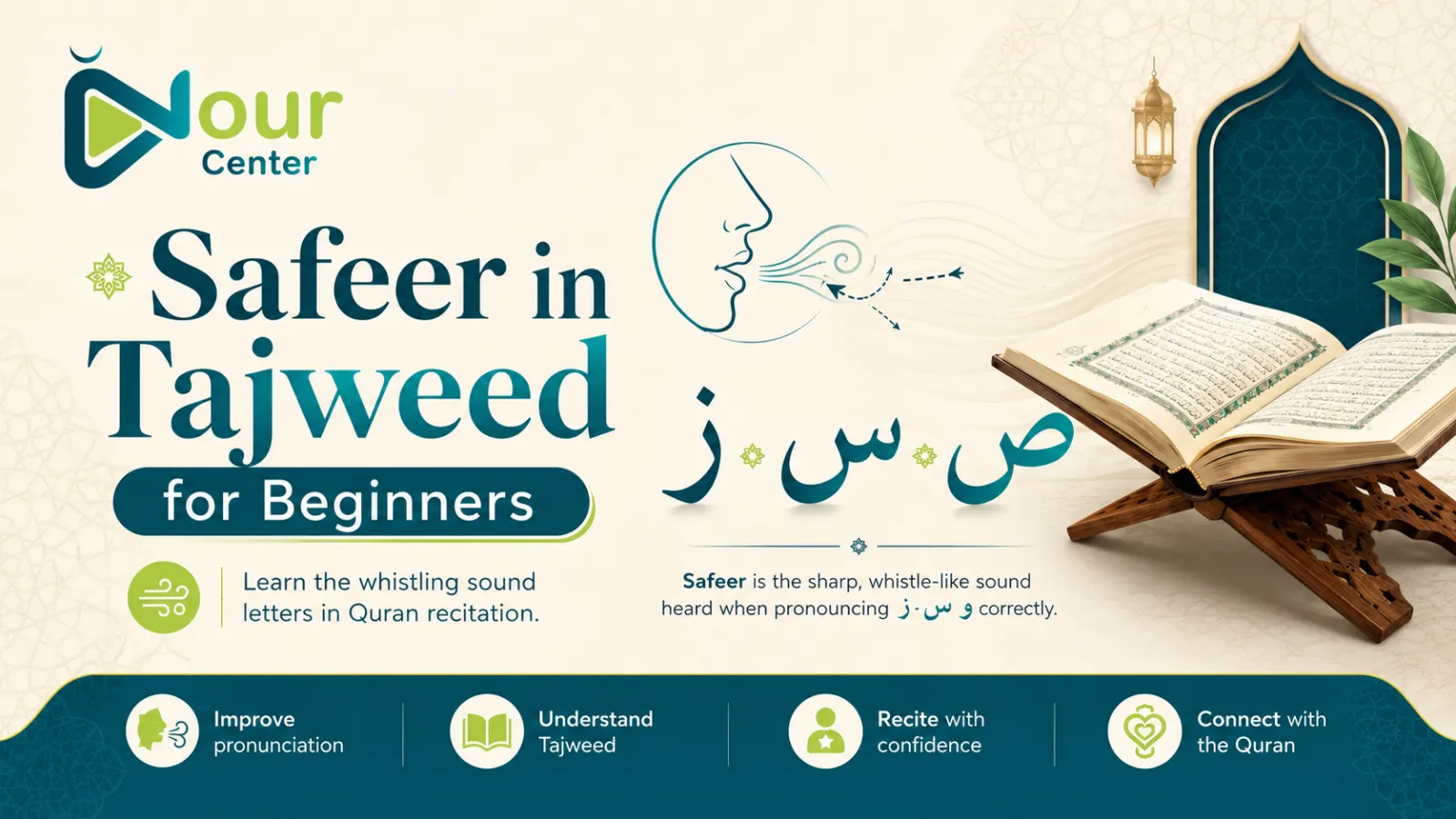
Learn Safeer in Tajweed for beginners, the three Safeer letters, how the whistling sound is produced, common pronunciati...
Read Article →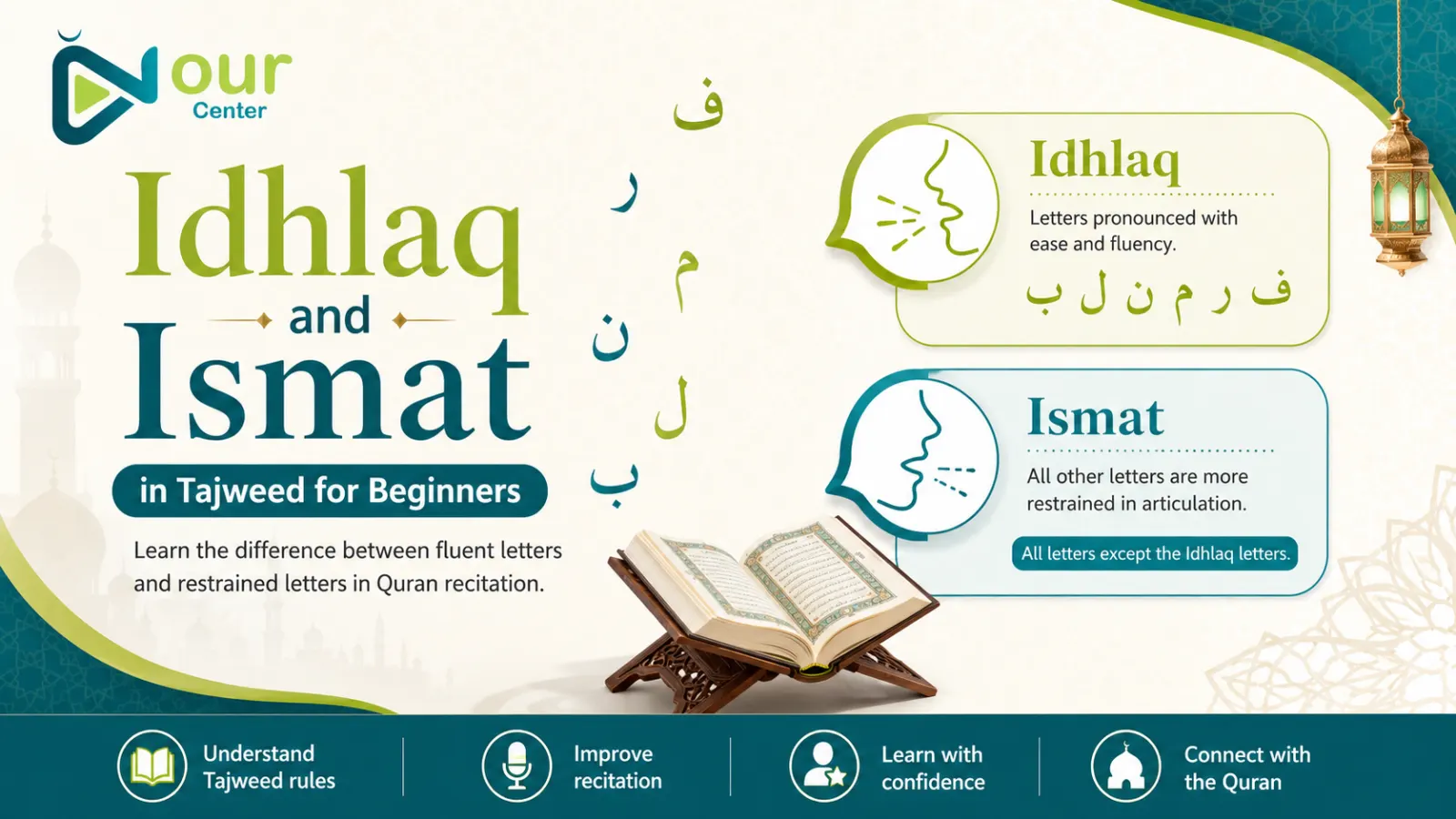
Learn Idhlaq and Ismat in Tajweed for beginners, the six Idhlaq letters, their pronunciation characteristics, the differ...
Read Article →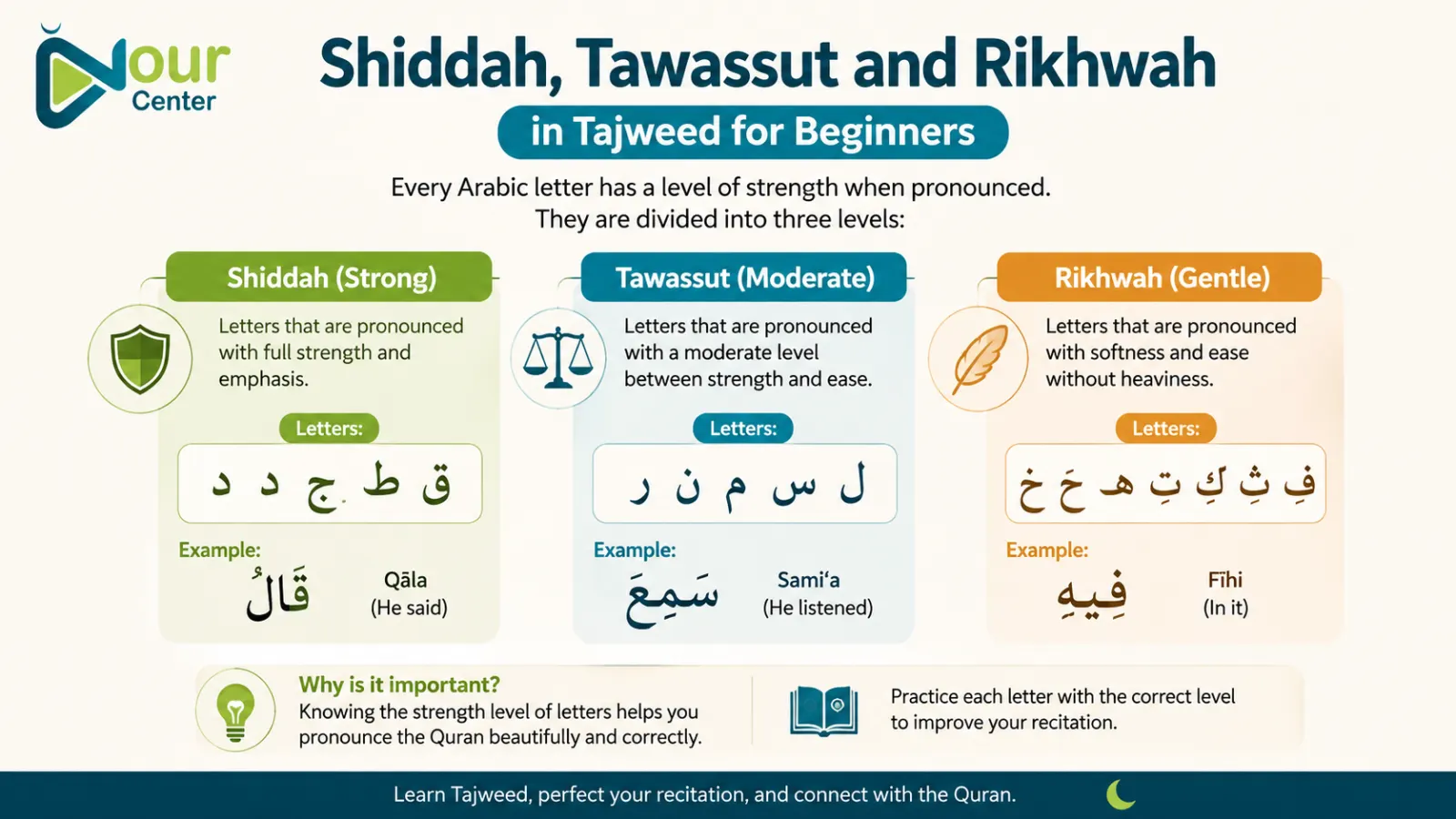
Learn Shiddah, Tawassut, and Rikhwah in Tajweed for beginners, how sound stops or flows through Arabic letters, common m...
Read Article →