Tajweed for Kids: A Beginner’s Guide to Correct Quran Recitation
Learn Tajweed for kids step by step, from correct Arabic pronunciation and Makharij to Madd, Ghunnah, Qalqalah, stopping...
Read Article →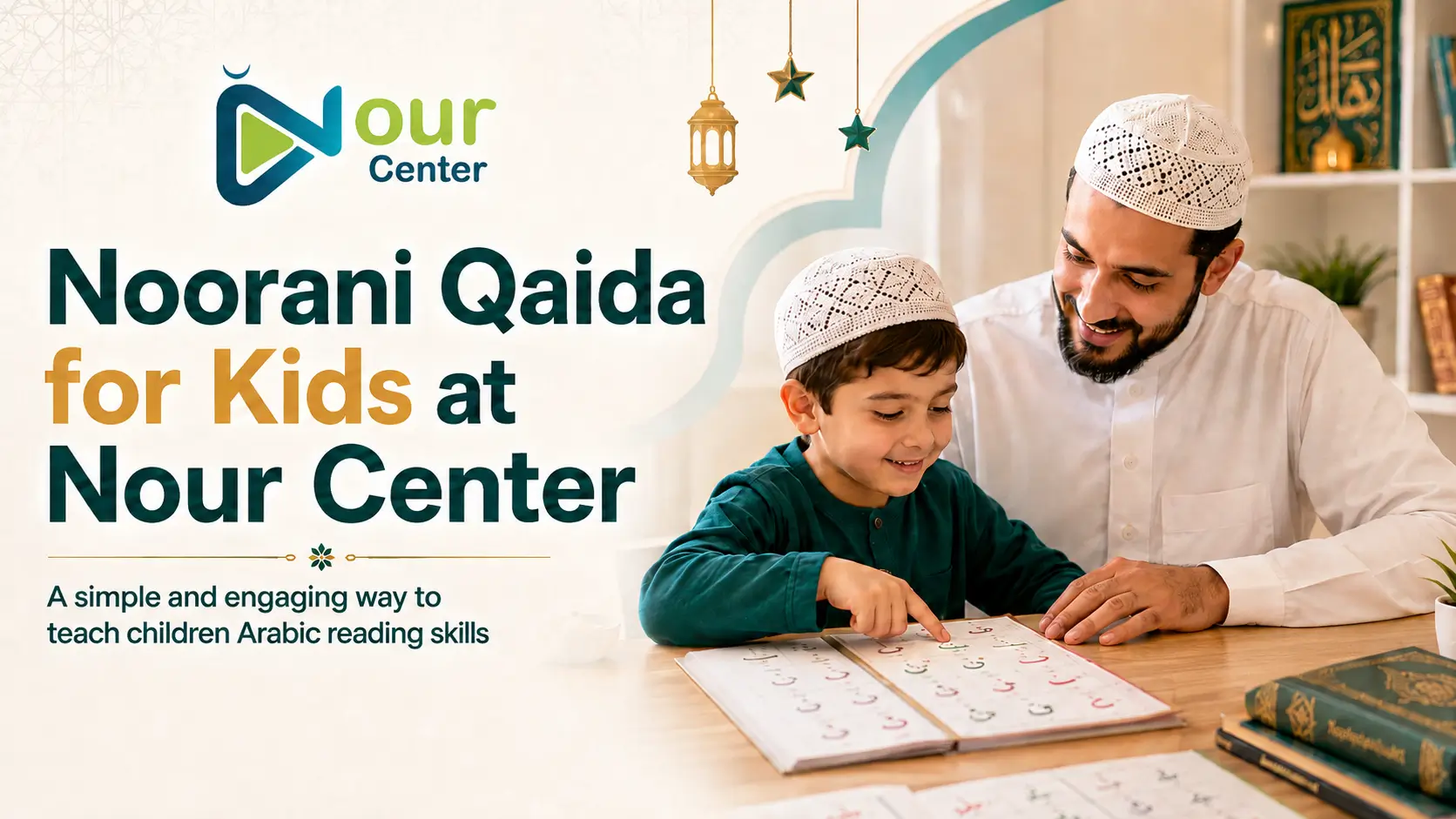
How Nour Center Teaches Arabic and Quran Reading Step by Step
Learning to read the Quran correctly begins with a strong foundation. For many children, especially those growing up in non-Arabic-speaking countries, learning Arabic letters, sounds, and pronunciation can feel difficult at first. This is where Noorani Qaida can be extremely helpful. Noorani Qaida is a structured method that introduces children to Arabic letters and gradually teaches them how to join letters, recognize vowel signs, pronounce words correctly, and prepare for Quran reading.
At Nour Center, Noorani Qaida is taught through live online one-to-one lessons designed to help children progress at a comfortable pace while developing confidence and accurate pronunciation. What Is Noorani Qaida? Noorani Qaida is a beginner-level learning method used to teach Arabic reading skills that are especially useful for reading the Quran. It starts with the Arabic alphabet and gradually moves toward more advanced reading patterns.
Children learn how individual Arabic letters look and sound before moving on to combinations of letters, short vowels, long vowels, Sukoon, Shaddah, Tanween, and other important reading rules.
The method is designed to build skills step by step rather than asking a beginner to read complete Quranic verses immediately. This makes Noorani Qaida especially useful for young children and non-Arabic-speaking students. Why Is Noorani Qaida Important for Children? A child who begins Quran reading without understanding the Arabic letters and sounds may develop pronunciation mistakes that become difficult to correct later.
Noorani Qaida helps prevent this by focusing first on the basic building blocks of Arabic reading.
Children learn to recognize letters quickly, pronounce them clearly, and understand how their sounds change when different vowel marks are added. This creates a stronger foundation before they begin reading longer Quranic words and verses. For parents, Noorani Qaida also provides a clear learning path. Instead of wondering what a child should study next, the lessons follow a structured progression from simple skills to more advanced ones. Who Can Learn Noorani Qaida?
Noorani Qaida is suitable for many types of learners.
Young children beginning Arabic for the first time. Children who can recognize some Arabic letters but cannot read words confidently. Non-Arabic-speaking Muslim children. Beginners preparing to read the Quran. Students who struggle with Arabic pronunciation. Children who need to correct basic Quran reading mistakes. Students returning to Quran learning after a long break. Every child begins at a different level.
For this reason, teachers at Nour Center first identify the student's current reading ability before deciding where to begin.
Some children may start with the Arabic alphabet, while others may already be ready to practice joined letters or vowel signs. How Does Noorani Qaida Help With Quran Reading? The Quran is written in Arabic, and correct reading requires more than simply recognizing the letters. Students need to understand how letters sound, how they connect, and how vowel signs affect pronunciation. Noorani Qaida introduces these skills gradually.
A student may begin by learning individual letters such as Alif, Ba, Ta, and Tha.
After recognizing them independently, the student learns how Arabic letters may look different when they appear at the beginning, middle, or end of a word. The student then begins studying vowel signs and reading small combinations. Over time, these exercises help the child recognize Quranic words more easily. The goal is not to memorize pages of rules. The goal is to train the eyes, tongue, and mind to recognize and pronounce Arabic correctly.
The first stage of Noorani Qaida usually focuses on the Arabic alphabet. Children learn the name and sound of each letter. A teacher may introduce only a small number of letters during a lesson so that the child is not overwhelmed. Students practice identifying letters visually and pronouncing them aloud. Repetition is very important at this stage. The teacher listens carefully and corrects pronunciation immediately.
ب ت ث ج ح خ د ذ ر ز س ش ص ض ط ظ ع غ A trained teacher helps the child notice the visual and pronunciation differences between these letters.
Recognizing a letter is only the first step. Children also need to pronounce each letter from its correct articulation point. Some Arabic sounds do not exist in English or other languages. This can make certain letters challenging for non-Arabic-speaking children. For example, students may need additional practice with letters such as: ح خ ع غ ص ض ط ظ ق At Nour Center, teachers demonstrate each sound clearly and ask the student to repeat it.
The teacher then corrects the student gently until the sound becomes clearer. This direct listening and correction is one of the main advantages of learning Noorani Qaida with a live teacher.
After children become familiar with Arabic letters, they begin learning short vowels. The main short vowel signs are Fathah, Kasrah, and Dammah. These signs change the way a letter is pronounced. For example, instead of seeing only the letter ب, the student begins learning different sounds based on the vowel sign attached to it. Regular practice helps children recognize these patterns automatically.
The teacher may use simple reading exercises and repetition until the child can move from one sound to another smoothly.
Students later learn Tanween. Tanween introduces additional sound patterns that children will frequently encounter while reading Arabic and the Quran. The teacher explains each form separately and gives the child enough practice before combining it with more difficult material. The objective is accuracy before speed. Children are encouraged to read carefully rather than rushing through the exercise.
Long vowel sounds are another important part of Arabic reading. Students learn how letters such as Alif, Waw, and Ya may extend a sound in specific situations. Understanding the difference between short and long sounds is important for Quran reading. A child who does not recognize these differences may shorten a sound that should be extended or extend a sound that should be short.
Noorani Qaida gives the student repeated exposure to these patterns before they begin appearing frequently in Quran reading.
Sukoon indicates that a letter does not carry a vowel sound. For beginners, reading letters with Sukoon can require careful practice because the student needs to connect the letter correctly with the sound before it. Teachers usually demonstrate the pronunciation first. The child then repeats the pattern until the transition becomes natural. This stage helps improve fluency because Quranic words often contain combinations that require the student to understand Sukoon correctly.
Shaddah is another important sign that children need to understand. It indicates a strengthened or doubled consonant sound. Students often need listening practice to understand how Shaddah affects pronunciation. A teacher can demonstrate the difference between a normal letter and a letter carrying Shaddah. This type of direct correction is especially important because young learners may not notice their own pronunciation errors.
Arabic letters change shape depending on their position inside a word. A child who knows individual letters may still struggle when those same letters are connected. Noorani Qaida gradually introduces joined letters so the student learns how to recognize them inside words. The teacher helps the child identify each letter even when its written shape changes. With practice, students begin recognizing complete patterns rather than stopping at every individual letter.
This is an important step toward fluent Quran reading.
The purpose of Noorani Qaida is to prepare students for actual Quran reading. Once a child becomes confident with Arabic letters, vowel marks, joined letters, Sukoon, Shaddah, Tanween, and other reading patterns, the transition to Quran reading becomes much easier. At this stage, the teacher may begin with short Surahs or selected verses suitable for the student's reading level. The teacher listens while the student reads and corrects pronunciation mistakes.
Students do not need to become fast readers immediately. Correct reading should come first. Fluency develops gradually through regular practice.
At Nour Center, Noorani Qaida lessons are designed to be structured, personal, and suitable for children. The focus is not simply on finishing a book. The goal is to make sure the child understands each stage and can apply it correctly.
Children learn through individual live lessons with a teacher. One-to-one teaching allows the teacher to focus completely on one student's pronunciation, reading ability, and progress. If the child needs more time on a particular letter or sound, the teacher can slow down. If the child learns quickly, the teacher can move forward without waiting for a group. This creates a more flexible learning experience.
The course follows a gradual progression. A beginner is not expected to read difficult words immediately. The teacher starts from the student's actual level and develops one skill at a time.
Recognizing Arabic letters. Pronouncing individual letters. Learning short vowels. Learning Tanween. Practicing long vowels. Learning Sukoon. Learning Shaddah. Reading joined letters. Reading complete Arabic words. Beginning Quran reading. This progression helps children understand how each lesson connects to the next.
Children need feedback while learning Arabic pronunciation. Simply watching recorded videos may not reveal whether a child is pronouncing a letter correctly. During live lessons, the teacher can hear each sound and correct errors immediately. This helps prevent mistakes from becoming habits. The teacher may repeat a sound several times, show the child how it should be pronounced, and then ask the student to try again. Lessons Suitable for the Child's Age
Young children have different learning needs from adults. Long explanations and difficult terminology may cause them to lose concentration. For this reason, lessons should be simple, focused, and appropriate for the child's age. Teachers can use repetition, visual recognition, short exercises, encouragement, and frequent review. The aim is to keep the child actively involved rather than simply listening for the entire lesson.
Children learn better when they feel comfortable making mistakes. A beginner will naturally mispronounce letters or forget previous lessons. This is part of the learning process. Teachers at Nour Center can correct mistakes while encouraging the student to keep trying. Parents should also avoid comparing one child with another. Some children learn quickly, while others need more repetition. Consistent progress is more important than completing Noorani Qaida as fast as possible.
Revision is essential. A child may recognize a letter during one lesson and forget it several days later. For this reason, previously learned material should be reviewed regularly. A lesson may begin with a short revision before introducing new material. This helps strengthen memory and gives the teacher an opportunity to identify weak areas. Parents can also support this process with short practice sessions at home. How Often Should Children Study Noorani Qaida?
Consistency is usually more useful than occasional long lessons. The exact schedule depends on the child's age, attention span, school commitments, and learning ability. Some children may benefit from several short lessons each week. Others may prefer fewer lessons with additional home practice. The most important factor is regular contact with the material. If too much time passes between lessons, young children may forget what they previously learned. A structured weekly schedule helps maintain progress.
How Long Does It Take to Complete Noorani Qaida? There is no single timeline for every child.
The child's age. Previous knowledge of Arabic. Frequency of lessons. Home practice. Ability to recognize letters. Pronunciation difficulties. Concentration during lessons. Some students may progress rapidly, while others need additional time. Completing Noorani Qaida should not become a race. A child who finishes slowly but develops accurate reading skills may have a stronger foundation than a child who rushes through the lessons. Can Non-Arabic-Speaking Children Learn Noorani Qaida? Yes.
Noorani Qaida is especially useful for children who do not speak Arabic at home.
The method begins with basic sounds and gradually builds reading skills. Students do not need to be fluent Arabic speakers before they start. A qualified teacher can explain the exercises in a language the child understands while helping the student become familiar with Arabic sounds. Regular exposure makes the letters and patterns increasingly familiar. Can Young Children Learn Noorani Qaida Online?
Online learning can work very well when the lesson is interactive and adapted to the child's age.
A live teacher can see and hear the student, demonstrate pronunciation, ask questions, and correct reading immediately. Parents can help younger children prepare the device and learning materials before class. A quiet environment also makes it easier for the child to concentrate. Short, focused lessons are often better for younger students than very long sessions. The goal is to maintain attention while providing enough repetition to build the required skills.
Parents play an important role in supporting their child's progress. They do not need to become the child's teacher. Instead, they can help create a positive learning routine.
Make sure the child attends lessons regularly. Provide a quiet place for online classes. Encourage short daily practice. Praise effort and improvement. Avoid creating unnecessary pressure. Communicate with the teacher about difficulties. Help the child revise previous lessons. Consistency between the lesson and home environment can greatly improve progress.
Learning Arabic reading can involve several challenges.
Many Arabic letters have similar shapes. Children may confuse them until they become familiar with the dots and other visual differences. Repeated identification exercises can help.
Some Arabic sounds may be unfamiliar to children who speak English or another language. The solution is repeated listening, demonstration, and correction.
Some children try to read quickly before they have developed accuracy. Teachers should encourage slow and correct reading first.
Young children may find it difficult to focus for long periods. Short exercises and interactive teaching can help maintain attention.
Without regular revision, children may forget letters or rules. A consistent revision schedule helps strengthen long-term memory.
Home practice does not need to be long. Even ten or fifteen focused minutes can be valuable when done regularly. A parent can ask the child to identify several letters, repeat sounds from the lesson, or read a short section of the Qaida. It is usually better to practice material already taught by the teacher rather than introducing new rules independently. This prevents confusion and keeps the child following a consistent learning method.
Children do not all make the same mistakes. One child may struggle with letter recognition, while another may have difficulty pronouncing certain sounds. In a one-to-one class, the teacher can identify these individual weaknesses. The lesson can then focus specifically on what the student needs. The teacher can also adjust the pace based on the child's progress. This individual attention is one of the main advantages of Noorani Qaida lessons at Nour Center.
What Comes After Noorani Qaida? Completing Noorani Qaida is the beginning rather than the end of Quran learning. Once students develop a strong reading foundation, they can continue with Quran recitation.
Reading short Surahs. Improving Quran fluency. Correcting pronunciation. Learning basic Tajweed rules. Practicing articulation points. Learning proper stopping and starting. Memorizing selected Surahs. Beginning a structured Quran memorization plan. A strong foundation can make these later stages easier.
Noorani Qaida and Tajweed are closely connected, but they are not exactly the same thing. Noorani Qaida teaches the fundamental reading skills needed before a student can apply more detailed Tajweed rules. A beginner first needs to recognize and pronounce Arabic letters correctly. After developing this foundation, the student can learn rules related to Quran recitation in greater detail. Starting with strong basic reading skills helps make later Tajweed study more effective.
The objective at Nour Center is not only to help a child complete Noorani Qaida. The larger goal is to help students develop the skills they need to continue learning the Quran confidently. Teachers can monitor progress and guide students from beginner Arabic reading into Quran recitation and Tajweed. Because lessons are individual, students can continue at a pace that matches their ability.
Parents can also receive a clearer understanding of what their child is studying and where additional practice may be needed.
Confidence is especially important for children. A student who is afraid of making mistakes may become reluctant to read aloud. Teachers should create an environment where correction is normal and mistakes are treated as part of learning. As children begin recognizing letters and reading words independently, their confidence usually grows. Small achievements matter. Reading a difficult word correctly or remembering a previously challenging letter can motivate a child to continue learning.
Noorani Qaida provides children with a structured introduction to Arabic reading and prepares them for Quran recitation. By learning letters, pronunciation, vowel signs, joined letters, Sukoon, Shaddah, Tanween, and other essential reading patterns, children can build a stronger foundation before moving into direct Quran reading. For non-Arabic-speaking children, this gradual approach can make learning much easier.
At Nour Center, Noorani Qaida is taught through live one-to-one online lessons that allow teachers to identify each child's level, correct pronunciation, provide regular revision, and progress at an appropriate pace.
With qualified teaching, consistent practice, and encouragement from parents, children can gradually develop the confidence and reading skills needed to continue their Quran learning journey.
Note: Comments may require approval before appearing publicly.
Learn Tajweed for kids step by step, from correct Arabic pronunciation and Makharij to Madd, Ghunnah, Qalqalah, stopping...
Read Article →
Learn how to learn Arabic online with a practical step-by-step plan covering the alphabet, pronunciation, reading, vocab...
Read Article →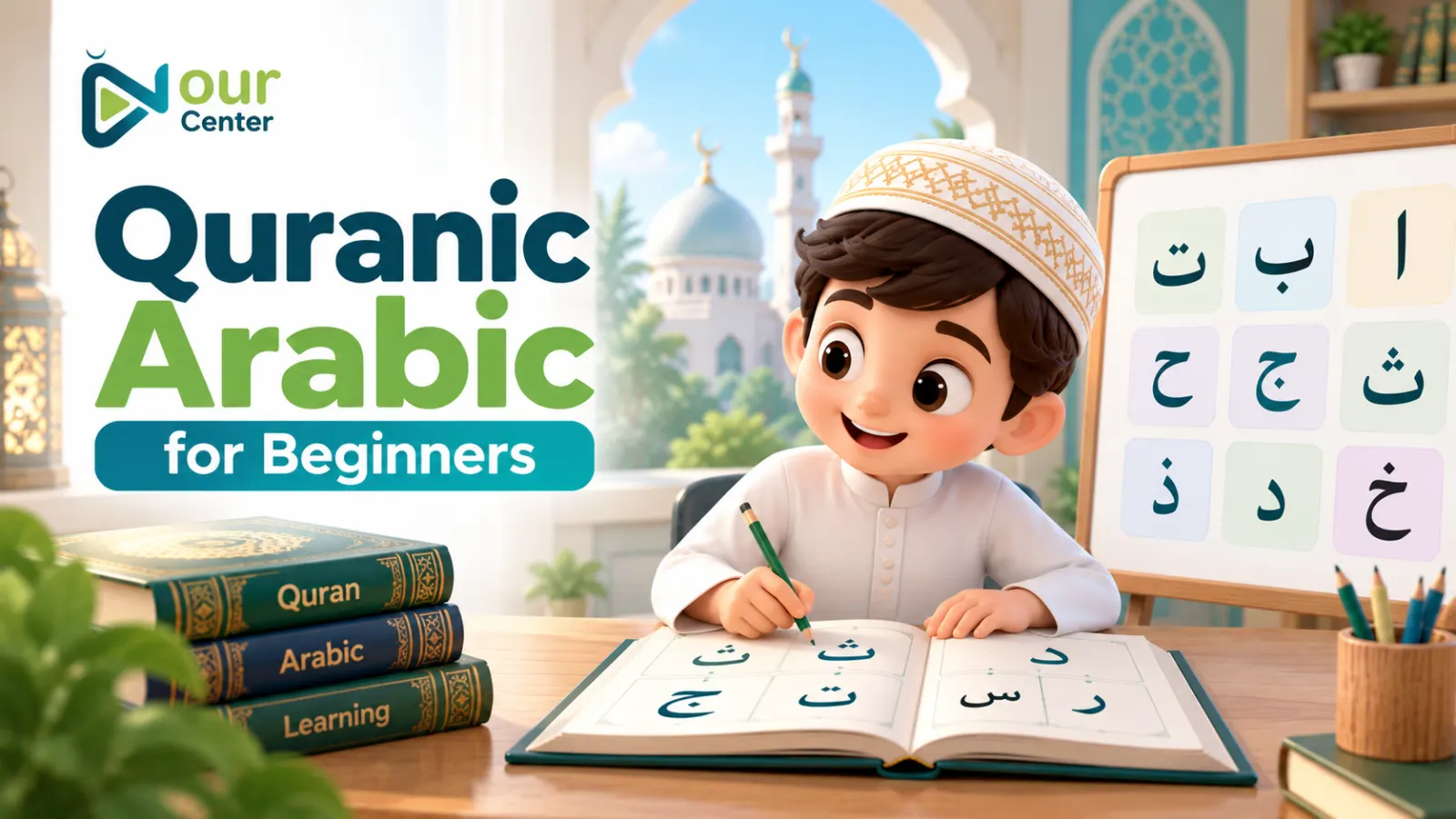
Learn Quranic Arabic for beginners step by step, build essential Quran vocabulary, understand common word patterns, reco...
Read Article →
Learn Arabic letter sounds for beginners, discover how to pronounce all 28 Arabic letters, distinguish difficult sounds,...
Read Article →