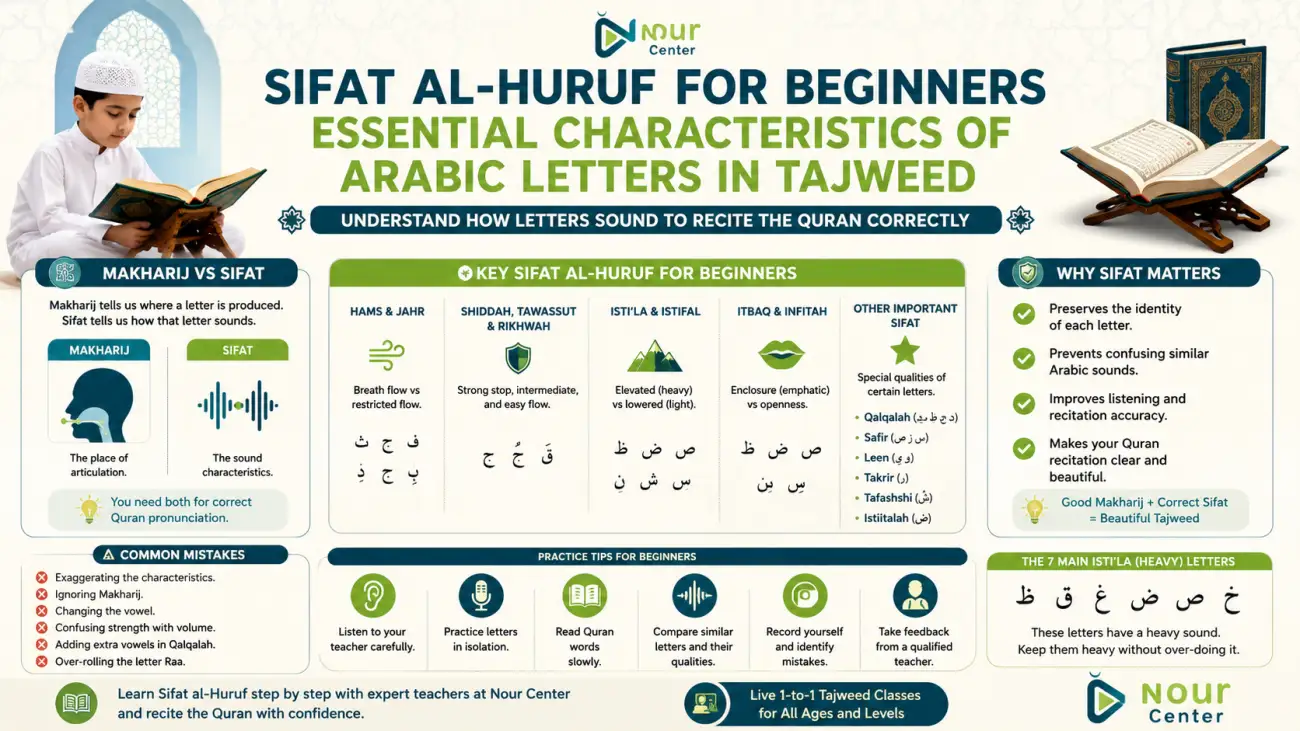
Sifat al-Huruf for Beginners: Essential Characteristics of Arabic Letters in Tajweed
Learn Sifat al-Huruf for beginners, including Hams, Jahr, Shiddah, Rikhwah, Isti'la, Istifal, Itbaq, and other essential...
Read Article →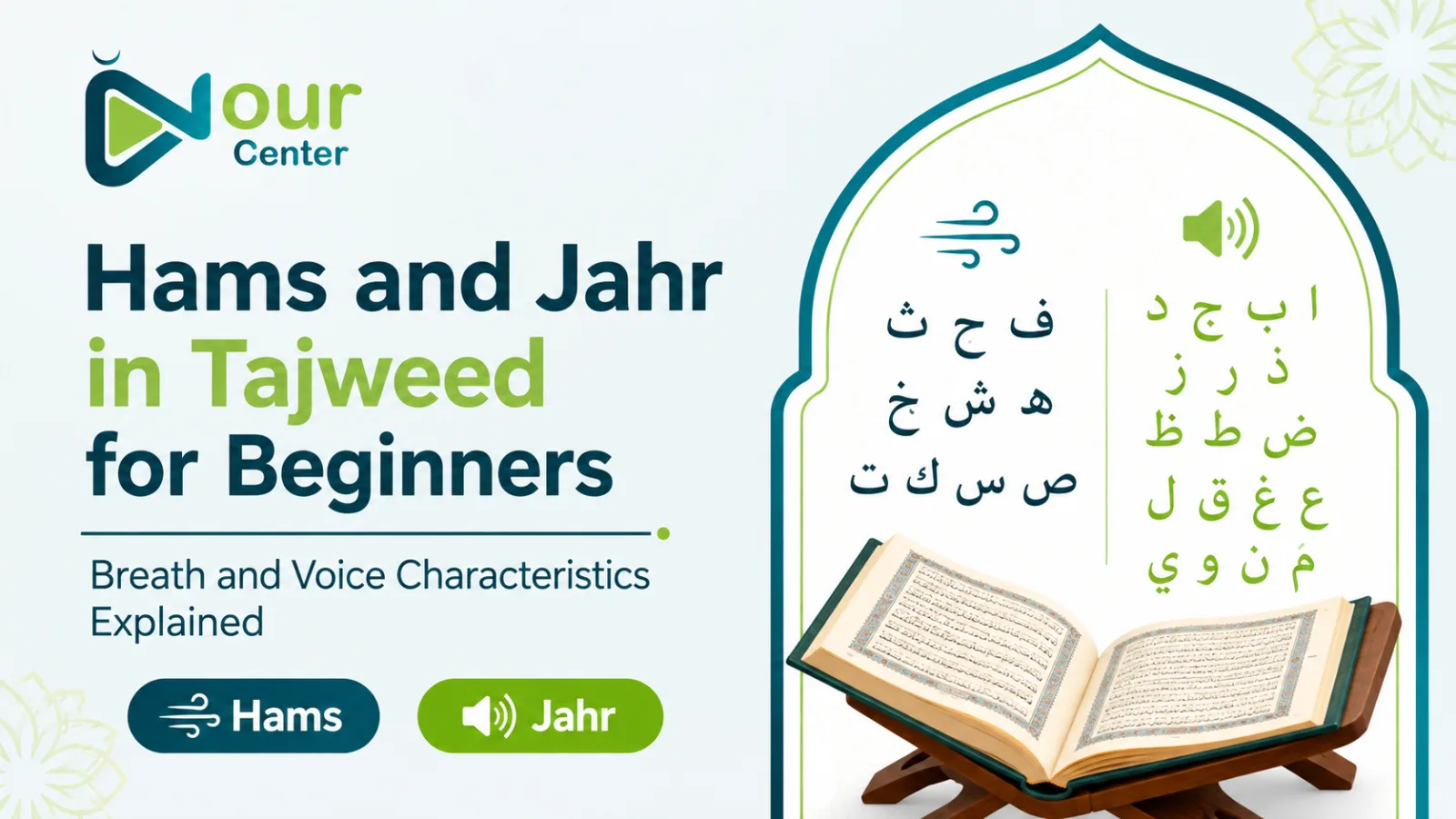
Breath and Voice Characteristics Explained
Hams and Jahr are two important characteristics of Arabic letters in Tajweed. They help explain why some letters allow the breath to flow more noticeably during pronunciation while other letters restrict that breath. For beginners, this topic is useful because two students may pronounce a letter from approximately the correct articulation point but still produce different sounds. The difference may come from the characteristics of the letter rather than its Makhrij alone.
Hams and Jahr are part of Sifat al-Huruf, the characteristics that describe how Arabic letters behave when they are pronounced.
Hams involves the flow of breath during the pronunciation of specific letters. Jahr involves greater restriction of the breath during the pronunciation of the remaining letters. This does not simply mean whispering versus speaking loudly. It also should not be confused with the English-language idea of voiced and unvoiced consonants. In Tajweed, Hams and Jahr are specific Arabic letter characteristics that must be learned through correct pronunciation and listening.
This guide explains Hams and Jahr in Tajweed for beginners, the ten Hams letters, how Jahr differs from Hams, common pronunciation mistakes, practical exercises, and how these characteristics improve Quran recitation.
What Are Sifat al-Huruf? Sifat al-Huruf means the characteristics or qualities of Arabic letters. Makharij tells us where a letter is articulated. Sifat tells us how the letter behaves when it comes from that articulation point.
Breath flow. Sound strength. Continuity. Elevation of the tongue. Openness. Other qualities. Students who understand Sifat al-Huruf for Beginners will find Hams and Jahr easier because these two characteristics are part of the broader system used to distinguish Arabic letters. Why Are Letter Characteristics Important? Arabic letters can share nearby articulation areas. If learners focus only on where a letter comes from, some sounds may still remain unclear. Sifat helps distinguish them.
Letter clarity. Pronunciation accuracy. Listening awareness. Quran recitation. Differences between similar sounds. Control of breath. Control of sound release. Confidence during Tajweed practice. A learner who combines correct Makharij with correct Sifat develops a much stronger foundation. What Is Hams in Tajweed? Hams is a letter characteristic associated with the noticeable flow of breath during pronunciation. When a Hams letter is pronounced correctly, the breath is not completely trapped.
The learner may notice air continuing through the articulation.
This does not mean the letter should become weak or disappear. The consonant still needs a clear articulation point. The breath simply flows according to the nature of the letter.
Hams = breath flows. What Does the Word Hams Mean? Hams carries the sense of softness or a lowered, subtle sound. In Tajweed terminology, the most important practical feature is the flow of breath during the pronunciation of its letters. A beginner should focus on hearing and feeling that airflow without turning the sound into exaggerated whispering. How Many Hams Letters Are There? There are ten commonly taught Hams letters.
Fa. Ha. Tha. Ha. Sheen. Kha. Sad. Seen. Kaf. Ta.
فَحَثَّهُ شَخْصٌ سَكَتْ Beginners do not need to rely only on the mnemonic. The letters should also be practiced individually so that the airflow becomes recognizable. Why Memorize the Hams Letters? Memorizing the ten letters gives the learner a quick way to classify them. When one of these letters appears, the student knows that Hams is one of its characteristics. All other letters belong to Jahr regarding this particular pair of characteristics.
However, knowing the list is not enough. A learner should also know what Hams actually sounds like. Hams in the Letter Fa Fa is a useful letter for hearing breath flow. It is articulated using the lower lip and the edges of the upper front teeth. When pronounced correctly, air passes through the articulation. A learner should hear the consonant clearly while noticing the breath. Do not turn Fa into only air.
The letter must remain distinct. Hams in the Letter Seen Seen provides another clear example. The air flows through a narrow passage as the letter is pronounced. Beginners may exaggerate the breath and produce a prolonged hiss. The objective is accurate Seen rather than extending the sound unnecessarily. Hams is a characteristic. It does not automatically mean that every Hams letter should be lengthened.
Hams in the Letter Kaf Kaf is particularly useful for understanding the difference between articulation and breath.
The back of the tongue makes the required contact. Then the letter is released with its characteristic airflow. Some beginners pronounce Kaf too weakly. Others make it overly forceful. Listening to a teacher helps establish the correct balance. Hams in the Letter Ta Ta is also one of the ten Hams letters. The learner should preserve its light quality and correct articulation while allowing the appropriate breath flow.
One common error is confusing the Hams of Ta with an exaggerated burst of air.
Correct pronunciation remains controlled. Hams in the Letter Sad Sad is a heavy letter and also a Hams letter. This combination is important because it shows that Tajweed characteristics work together. Sad has Tafkhim because it belongs to the heavy-letter group. It also has Hams because breath flows during its pronunciation. Students who understand Heavy and Light Letters in Tajweed for Beginners should remember that Tafkhim does not cancel the Hams characteristic of Sad.
A letter can carry several characteristics simultaneously.
This is a very important beginner point. Some Hams letters are light. Others, such as Sad and Kha, have heavy qualities.
Hams does not mean Tarqiq. Hams means breath flow. Tafkhim and Tarqiq describe a different characteristic of pronunciation. Do not mix these categories.
The English word “whisper” may make learners think they should lower their entire voice dramatically. That is not the objective. The letter should retain its normal Arabic sound. Hams refers to the characteristic flow of breath associated with that letter.
Correct Hams. Weak pronunciation. Excessive whispering. What Is Jahr in Tajweed? Jahr is the characteristic opposite Hams in this classification. With Jahr letters, the breath is more restrained during pronunciation because of stronger reliance on the articulation point.
Hams = breath flows. Jahr = breath is restrained. This does not mean that absolutely no air leaves the mouth. It describes the characteristic relationship between the breath and the articulation of the letter. How Many Jahr Letters Are There? The remaining Arabic letters outside the ten Hams letters are classified as Jahr letters in this paired characteristic.
Instead of memorizing a second large list immediately, beginners often find it easier to memorize the ten Hams letters.
If the letter is not one of the ten Hams letters, it belongs to Jahr in this classification. This reduces memorization load. Does Jahr Mean a Loud Letter? No. Jahr does not simply mean loudness. A Jahr letter can be pronounced quietly while still maintaining its characteristic. Likewise, a Hams letter can be pronounced loudly without losing its Hams quality. The difference involves how the breath behaves at the articulation point.
Volume is a separate issue. Does Jahr Mean Voiced? Not exactly. Students familiar with modern phonetics may compare Hams and Jahr to voiceless and voiced sounds. There can be similarities in some letters, but the Tajweed categories should not be reduced to English phonetic terminology. The traditional Tajweed definitions focus on the flow or restraint of breath during articulation.
Beginners should therefore learn the Tajweed sound itself rather than forcing every letter into an English pronunciation category.
Breath control alone cannot produce a correct Arabic letter. The letter must first come from its proper articulation point. Correct Makharij for Beginners provides the foundation for applying Hams and Jahr because breath behavior only makes sense when the underlying letter is articulated correctly. If the Makhrij is wrong, the learner may feel airflow but still pronounce the wrong consonant. Makharij and Sifat must work together.
Makhrij = where the letter comes from. Sifah = how the letter sounds and behaves. Imagine two letters that come from nearby places. Their different characteristics help distinguish them. This is why Tajweed teachers study both subjects. A learner who masters only Makharij may still need Sifat to refine pronunciation.
Hams and Jahr are traditionally studied as opposing characteristics. A letter belongs to one side of this pair. If the letter has Hams, it does not also have Jahr in the same classification. This makes the system easier to learn. Identify the Hams letters. Everything else falls under Jahr. Other Sifat pairs work in a similar way.
A teacher may ask a learner to pronounce a Hams letter slowly and notice the airflow.
Pronounce Seen. Notice the air. Pronounce Fa. Notice the air. Pronounce Kaf. Notice the release. This physical awareness can help beginners. However, do not exaggerate the letter just to feel more air. The final goal is natural Quran pronunciation.
To compare, pronounce a clear Jahr letter under teacher guidance. Notice how the breath is more restrained at the articulation point.
Hams letter. Jahr letter. Hams letter. Jahr letter. This comparison teaches the ear and mouth simultaneously.
Hams can often become easier for beginners to notice when the letter carries Sukoon because the consonant characteristic is more exposed. However, learners should be careful.
An added vowel. Unnecessary length. A false Qalqalah. The sound should simply retain its proper Hams characteristic.
Some letters may combine Hams with other Sifat characteristics. Ta and Kaf are useful examples because their pronunciation involves more than simply continuous airflow.
One letter can have several Sifat at the same time. You should not expect Hams to make every one of its ten letters sound identical. Each letter is a combination of characteristics.
Some Hams letters allow greater sound continuation because they also possess characteristics related to Rikhwah. Others behave differently because of Shiddah or Tawassut-related qualities. This will become clearer when the learner studies Shiddah, Tawassut, and Rikhwah in detail.
Hams describes the breath. Other characteristics describe different aspects of the sound.
A Hams letter can also be heavy. Examples include letters such as Sad and Kha. Therefore, do not lighten a letter merely because it belongs to Hams.
Its Makhrij. Its Hams. Its Tafkhim if applicable. Its other characteristics. This layering is what gives each Arabic letter its correct identity.
Hams and Qalqalah are separate topics. Qalqalah is a controlled release associated with specific letters when Sukoon applies. Hams concerns breath flow in its ten letters. A learner who studied What Is Qalqalah should avoid adding a bounce to a Hams letter simply because it carries Sukoon. Sukoon does not make every consonant Qalqalah. Only the Qalqalah letters receive that rule.
Madd controls vowel length. Hams controls breath flow in consonants. These should not be confused. A learner may unconsciously lengthen a Hams consonant because the airflow can continue. That is not the same as Madd. The letter should receive only the duration appropriate to its actual pronunciation.
Ghunnah is nasal resonance associated mainly with Noon and Meem. Hams is breath flow associated with its ten letters. They are completely different characteristics. Do not turn Hams into a nasal sound. Do not try to produce Ghunnah through the mouth as though it were Hams. Each quality has its own place in Tajweed.
When learners first discover breath flow, they may try to make it very obvious.
Too much air. Weak consonants. Extended hissing. Broken recitation. Loss of the following vowel. The goal of Tajweed is not to display the rule dramatically. The goal is to pronounce the letter naturally and correctly.
No Breath in Hams Letters
Some students pronounce Hams letters too tightly. The characteristic airflow disappears. This may make the letter sound unusually strong. The correction is not simply “blow more air.”
Relax the articulation. Use the correct Makhrij. Listen to the teacher. Allow the natural breath flow.
Too Much Breath
The opposite mistake is also common. The learner exaggerates Hams until the consonant becomes weak. For example, Seen may become an extended hiss. Fa may sound like air without enough consonant identity. Correct Hams should remain balanced.
Turning Hams Into an Extra Vowel
When releasing a Hams letter with Sukoon, beginners may accidentally add a vowel afterward. This often happens with Ta or Kaf.
Ta-a. Ka-a. Or another inserted vowel. Practice slow Sukoon endings with teacher feedback.
Adding Qalqalah to Hams Letters
Beginners who recently learned Qalqalah may bounce any silent consonant. That is incorrect. Hams letters should retain Hams. Qalqalah applies only to its designated letters.
Making Jahr Letters Breathless by Force
Jahr means the breath is restrained, but the learner should not physically hold the breath in an uncomfortable way. Correct Jahr comes from proper articulation. Do not close the throat or tense the entire body. The pronunciation should remain natural.
Confusing Jahr With Loudness
A learner may increase volume when pronouncing Jahr letters. That does not teach the characteristic. Practice both Hams and Jahr at the same comfortable volume. Then focus only on the behavior of the breath.
Ignoring Other Characteristics
A learner may become so focused on Hams that they forget: Tafkhim. Makharij. Shiddah. Other Sifat. Every Arabic letter combines several features. Correct Tajweed requires the complete letter.
Applying Hams to All Light Letters
Not every light letter is a Hams letter. Hams and Tarqiq are different classifications. Memorize the ten Hams letters instead of guessing from whether a sound feels light.
Treating Every Hams Letter Identically
Fa, Seen, Kaf, Ta, Sad, and the other Hams letters do not all behave exactly the same way. They share Hams. But they have different Makharij and other Sifat. The learner should preserve each letter's individual identity.
Studying the Rule Without Quran Practice
Memorizing the ten letters is helpful. But Tajweed is an oral skill. The learner must identify and pronounce Hams and Jahr inside actual words and verses. Theory should move into recitation quickly.
فَحَثَّهُ شَخْصٌ سَكَتْ contains the ten Hams letters. Beginners can use it as a memory aid. Another method is to divide the letters into smaller groups.
Fa, Ha, Tha. Ha, Sheen, Kha. Sad, Seen. Kaf, Ta. Review them daily until recognition becomes automatic.
Ask your teacher to pronounce individual letters without telling you the category. Listen for the breath.
Hams. Or Jahr. Then check the answer. Once this becomes easier, repeat the exercise using Quran words. This develops auditory recognition rather than memorization alone.
Choose one Hams letter. Pronounce it correctly. Notice the airflow. Then choose one Jahr letter. Pronounce it at the same volume. Notice the difference. Repeat several times. Do not exaggerate either sound. The purpose is awareness.
Review the ten Hams letters.
Practice three Hams letters individually.
Compare Hams and Jahr pairs.
Practice Sukoon examples.
Read a short Quran phrase. This short routine can be repeated daily.
Review the definition of Hams and Jahr.
Practice all ten Hams letters.
Compare them with several Jahr letters.
Read Quran words containing both categories.
Record yourself.
Repeat teacher corrections.
Understand Breath Flow
Learn the practical difference between Hams and Jahr.
Memorize the First Hams Letters
Practice a small group slowly.
Complete the Ten Hams Letters
Review the full mnemonic.
Hams With Sukoon
Practice clear consonant endings without extra vowels.
Compare Hams and Jahr
Use listening exercises.
Quran Application
Find Hams letters inside a short passage.
Teacher Assessment
Hams. Jahr. Makharij. Breath control. Other letter characteristics. Hams and Jahr for Kids Children can learn the concept through simple listening.
This letter lets more breath flow. This letter holds the breath more. Then demonstrate both. The child repeats. Formal terminology can come afterward. Children often understand the physical difference before they can explain the technical definition. Should Children Memorize the Hams Phrase? The mnemonic can be useful for older children who are ready to memorize Arabic letter groups. Younger learners can first practice a few letters at a time.
Correct sound. Recognition. Application. Then terminology and memorization.
Adults often appreciate understanding the logic behind the sounds. However, they may overanalyze breath mechanics.
Brief explanation. Teacher demonstration. Imitation. Correction. Quran application. Do not turn pronunciation into a complicated breathing experiment. The goal is accurate Arabic. Can Hams and Jahr Be Learned Without a Teacher? A learner can memorize the letter categories independently. Written explanations also help.
Hams is too weak. Hams is exaggerated. Jahr is forced. The Makhrij is wrong. An extra vowel appears. The letter has lost another characteristic. Direct teacher feedback makes these distinctions much easier.
Record several Hams letters followed by several Jahr letters. Listen afterward.
Can I hear the breath difference? Did the Hams consonant remain clear? Did I exaggerate the air? Did I add a vowel after Sukoon? Did I make the Jahr letters unnecessarily loud? Then compare your pronunciation with a reliable teacher model.
Choose a short passage. Find examples containing the ten Hams letters. Read each word slowly. Identify the Hams letter. Then read the entire verse naturally. Do not stop at every Hams letter during normal recitation. The purpose of technical practice is eventually to improve fluent reading.
Letter characteristics become especially important when sounds are close. Two letters may have nearby Makharij but different Sifat. Learning those differences helps prevent substitution. This is why Sifat al-Huruf follows naturally after studying articulation points. Makharij builds the location. Sifat refines the sound.
At Nour Center, live one-to-one Tajweed lessons can teach Hams and Jahr through direct pronunciation rather than memorization alone.
Makharij. Sifat recognition. Hams letters. Breath flow. Jahr. Sukoon pronunciation. Tafkhim and Tarqiq. General Quran recitation. The student can then practice individual letters before moving into Quran words and verses. A learner who produces too much air may receive one type of correction. Another learner who suppresses Hams may need a different exercise. Individual feedback makes the lesson more efficient.
You recognize the ten Hams letters quickly. Breath flows naturally without exaggeration. The consonant remains clear. You avoid extra vowels. You do not add false Qalqalah. Heavy Hams letters remain heavy. Light Hams letters remain light. Your teacher corrects fewer Hams errors.
You distinguish it from Hams by sound. The breath is naturally restrained. You do not force the throat. You do not confuse Jahr with volume. The articulation remains clear. Other Sifat remain intact. The goal is eventually to apply these characteristics automatically without consciously labeling every letter. What Should You Study After Hams and Jahr? After Hams and Jahr, a useful next topic is Shiddah, Tawassut, and Rikhwah.
Stopped strongly. Partially continued. Or allowed to flow. This creates an important distinction from Hams and Jahr. Hams and Jahr mainly help the learner understand breath behavior. Shiddah, Tawassut, and Rikhwah help explain sound flow. Studying the two groups together gives the learner a much deeper understanding of Arabic letter pronunciation.
Hams and Jahr in Tajweed for Beginners become easier when the learner focuses on the behavior of the breath.
Hams = breath flows. Jahr = breath is more restrained. There are ten Hams letters.
Fa. Ha. Tha. Ha. Sheen. Kha. Sad. Seen. Kaf. Ta.
فَحَثَّهُ شَخْصٌ سَكَتْ The remaining letters belong to Jahr in this classification.
Whispering the entire word. Tarqiq. Madd. Ghunnah. Qalqalah.
Loudness. Physical breath holding. English phonetic terminology alone. Correct Hams and Jahr depend on proper Makharij and must work together with the other characteristics of each letter. The best way to improve is through listening, controlled comparison, short daily practice, Quran examples, recording, and qualified teacher correction. With regular practice, Hams and Jahr become natural parts of clear, accurate, and confident Quran recitation.
Note: Comments may require approval before appearing publicly.
Learn Sifat al-Huruf for beginners, including Hams, Jahr, Shiddah, Rikhwah, Isti'la, Istifal, Itbaq, and other essential...
Read Article →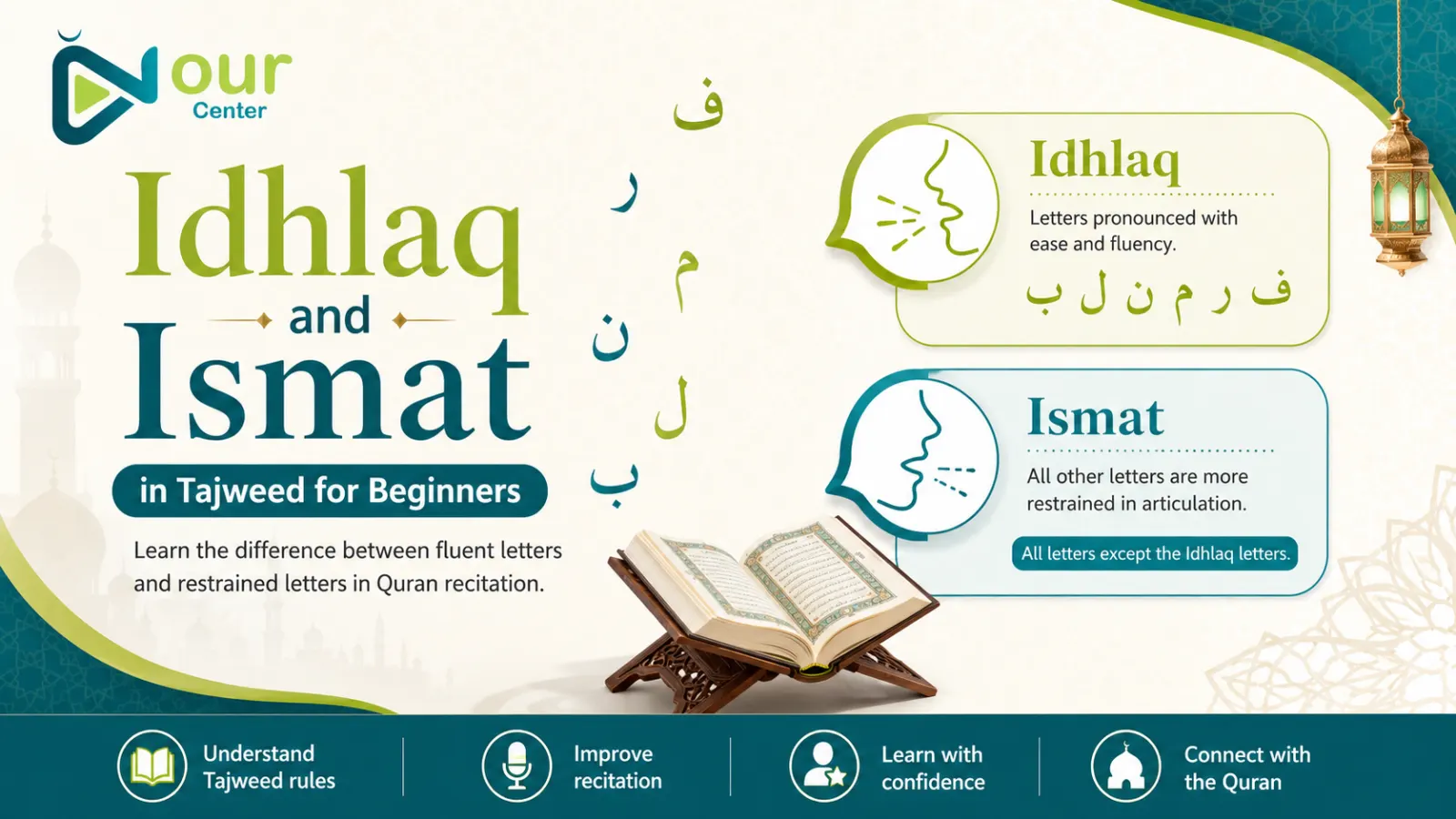
Learn Idhlaq and Ismat in Tajweed for beginners, the six Idhlaq letters, their pronunciation characteristics, the differ...
Read Article →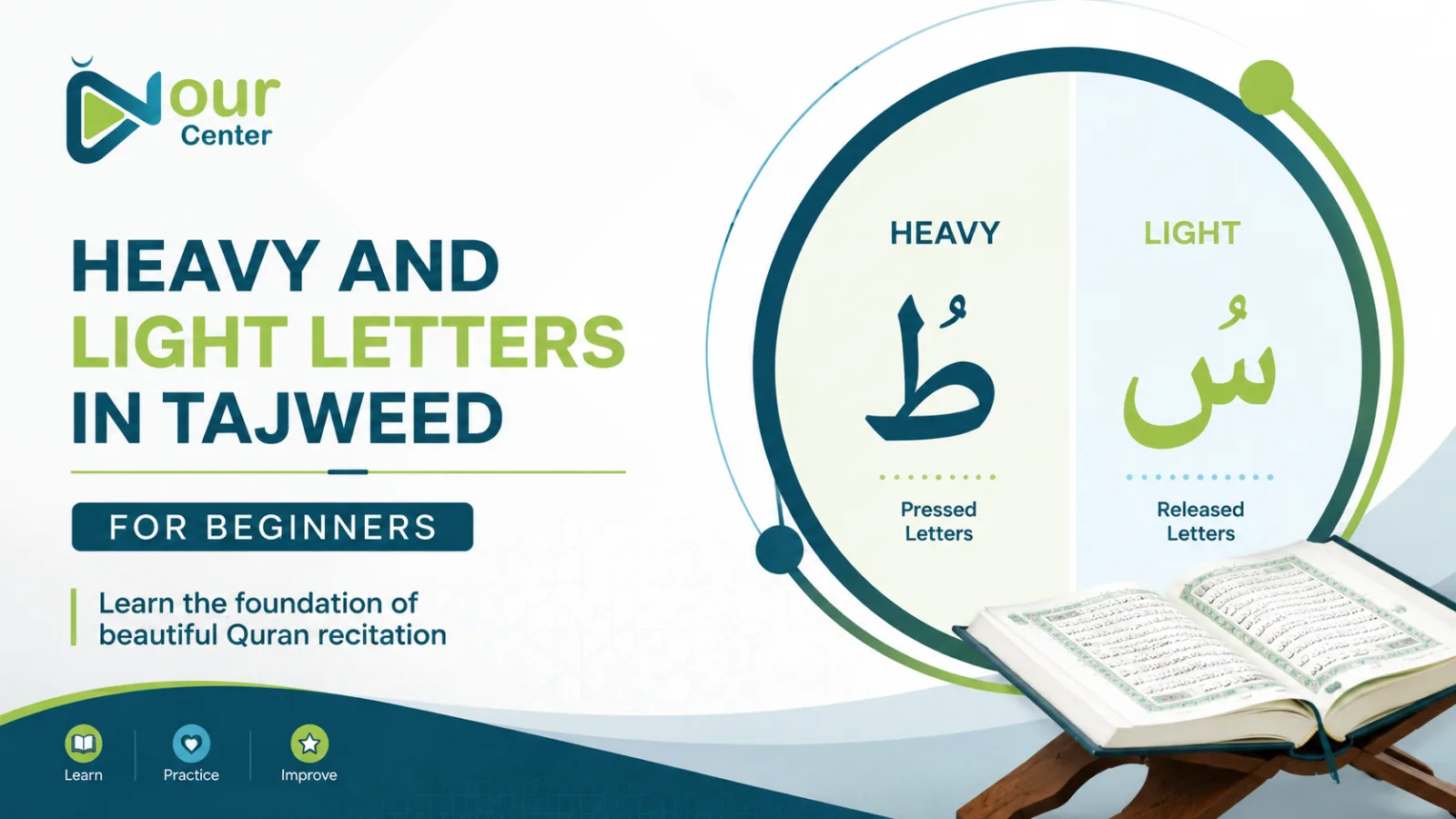
Learn heavy and light letters in Tajweed for beginners, including Tafkhim, Tarqiq, the heavy Arabic letters, rules of Ra...
Read Article →
Learn Safeer in Tajweed for beginners, the three Safeer letters, how the whistling sound is produced, common pronunciati...
Read Article →