Safeer in Tajweed for Beginners: Understanding the Whistling Sound of Arabic Letters
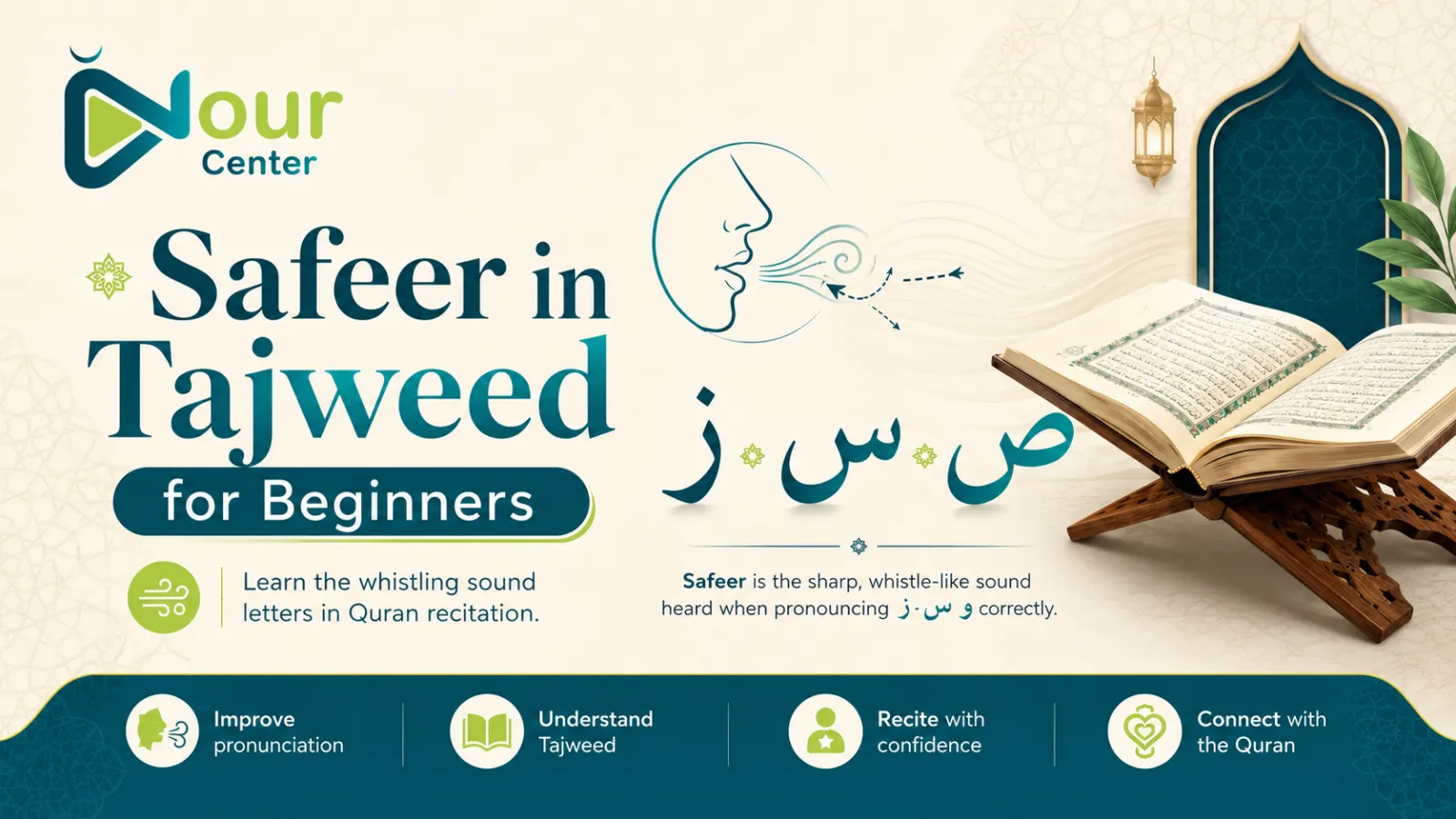
Learn Safeer in Tajweed for beginners, the three Safeer letters, how the whistling sound is produced, common pronunciati...
Read Article →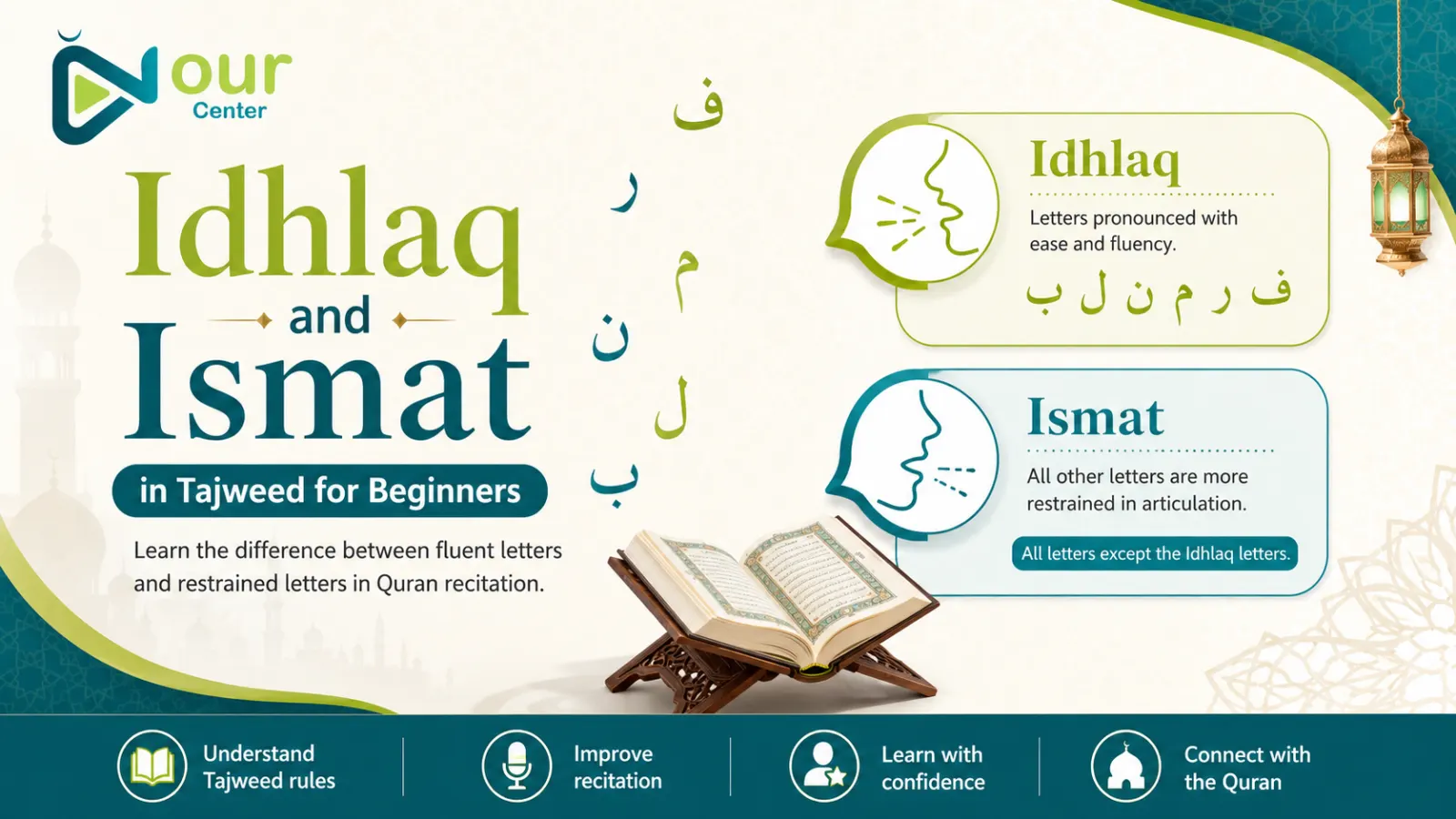
Understanding Arabic Letter Characteristics
Idhlaq and Ismat in Tajweed for Beginners are two traditional characteristics used to classify Arabic letters within the study of Sifat al-Huruf. By the time a Tajweed student reaches this topic, they may already have studied several pairs of opposite characteristics.
Hams and Jahr. Shiddah and Rikhwah, with Tawassut between them. Isti'la and Istifal. Itbaq and Infitah. Idhlaq and Ismat complete another important pair in this traditional system.
Idhlaq applies to six Arabic letters. Ismat applies to the remaining Arabic letters. The six Idhlaq letters are commonly memorized through the Arabic phrase: فَرَّ مِنْ لُبٍّ
Fa. Ra. Meem. Noon. Lam. Ba. One important point should be understood from the beginning. Idhlaq and Ismat are not usually applied in Quran recitation in the same practical way as rules such as Qalqalah, Ghunnah, Tafkhim, or Madd. They are permanent letter characteristics that help students understand the traditional classification of Arabic sounds.
This guide explains Idhlaq and Ismat in Tajweed for beginners, the six Idhlaq letters, the meaning of both terms, their relationship with Makharij and other Sifat, common misunderstandings, and practical ways to study them.
What Are Sifat al-Huruf? Sifat al-Huruf means the characteristics or qualities of Arabic letters. Makharij tells us where a letter is articulated. Sifat helps describe the qualities that accompany that articulation.
Breath. Sound flow. Tongue elevation. Tongue-palate enclosure. Ease of articulation. Other specific sound qualities. Students who understand Sifat al-Huruf for Beginners will find Idhlaq and Ismat easier because these two characteristics belong to the traditional system used to classify every Arabic letter. Why Study Sifat al-Huruf? Learning Sifat helps a student understand why Arabic letters remain distinct even when their articulation points may be close. Different characteristics combine to create each letter's identity.
Jahr. Tawassut. Istifal. Infitah. Idhlaq. Another may have a completely different combination. This classification helps advanced students understand Arabic pronunciation systematically. For beginners, it also creates a useful framework for organizing what they have already learned. What Is Idhlaq in Tajweed? Idhlaq is one of the traditional permanent characteristics of Arabic letters. The term is associated with ease, fluency, or quickness in pronunciation.
The tip or edge of the tongue. Or the lips. These articulation areas allow the letters to be pronounced with relative ease.
Idhlaq has six letters.
Fa. Ra. Meem. Noon. Lam. Ba. What Does Idhlaq Mean? The Arabic term carries a sense connected with fluency or ease. In traditional descriptions of Sifat, the letters are associated with parts of the mouth that allow relatively easy articulation. However, beginners should not interpret this to mean that these six letters must always be pronounced faster than other letters during Quran recitation. Idhlaq does not create a special timing rule.
It is a permanent classification of the letters.
ف ر م ن ل ب
فَرَّ مِنْ لُبٍّ This mnemonic makes the group much easier to remember. If a letter belongs to this group, it has the characteristic of Idhlaq. If it does not belong to this group, it belongs to Ismat in this paired classification. Why Are These Six Letters Grouped Together? Traditional Tajweed descriptions connect these letters with areas of articulation that facilitate relatively easy pronunciation.
Ra. Noon. Lam. And the articulation associated with their tongue positions.
Fa. Ba. Meem is also produced with the lips. The classification is therefore closely connected with the articulation system of Arabic. Correct Makharij for Beginners remains essential because the meaning of Idhlaq becomes clearer when students understand exactly where these six letters are articulated.
Fa is articulated using the lower lip and the upper front teeth. Because the articulation occurs at the front of the mouth, the movement is relatively accessible. However, Idhlaq does not replace the other characteristics of Fa. Fa also has characteristics such as Hams and Rikhwah. The learner must still pronounce the complete letter.
Ba is articulated by bringing the lips together. It belongs to the Idhlaq group. But Ba also has other important characteristics. When Ba has Sukoon, for example, Qalqalah can apply.
An Idhlaq letter. A Shiddah letter. A Jahr letter. A Qalqalah letter under the appropriate condition. This is why Sifat should be understood as a collection of characteristics rather than one label per letter.
Meem is also articulated using the lips. It belongs to Idhlaq. But students may already know Meem from other Tajweed subjects.
Ghunnah. Meem Sakinah. Idgham Shafawi. Ikhfa Shafawi. Tawassut. Idhlaq does not change any of these rules. It simply adds another permanent characteristic to the profile of Meem.
Noon belongs to the Idhlaq group. It also has several important characteristics and rules connected with Quran recitation.
Ghunnah. Noon Sakinah. Ikhfa. Idgham. Iqlab. Izhar. Tawassut. Again, Idhlaq is not a replacement for any of these practical rules. It is part of the broader Sifat classification.
Lam belongs to Idhlaq and is articulated using the tongue in the upper mouth area. Students may already know that Lam can also appear in specific Tafkhim and Tarqiq discussions, particularly in the name of Allah. Its classification as Idhlaq remains permanent regardless of whether a particular pronunciation context makes the Lam heavy or light. This distinction is important. A permanent Sifah remains part of the letter.
A contextual rule may change the way the letter sounds in a specific environment.
Ra is the final letter of the six-letter Idhlaq group. Ra is especially useful for understanding how characteristics overlap.
Heavy or light depending on its context. A Tawassut letter. A Jahr letter. An Infitah letter. An Istifal letter in the permanent Sifat classification. An Idhlaq letter. Students who study Tajweed systematically begin to see every Arabic consonant as a combination of several characteristics. Does Idhlaq Mean a Letter Should Be Pronounced Quickly? No. This is an important beginner correction.
Although the traditional meaning of Idhlaq is connected with ease or fluency, it does not mean:
Rush the letter. Shorten the letter. Ignore Shaddah. Ignore Ghunnah. Ignore Madd around it. Change its normal timing. Every letter still follows the actual Tajweed rules that apply in the word. Does Idhlaq Change the Sound of Quran Recitation? Not in the same direct way as some other Tajweed rules.
Qalqalah produces a recognizable controlled release. Ghunnah creates nasal resonance. Tafkhim produces heaviness. Madd controls vowel length. Idhlaq is primarily a permanent classification characteristic. Knowing it helps students understand Sifat al-Huruf more completely. What Is Ismat in Tajweed? Ismat is the opposite characteristic to Idhlaq in this traditional classification. The Arabic letters that are not among the six Idhlaq letters belong to Ismat. Therefore, beginners do not need to memorize a second long list immediately.
Six letters = Idhlaq. All remaining letters = Ismat. This is the easiest way to classify them. What Does Ismat Mean? The term Ismat carries a sense of prevention or restraint. Traditional Arabic phonetic descriptions also connect this characteristic with the structure of Arabic words. Classical explanations mention that words with four or five original root letters generally do not consist entirely of Ismat letters without including an Idhlaq letter.
For a beginner studying Quran pronunciation, however, the most useful point is the classification itself. Ismat should not be turned into an invented sound effect. There is no special "Ismat sound" that the learner needs to add during Quran recitation. How Many Ismat Letters Are There? If the six Idhlaq letters are removed from the Arabic alphabet, the remaining letters belong to Ismat. This means the Ismat group is much larger.
فَرَّ مِنْ لُبٍّ Everything else is Ismat. This makes the topic much easier.
Idhlaq = six letters. Ismat = all remaining Arabic letters. Idhlaq is traditionally associated with ease of articulation. Ismat is the opposite classification.
Heavy and light pronunciation. Breath flow. Sound flow. Qalqalah. Ghunnah. Madd. They describe a different aspect of letter classification.
The relationship with Makharij is useful because the Idhlaq letters are connected with accessible articulation areas such as the lips and parts of the tongue. Correct Makharij allows the learner to understand why these letters were grouped together in traditional Tajweed study. However, Makhrij and Idhlaq are not the same thing. Makhrij tells us exactly where the letter comes from. Idhlaq is one of its permanent characteristics. The two work together.
Idhlaq and Hams or Jahr The six Idhlaq letters do not all belong to one side of every other Sifat pair. For example, Fa has Hams. Other Idhlaq letters may belong to Jahr. This proves that Idhlaq is independent from breath behavior. Students who understand Hams and Jahr in Tajweed for Beginners should remember that Idhlaq and Ismat classify a different characteristic and do not determine whether breath flows or is restrained.
Every Sifah has its own role.
The Idhlaq letters also differ in sound flow. Some may have Tawassut. Some may have Shiddah. Some may have Rikhwah.
Lam, Noon, Meem, and Ra belong to Tawassut. Ba has Shiddah. Fa has Rikhwah. This makes the six-letter group very useful for seeing how several Sifat can combine differently. Students who understand Shiddah, Tawassut, and Rikhwah in Tajweed for Beginners can use the Idhlaq letters to compare how permanent characteristics overlap within different Arabic consonants. Idhlaq and Isti'la The six Idhlaq letters are not the seven Isti'la letters. These classifications are completely different.
Isti'la concerns tongue elevation. Idhlaq concerns another traditional characteristic connected with ease of articulation. A learner should not expect an Idhlaq letter to be heavy simply because it has Idhlaq. Most of the familiar Idhlaq letters are not part of the permanent Isti'la group.
None of the six Idhlaq letters belong to the four Itbaq letters.
Sad. Dad. Emphatic Ta. Emphatic Za.
Fa. Ra. Meem. Noon. Lam. Ba. Keeping the mnemonics separate prevents confusion. Students who understand Itbaq and Infitah in Tajweed for Beginners should remember that tongue-palate enclosure is a different characteristic from the Idhlaq and Ismat classification.
After studying several Sifat pairs, learners may start assuming that one characteristic determines another.
Heavy = Jahr. Light = Hams. Idhlaq = light. Ismat = heavy. These assumptions are incorrect. Each Sifah answers a different question. A single letter can combine several qualities in different ways. This is why Tajweed teachers often use charts showing the complete characteristics of every Arabic letter.
This distinction is extremely important. Permanent characteristics remain associated with the letter itself.
Hams or Jahr. Shiddah, Tawassut, or Rikhwah. Isti'la or Istifal. Itbaq or Infitah. Idhlaq or Ismat. Conditional rules depend on context.
Qalqalah when Sukoon applies. Heavy or light Ra according to its condition. Lam in Allah according to the preceding vowel. Noon Sakinah rules according to the following letter. Understanding the difference helps students organize Tajweed correctly. Does Ismat Mean the Letter Is Difficult to Pronounce? Not necessarily. The English idea of "difficult" can be misleading. Ismat is a technical traditional classification. Some Ismat letters may be easy for one learner and difficult for another.
Native language. Makharij. Practice. Teacher correction. Individual speech habits. Do not assume every Ismat letter must feel physically difficult. Does Idhlaq Mean the Letter Is Easy for Everyone? No. For example, a learner whose native language lacks Arabic Ra may struggle with Ra even though it belongs to Idhlaq. Likewise, Noon or Lam may be difficult if the learner's articulation is inaccurate. The classification does not guarantee that a beginner will find the letter easy.
It describes the traditional characteristics of Arabic letters. Why Study Idhlaq and Ismat If They Do Not Create a Strong Sound Rule? This is a reasonable beginner question. Studying them helps complete the traditional system of opposite Sifat.
Understand Arabic phonetic classification. Build a complete letter-characteristics chart. Recognize how several qualities coexist. Prepare for advanced Tajweed study. Understand classical explanations of Arabic sound structure. It is especially valuable for students who want more than basic recitation rules.
By this stage, a learner may have studied five major opposite classifications.
How does the breath behave?
How does the sound behave? Tawassut provides a middle state. Isti'la vs Istifal
Does the tongue rise toward the upper palate?
Does the tongue create greater enclosure with the palate?
Which traditional articulation classification does the letter belong to? Seeing the categories together gives the student a much clearer map of Sifat al-Huruf.
Arabic consonants are not defined by a single feature. Take Ba as an example.
Its Makhrij at the lips. Jahr. Shiddah. Istifal. Infitah. Idhlaq. And Qalqalah when Sukoon creates the appropriate condition. All of these characteristics work together. Take Fa.
Its lip-and-teeth articulation. Hams. Rikhwah. Istifal. Infitah. Idhlaq. Its sound is different from Ba even though both involve the lips. The combination of Makharij and Sifat creates the difference.
Choose one Idhlaq letter.
Ba.
Its Makhrij. Hams or Jahr. Shiddah, Tawassut, or Rikhwah. Isti'la or Istifal. Itbaq or Infitah. Idhlaq or Ismat. Then repeat with Fa. Compare the two. This exercise helps students understand why letter characteristics are studied as a system.
Thinking Idhlaq Is a New Recitation Rule
Students may expect to hear a dramatic special sound. There is no separate Idhlaq effect like Qalqalah. It is a permanent letter classification. Do not add anything artificial to the recitation.
Pronouncing Idhlaq Letters Faster
Idhlaq does not instruct the reader to rush these letters. Use the normal timing required by the word and applicable Tajweed rules.
Making Ismat Letters Heavy
Ismat is not synonymous with Tafkhim. Many Ismat letters are light. Some are heavy. Heavy-light pronunciation belongs to another classification.
Making Idhlaq Letters Light Automatically
Ra can sometimes be pronounced heavy. Its Idhlaq characteristic does not prevent that. Again, Idhlaq and Tafkhim answer different questions.
Forgetting Other Sifat
"This is an Idhlaq letter." That is correct but incomplete. The letter still has several other characteristics. Always think of the full letter profile.
Memorizing Without Understanding
The phrase فَرَّ مِنْ لُبٍّ is useful. But learners should also know what it represents. Memorization should support understanding.
Confusing Idhlaq With Isti'la
The names can feel unfamiliar, but their meanings are different. Isti'la concerns tongue elevation. Idhlaq is the six-letter characteristic discussed in this lesson. Keep the groups separate.
Confusing Ismat With Infitah
Both groups contain many letters, but they are not the same classification.
Infitah + Idhlaq.
Infitah + Ismat. The characteristics can combine independently.
Ignoring Makharij
Knowing that Ra belongs to Idhlaq will not correct an inaccurate Ra articulation. Makharij remains fundamental. Use Sifat to refine correct articulation, not replace it.
Overcomplicating Beginner Recitation
every time they see Lam. The classifications are training tools. The final goal is natural correct pronunciation.
فَرَّ مِنْ لُبٍّ
Fa. Ra. Meem. Noon. Lam. Ba. Repeat the group several times. Then test yourself with random Arabic letters.
Idhlaq? Or Ismat? This builds quick recognition.
Write the six Idhlaq letters on one side. Then choose ten random Arabic letters.
Idhlaq. Or Ismat. Because only six letters belong to Idhlaq, the task quickly becomes easy.
Fa. Ba. Meem.
Ra. Noon. Lam. Notice their articulation areas. The purpose is not to create a new sound. It is to understand why the group is connected with ease and accessible articulation areas in traditional descriptions.
Choose Fa and Ba. Both are Idhlaq letters. But compare their other Sifat.
Hams. Rikhwah.
Jahr. Shiddah. This demonstrates that sharing Idhlaq does not make two letters sound alike.
Choose Noon and Ra.
Idhlaq. Tawassut. But they still differ in articulation and other characteristics. This type of comparison develops a deeper understanding of Arabic phonetics.
Memorize فَرَّ مِنْ لُبٍّ.
Name the six Idhlaq letters.
Classify random letters as Idhlaq or Ismat.
Review the other Sifat of two Idhlaq letters.
Read a short Quran passage and identify examples.
Review the definitions of Idhlaq and Ismat.
Practice the six Idhlaq letters from their correct Makharij.
Compare Fa and Ba.
Compare Noon, Meem, Lam, and Ra.
Find Idhlaq letters in a Quran passage.
Review their full Sifat with a teacher.
Understand the Two Categories
Learn that Idhlaq has six letters and Ismat contains the remaining letters.
Memorize the Idhlaq Letters
Use فَرَّ مِنْ لُبٍّ.
Practice Makharij
Review the articulation points of the six letters.
Compare Other Sifat
Notice how the Idhlaq letters differ in Hams, Jahr, Shiddah, Tawassut, and Rikhwah.
Idhlaq vs Ismat Classification
Classify random Arabic letters.
Quran Application
Find the six letters in a short passage.
Complete Sifat Review
Review all five major opposite characteristic groups. Idhlaq and Ismat for Kids Children do not need a complicated explanation.
Six letters belong to one special group. Everything else belongs to the other group.
فَرَّ مِنْ لُبٍّ Then practice identifying the letters. Once the child can recognize them, explain that these are permanent characteristics of the letters. Should Children Memorize the Six Letters? Yes, if they are already studying Sifat systematically. The group is small and easy to memorize. However, pronunciation should remain the main goal. Do not allow terminology to replace Quran reading practice.
Adults often appreciate seeing how the classification completes the system of opposite Sifat. A useful approach is to create a table for each letter containing: Makhrij. Hams or Jahr. Shiddah, Tawassut, or Rikhwah. Isti'la or Istifal. Itbaq or Infitah. Idhlaq or Ismat. This converts many separate lessons into one organized system. Can Idhlaq and Ismat Be Learned Without a Teacher? The classification itself is easy to memorize independently.
However, the wider Sifat system is primarily valuable when connected with correct pronunciation.
A teacher can help ensure that students do not invent unnecessary sound changes based on theoretical terminology.
Correct Makharij. Correct permanent characteristics. Correct contextual Tajweed rules. Fluent Quran recitation.
Even though Idhlaq and Ismat do not create a dramatic standalone sound rule, students should continue listening carefully to the letters themselves. A letter's full sound results from all its characteristics together. Hearing a qualified teacher helps connect theoretical classification with real Arabic pronunciation.
At Nour Center, live one-to-one Tajweed lessons can place Idhlaq and Ismat within the wider study of Sifat al-Huruf.
Makharij. Hams and Jahr. Shiddah, Tawassut, and Rikhwah. Isti'la and Istifal. Itbaq and Infitah. Idhlaq and Ismat. General Quran pronunciation. Instead of teaching the terms as isolated lists, the teacher can build a complete characteristic profile for selected Arabic letters. This makes the system easier to understand and remember.
You can name the six Idhlaq letters. You remember فَرَّ مِنْ لُبٍّ. You classify all other letters as Ismat. You do not confuse Idhlaq with light pronunciation. You do not confuse Ismat with heavy pronunciation. You understand that these are permanent letter characteristics. You can combine Idhlaq or Ismat with other Sifat. You understand that Makharij remains essential. You do not invent a special recitation sound for Idhlaq or Ismat.
You can build a basic Sifat profile for Arabic letters. What Should You Study After Idhlaq and Ismat? After completing the major opposite characteristics, the next stage is usually studying individual Sifat that do not have direct opposites.
Safeer. Qalqalah. Leen. Inhiraf. Takrir. Tafashshi. Istitalah. Some of these, such as Qalqalah, may already be familiar to beginners. Studying them again within Sifat al-Huruf helps connect individual Tajweed rules to the wider pronunciation system.
Idhlaq and Ismat in Tajweed for Beginners complete an important part of the traditional opposite Sifat system.
Idhlaq has six letters.
Fa. Ra. Meem. Noon. Lam. Ba.
فَرَّ مِنْ لُبٍّ All remaining Arabic letters belong to Ismat in this paired classification. Idhlaq does not mean rushing the letter. Ismat does not mean making the letter heavy. Neither characteristic creates a special added sound like Qalqalah or Ghunnah. They are permanent classifications that help students understand Arabic letters more systematically.
Correct Makharij. Hams and Jahr. Shiddah, Tawassut, and Rikhwah. Isti'la and Istifal. Itbaq and Infitah. Other individual Sifat. With structured study and qualified teacher correction, learners can move from memorizing individual Tajweed rules toward understanding how the complete Arabic sound system works.
Note: Comments may require approval before appearing publicly.
Learn Safeer in Tajweed for beginners, the three Safeer letters, how the whistling sound is produced, common pronunciati...
Read Article →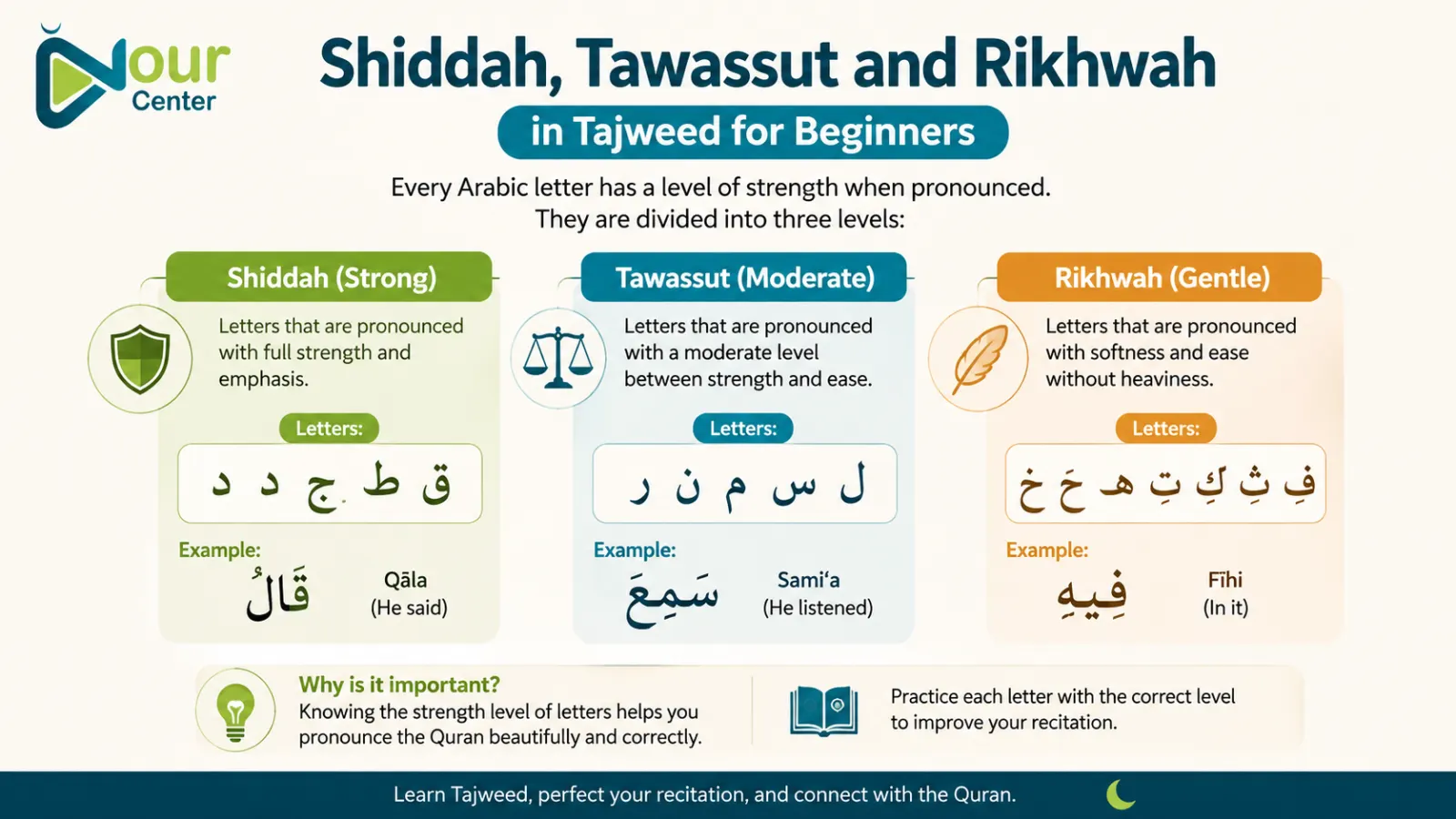
Learn Shiddah, Tawassut, and Rikhwah in Tajweed for beginners, how sound stops or flows through Arabic letters, common m...
Read Article →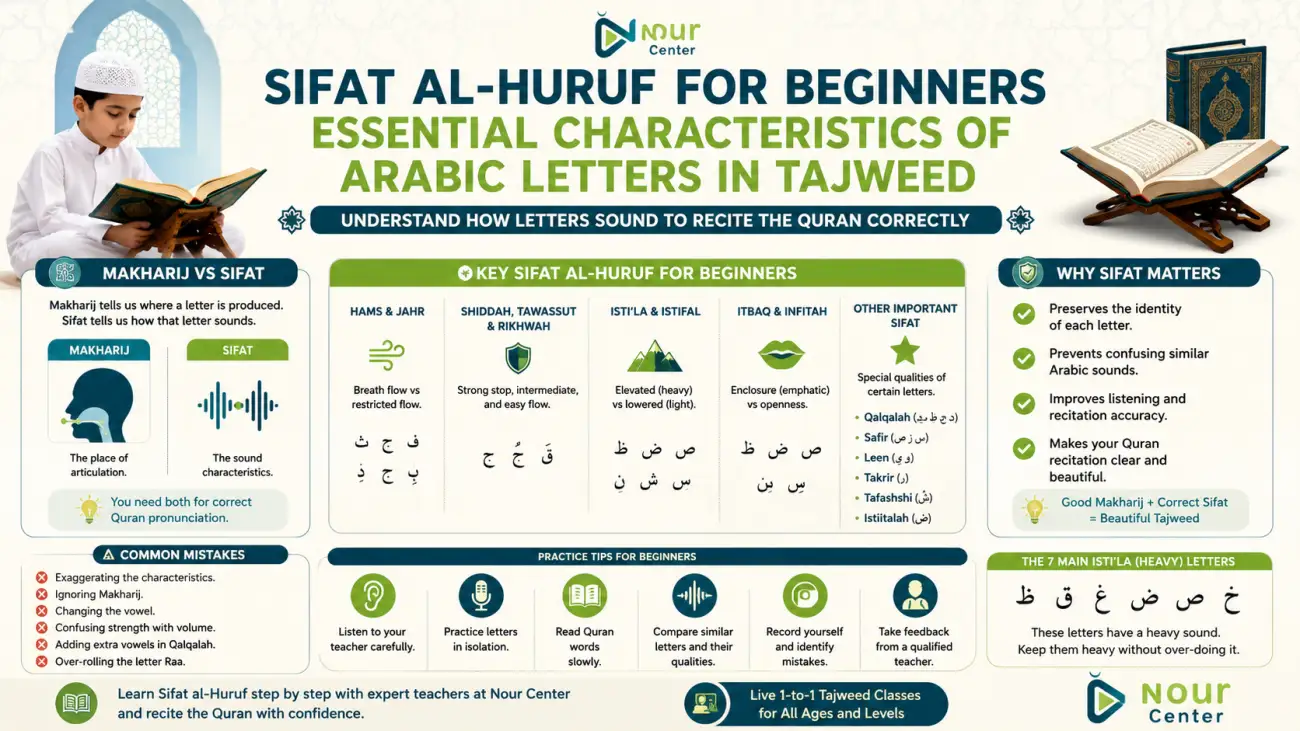
Learn Sifat al-Huruf for beginners, including Hams, Jahr, Shiddah, Rikhwah, Isti'la, Istifal, Itbaq, and other essential...
Read Article →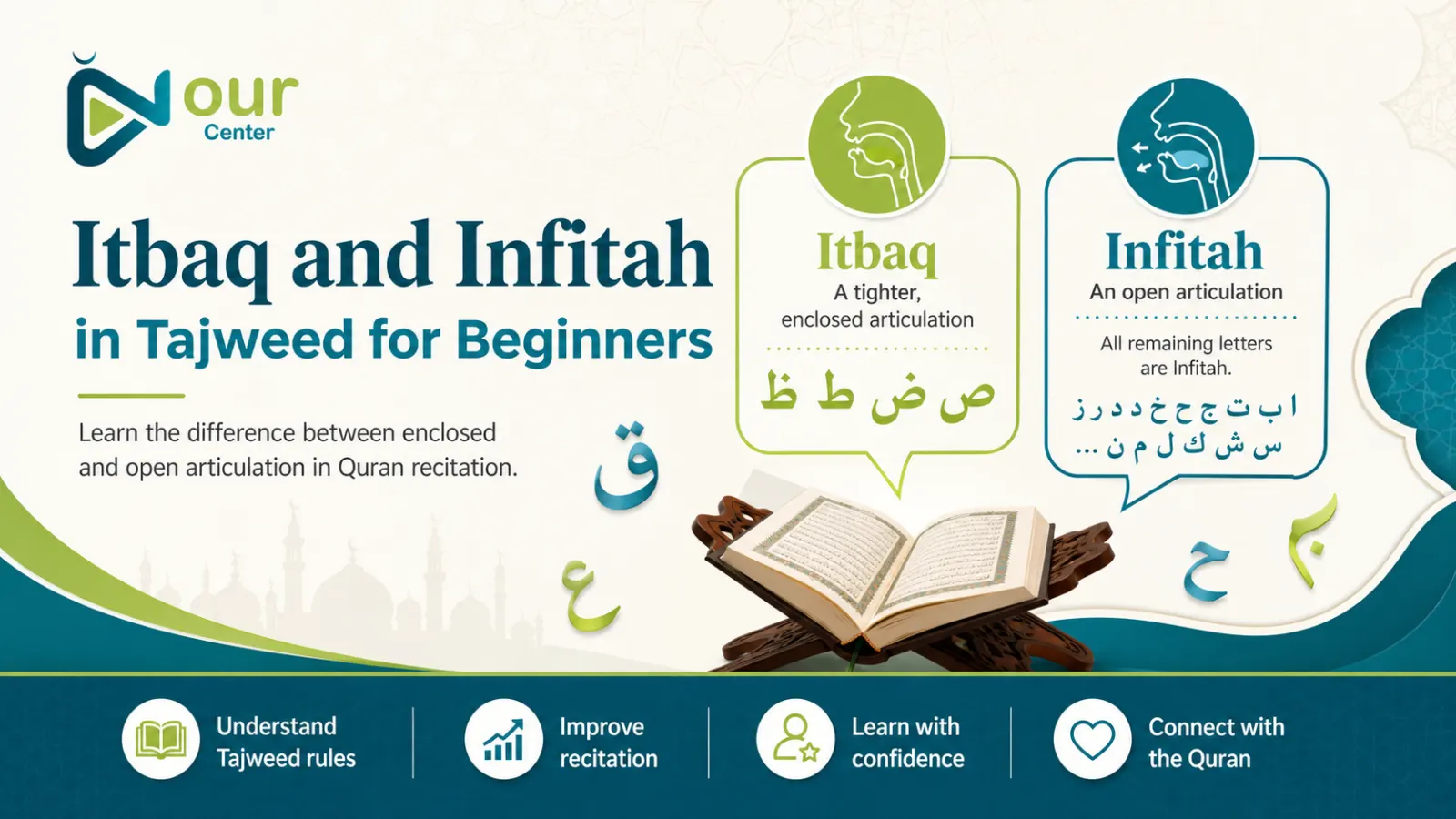
Learn Itbaq and Infitah in Tajweed for beginners, the four Itbaq letters, tongue position, heavy pronunciation, common m...
Read Article →