Prophet Muhammad صلى الله عليه وسلم Treated Non-Muslims

Prophet Muhammad صلى الله عليه وسلم Treated Non-Muslims

📅 22 Jun 2026 Category: Islamic Learning

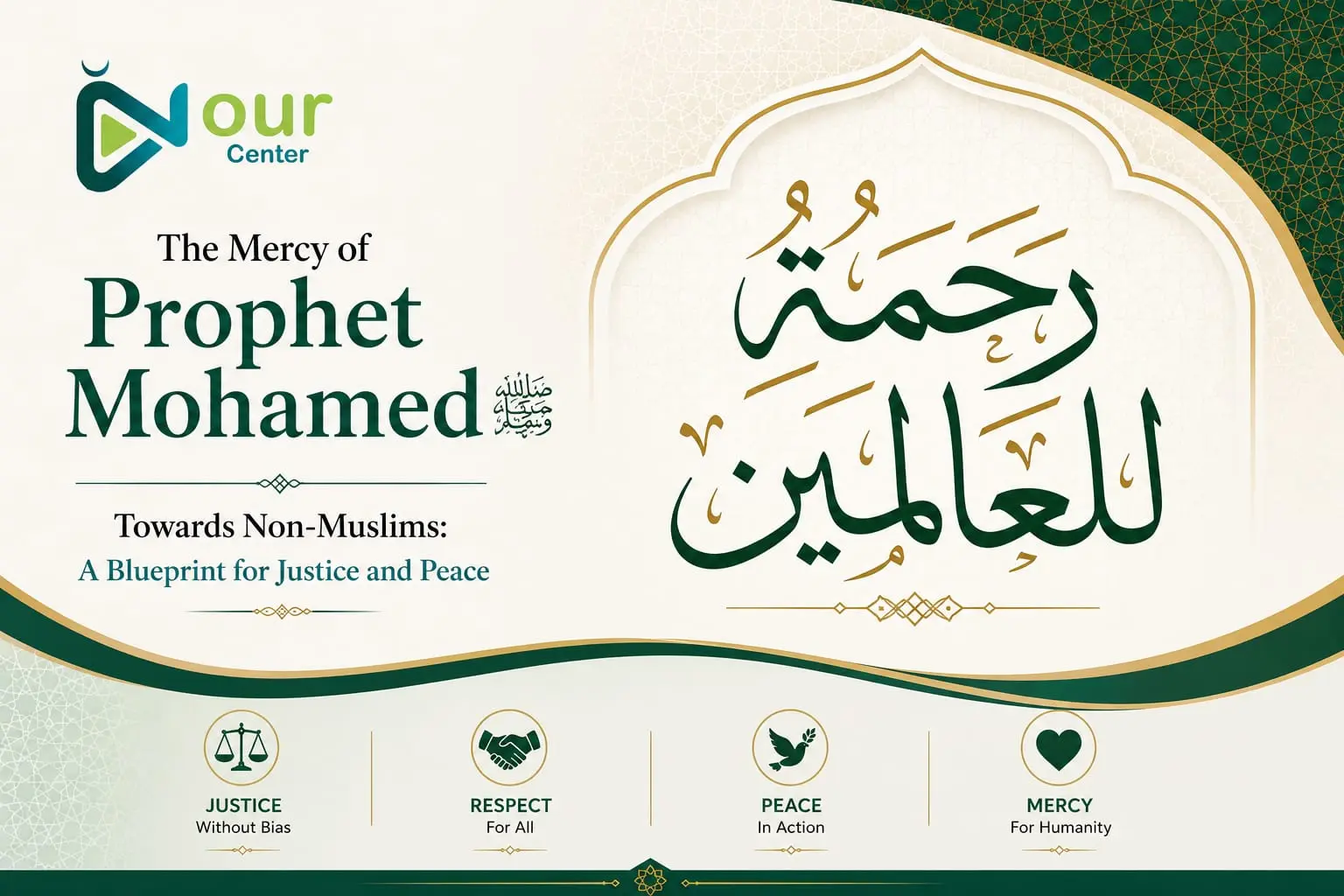
The Mercy of Prophet Muhammad صلى الله عليه وسلم Towards Non-Muslims and the Principle of Justice
In a world often divided by cultural and religious differences, the life of Prophet Muhammad صلى الله عليه وسلم stands as a profound historical example of coexistence, human rights, and absolute fairness. At Nour Center, we believe that understanding these historical precedents is essential for building modern societies rooted in mutual respect.

This article explores how the Prophet صلى الله عليه وسلم treated non-Muslims, highlighting his unwavering commitment to mercy and the establishment of justice for all members of society, regardless of their faith.
The Foundation of Mercy

The core message of Islam is deeply intertwined with the concept of mercy. The Quran explicitly establishes this universal mission:

وَمَا أَرْسَلْنَاكَ إِلَّا رَحْمَةً لِّلْعَالَمِينَ
Prophet Muhammad صلى الله عليه وسلم did not limit his kindness and compassion to his followers. His actions demonstrated that mercy is a universal right. Whether in times of peace or conflict, his approach to non-Muslims was characterized by dignity, protection, and deep empathy
The Charter of Medina: A Blueprint for Coexistence

When Prophet Muhammad صلى الله عليه وسلم migrated to Medina, he found a diverse society comprising Muslims, Jews, and polytheists. One of his very first actions was drafting the Constitution of Medina (Sahifat al-Madinah). This historic document is widely considered one of the earliest written constitutions in human history.

Through this charter, he صلى الله عليه وسلم established a pluralistic state where non-Muslims were recognized as equal citizens. Key principles included:

  • Freedom of Belief: Every community had the right to practice their religion freely without coercion.
  • Mutual Defense: Muslims and non-Muslims were bound to protect the city together against external threats.
  • Equality Before the Law: Disputes were to be resolved based on justice, and no group was granted superiority over another in legal or civil matters.

Achieving Absolute Justice in Society

Justice is a fundamental pillar of Islam, and Prophet Muhammad صلى الله عليه وسلم applied it rigorously, even if it meant ruling against a Muslim in favor of a non-Muslim.

The Quran commands strict, unwavering justice regardless of personal feelings or affiliations:

﴿يَا أَيُّهَا الَّذِينَ آمَنُوا كُونُوا قَوَّامِينَ لِلَّهِ شُهَدَاءَ بِالْقِسْطِ ۖ وَلَا يَجْرِمَنَّكُمْ شَنَآنُ قَوْمٍ عَلَىٰ أَلَّا تَعْدِلُوا ۚ اعْدِلُوا هُوَ أَقْرَبُ لِلتَّقْوَىٰ﴾

Historical records and studies highlighted by Nour Center show numerous instances where the Prophet صلى الله عليه وسلم upheld this principle:

  1. Protecting Property Rights: He strictly forbade the usurpation of land or property belonging to non-Muslims living under the protection of the Islamic state.
  2. Fair Judicial Rulings: In cases of theft or disputes between a Muslim and a non-Muslim citizen, the Prophet صلى الله عليه وسلم consistently ruled based on evidence. He famously acquitted a Jewish man who was falsely accused by a Muslim, ensuring the innocent was freed and the guilty held accountable.
  3. Honoring Treaties: He was known for his absolute adherence to covenants and treaties made with non-Muslim tribes, never breaking a promise or initiating betrayal.

Everyday Compassion and Human Dignity

Beyond state laws and constitutions, the personal life of Prophet Muhammad صلى الله عليه وسلم was filled with everyday acts of kindness towards non-Muslims:

  • Respecting the Deceased: In a famous narration, a funeral procession passed by the Prophet صلى الله عليه وسلم, and he stood up out of respect. When he was told that it was the funeral of a Jewish person, he profoundly replied, "Is it not a human soul?"
  • Visiting the Sick: He صلى الله عليه وسلم regularly visited his non-Muslim neighbors when they were ill. He famously visited a young Jewish boy who used to serve him when the boy fell sick, showing deep personal care and empathy.
  • Financial Transactions: He engaged in fair trade and commerce with non-Muslims. In fact, when he صلى الله عليه وسلم passed away, his shield was mortgaged to a Jewish merchant in Medina, proving his normal, respectful integration with all members of society without prejudice.

Conclusion

  • The legacy of Prophet Muhammad صلى الله عليه وسلم provides a timeless framework for how diverse societies can thrive. By prioritizing human dignity, ensuring freedom of belief, and strictly enforcing equal justice, he established a society where non-Muslims felt safe, respected, and valued.

FAQs

No FAQs for this article yet.

Comments

No comments yet. Be the first to comment.

Note: Comments may require approval before appearing publicly.

Link copied!