
Rules of Lam in Tajweed for Beginners: When Lam Is Heavy or Light
Learn the Rules of Lam in Tajweed for beginners, when Lam is heavy or light, the Lam in Allah, common mistakes, and prac...
Read Article →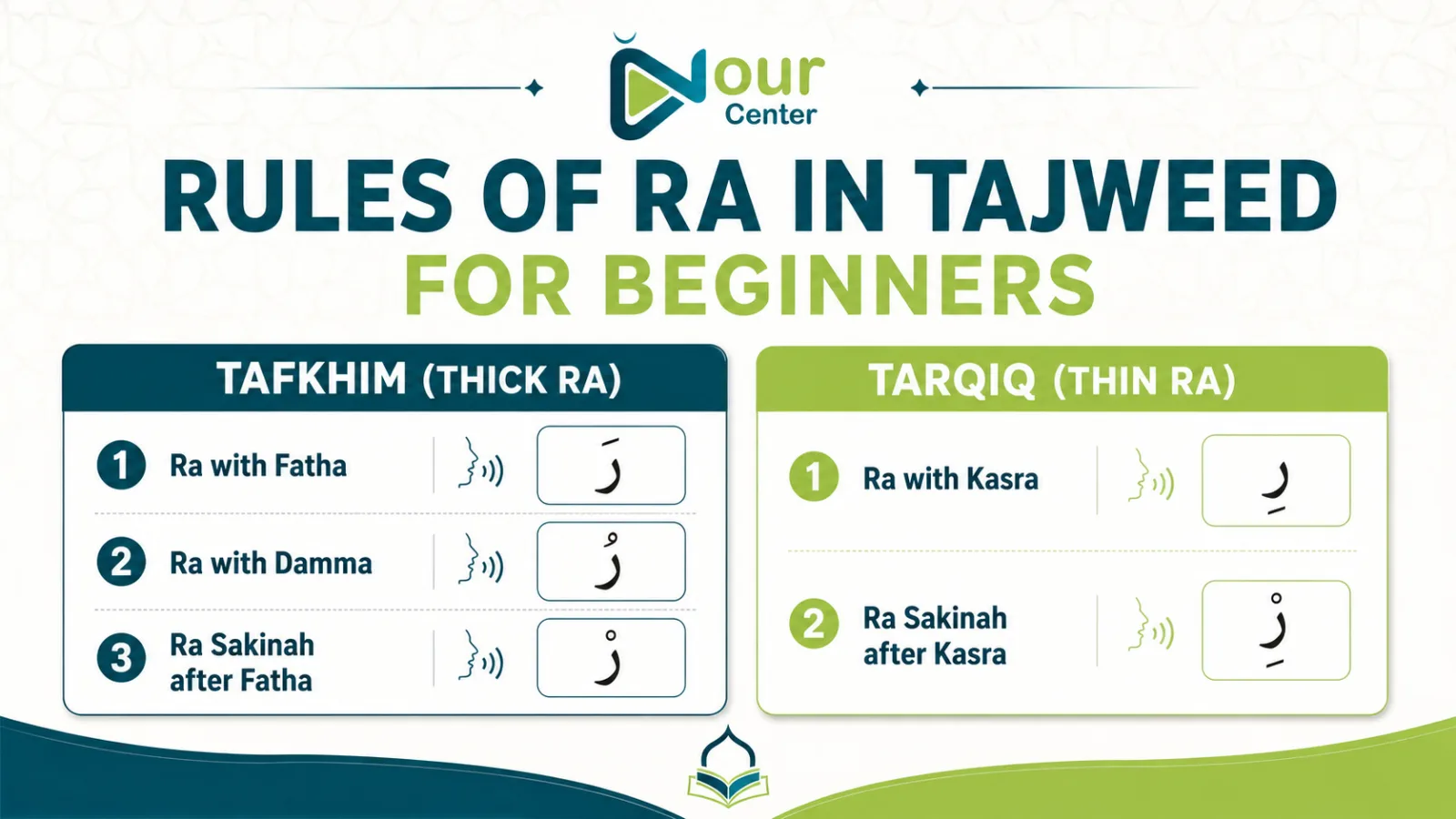
When Ra Is Heavy or Light
The Rules of Ra in Tajweed for beginners are an important part of learning correct Quran pronunciation because the Arabic letter Ra does not always have the same sound quality. Sometimes Ra is pronounced with Tafkhim, meaning a fuller or heavier sound. At other times, it is pronounced with Tarqiq, meaning a lighter sound. For beginners, this can feel confusing at first.
The same letter appears on the page, yet its pronunciation changes according to the vowel on Ra, the vowel before it, whether Ra has Sukoon, and sometimes the letters around it.
The good news is that most beginner situations follow a clear pattern.
Ra with Fathah is generally heavy. Ra with Dammah is generally heavy. Ra with Kasrah is generally light. When Ra has Sukoon, the learner usually looks at the sound before it to decide whether the Ra should be heavy or light. There are also more detailed cases and a small number of situations that should be learned later with a qualified Tajweed teacher.
This guide explains the Rules of Ra in Tajweed for beginners step by step, including heavy Ra, light Ra, Ra with Sukoon, stopping on Ra, common pronunciation mistakes, and practical Quran exercises.
What Is the Letter Ra in Arabic? Ra is the Arabic letter ر. It has a distinct articulation and sound that does not correspond perfectly to the English letter R. Learners should therefore avoid simply replacing Arabic Ra with the R sound from their native language.
Makharij. Tafkhim or Tarqiq. Makharij tells us how the letter itself is articulated. Tafkhim and Tarqiq tell us whether its sound quality should be heavy or light in a particular context. Students who understand Makharij for Beginners will find the Rules of Ra easier because the correct articulation point must remain stable whether Ra is heavy or light. What Is Tafkhim of Ra? Tafkhim means giving Ra a fuller and heavier sound.
The sound becomes broader without becoming louder or longer. This distinction is essential.
Shouting. Stretching the letter. Adding a vowel. Rolling the letter excessively. Changing the word. The Ra should simply carry the appropriate heavy sound quality. What Is Tarqiq of Ra? Tarqiq means pronouncing Ra with a lighter sound quality. The letter remains clear and properly articulated. A light Ra should not become weak. The learner still needs to pronounce the consonant accurately.
The difference is in the quality of the sound rather than whether the letter is pronounced strongly or softly.
Why Does Ra Change Between Heavy and Light? Ra is one of the Arabic letters whose pronunciation can change according to its context. This makes it different from the seven consistently heavy letters studied in Tafkhim. The vowel on Ra is one of the most important clues. If Ra has Fathah or Dammah, the pronunciation is usually heavy. If Ra has Kasrah, the pronunciation is usually light.
If Ra has Sukoon, the learner needs to inspect the vowel or sound before it.
Understanding Heavy and Light Letters in Tajweed for Beginners provides the foundation for recognizing why Ra can move between Tafkhim and Tarqiq.
Ra With Fathah Is Generally Heavy
When Ra carries Fathah, beginners should generally pronounce it with Tafkhim. The sound should be full and clear. The learner should avoid making it excessively deep. Correct Tafkhim is controlled.
Ra + Fathah = Heavy Ra. Practice the Ra itself first. Then place it inside words. Finally, practice it during continuous Quran recitation.
Some learners hear that Ra should be heavy and then distort the Fathah. The vowel may become too broad or sound unnatural.
Maintain the proper Fathah. Keep Ra heavy. Do not change the identity of the vowel. Tafkhim belongs to the sound quality of Ra.
Ra With Dammah Is Generally Heavy
Ra carrying Dammah is also generally pronounced with Tafkhim. The lips naturally round for Dammah, but the learner should not exaggerate the mouth movement.
Ra + Dammah = Heavy Ra. Ra should remain clearly different from a light Ra with Kasrah.
A learner may combine the rounded Dammah with excessive heaviness and produce an unnaturally deep sound. More depth does not necessarily mean more correct Tajweed. Listen to a teacher and imitate the balanced sound.
Ra With Kasrah Is Generally Light
When Ra carries Kasrah, it is generally pronounced with Tarqiq. This is one of the easiest light-Ra rules to remember.
Ra + Kasrah = Light Ra. The Ra remains clear. Do not weaken the consonant simply because it is light. A correct light Ra still has accurate articulation and definition.
Students who have developed a strong habit of heavy Ra may continue using Tafkhim even when Kasrah is present. This often happens because the learner memorized one Ra sound and uses it everywhere.
Heavy Ra with Fathah. Light Ra with Kasrah. Heavy Ra with Dammah. Light Ra with Kasrah. The ear gradually learns the difference.
Ra with Sukoon requires more attention. Because Ra itself has no short vowel, the learner usually looks at the preceding sound.
If Ra Sakinah is preceded by Fathah or Dammah, it is generally heavy. If Ra Sakinah is preceded by an original Kasrah, it is generally light, unless a more detailed Tajweed condition changes the ruling. This introduces beginners to the idea that the sound before Ra can control its quality.
When a Ra with Sukoon is preceded by Fathah, it is generally heavy. The learner should connect the Fathah smoothly into a full Ra sound. Do not add a new vowel to the Ra.
Ra has Sukoon. So the consonant itself should not receive Fathah, Kasrah, or Dammah unless one is actually written.
Beginners sometimes find silent consonants difficult. They may unconsciously add a small vowel after Ra. This changes the pronunciation.
Previous vowel. Ra Sakinah. Next sound. Keep the transition connected.
A Ra with Sukoon preceded by Dammah is generally heavy. The Dammah should remain correct, and the Ra should retain a full sound. Again, do not exaggerate the heaviness. The student should develop controlled Tafkhim rather than an artificially deep voice.
When Ra Sakinah is preceded by an original Kasrah, it is generally light, provided a special condition does not require Tafkhim.
Kasrah before silent Ra often points toward Tarqiq.
Ra Sakinah after Fathah. Ra Sakinah after Dammah. Ra Sakinah after Kasrah. Listening comparison is extremely useful. What Does Original Kasrah Mean? An original Kasrah is part of the normal structure of the word rather than a temporary vowel produced only because of a special way of beginning or connecting recitation. This distinction becomes more important in advanced Ra rules. Beginners do not need to memorize every exceptional case immediately.
First master the common vowel patterns. Then learn the more detailed conditions with a teacher.
When stopping or in relevant pronunciation conditions, Ra preceded by a silent Ya is commonly pronounced lightly. The Ya creates a context associated with Tarqiq. This pattern is especially useful when learners begin studying stopping rules. The student should avoid making the Ra automatically heavy simply because it has Sukoon. Sukoon alone does not determine the answer. The preceding sound matters.
One of the more detailed Ra topics involves a silent Ra preceded by Kasrah when a heavy Isti'la letter appears after Ra in the same word. In some such cases, the following heavy letter influences the ruling and Ra is pronounced heavy. This is a more advanced condition.
Kasrah before Ra Sakinah = always light has exceptions. A qualified teacher can introduce these examples after the learner has mastered the common heavy and light patterns.
Original and temporary Kasrah. Ra with Sukoon. Stopping. Ya Sakinah. Heavy letters after Ra. Certain special Quranic words. Trying to memorize every case at once can create confusion.
Ra with Fathah. Ra with Dammah. Ra with Kasrah. Ra Sakinah after Fathah. Ra Sakinah after Dammah. Ra Sakinah after Kasrah. Ra when stopping. Then advanced exceptions. This creates a stable foundation.
Some languages use a strongly rolled R. Beginners may assume that heavy Ra requires more rolling. That is not the purpose of Tafkhim. The heaviness comes from the sound quality, not from adding repeated vibrations. Avoid turning a single Ra into multiple R sounds. A teacher can help control the articulation.
Another mistake is replacing light Arabic Ra with an English-style R. Tarqiq changes the heaviness of the Arabic Ra. It does not change the articulation point into an English consonant. The Arabic identity of Ra must remain. This is why Makharij practice is important.
Whether Ra is heavy or light, it remains Ra. The learner should not create two completely different consonants. Think of it as one letter with two permitted sound qualities according to context. This is similar to how the same instrument can produce different tonal qualities while remaining the same instrument.
Ra is not one of the seven letters that are permanently heavy. That is why beginners should not memorize Ra as simply a heavy letter. The permanently heavy group follows its own rules. Ra is conditional. Sometimes heavy. Sometimes light. This distinction is one of the most important lessons in Tafkhim and Tarqiq.
Madd controls vowel length. The Rules of Ra control whether Ra has heavy or light sound quality. These concepts can appear next to each other but must remain separate. For example, a Madd sound may appear before or after Ra. The Madd should keep its correct length. The Ra should keep its correct Tafkhim or Tarqiq. Students who learned Madd Rules for Beginners should avoid making heavy Ra longer simply because its sound feels fuller.
Ra is not one of the Qalqalah letters. Beginners sometimes produce an unnecessary bounce when Ra has Sukoon. This is incorrect. Sukoon alone does not create Qalqalah. A learner who studied What Is Qalqalah should remember that Qalqalah applies only to its specific letters and conditions. Ra Sakinah needs a clean Ra sound without an artificial echo.
Ghunnah is nasal resonance associated mainly with Noon and Meem. Ra does not become nasal simply because it is heavy. Students who studied Ghunnah in Tajweed for Beginners should maintain a clear distinction between nasal resonance and Tafkhim. Heavy Ra should sound full. It should not sound nasal. Ra and the Lam in Allah Both Ra and the Lam in the name of Allah can be studied under Tafkhim and Tarqiq.
However, their conditions are different. Ra has a more extensive set of heavy and light rules. The Lam in Allah depends mainly on the vowel immediately before the name. For this reason, Lam deserves a separate lesson after Ra.
Start slowly. Pronounce a correct Arabic Ra. Then add the heavy quality without increasing volume.
Fullness. Clear articulation. No extra vowel. No excessive rolling. No unnecessary lengthening. Then practice the Ra with Fathah and Dammah. After that, practice Ra Sakinah after Fathah and Dammah.
Begin with Ra carrying Kasrah. Maintain the correct Arabic articulation. Reduce the heavy quality. Do not weaken the consonant. The Ra should remain crisp and identifiable. Then practice light Ra in Sukoon conditions after Kasrah or Ya where appropriate.
Heavy Ra. Light Ra. Heavy Ra. Light Ra. Listen without reading first. Try to identify the category. Then look at the written examples and determine why each Ra is heavy or light.
Listening. Rule recognition. Pronunciation.
Making Every Ra Heavy
This is one of the most common beginner mistakes. Once learners develop a full Arabic Ra, they may use it everywhere. This causes errors when Ra carries Kasrah or appears in another light condition. The solution is contrast practice. Read heavy and light examples side by side.
Making Every Ra Light
Some learners have the opposite habit. They pronounce a light Ra in every word. This can weaken Ra with Fathah and Dammah. The learner needs to develop a comfortable heavy sound without turning it into exaggerated throatiness.
Confusing Heavy With Loud
Increasing your volume will not fix Tafkhim. Try pronouncing heavy Ra quietly. If it still sounds full, you are developing the right quality.
Stretching Heavy Ra
Heavy Ra does not require extra time. Do not turn Tafkhim into Madd. A heavy Ra can be short. Its quality is full, but its timing still follows the actual vowel and recitation rules.
Adding a Vowel to Ra Sakinah
This is particularly common for students whose native language does not allow certain consonant combinations. Practice the surrounding sounds slowly. Do not insert an extra vowel to make pronunciation easier.
Excessive Rolling
Ra should not automatically become several repeated R sounds. Over-rolling can distort Quran pronunciation. Teacher correction is especially useful because the learner may not notice the repetition.
Ignoring the Previous Vowel
When Ra has Sukoon, beginners often look only at Ra. Instead, train yourself to look backward. What sound comes immediately before Ra? Fathah? Dammah? Kasrah? Ya Sakinah? This is often the key to the ruling.
Assuming Kasrah Always Makes Silent Ra Light
Kasrah is a strong signal for Tarqiq, but advanced Ra rules include special conditions. Beginners should learn the standard rule first and then study exceptions separately. Do not create your own pronunciation rule without checking a reliable Tajweed teacher.
Letting Heavy Ra Affect Nearby Letters
The learner may pronounce Ra correctly but make the following light letter heavy as well. Keep each consonant independent. Ra may be heavy. The next consonant may be light. Practice the transition slowly.
Choose a short Quran passage. Find every Ra.
Does Ra have Fathah? Does Ra have Dammah? Does Ra have Kasrah? Does Ra have Sukoon? If it has Sukoon, what comes before it?
Heavy. Or light. Read the passage aloud. Ask your teacher to check both the rule and the sound.
A learner cannot apply Ra rules reliably if they only imitate memorized recitation. You should gradually connect sound to the written text. Seeing Kasrah should alert you to possible Tarqiq. Seeing Fathah or Dammah on Ra should alert you to Tafkhim. Seeing Sukoon should remind you to inspect the surrounding context. This develops independent Quran reading.
Practice Ra with Fathah.
Practice Ra with Dammah.
Practice Ra with Kasrah.
Practice Ra with Sukoon in heavy and light situations.
Read a short Quran passage. Repeat this daily.
Review the meaning of Tafkhim and Tarqiq.
Practice heavy Ra with Fathah and Dammah.
Practice light Ra with Kasrah.
Practice Ra Sakinah after different vowels.
Record yourself.
Repeat teacher-corrected examples.
Hear Heavy and Light Ra
Compare the two sound qualities.
Ra With Fathah and Dammah
Practice the main heavy cases.
Practice basic Tarqiq.
Study how the preceding vowel affects the sound.
Practice common stopping situations.
Mixed Quran Examples
Identify heavy and light Ra without being told the category first.
Teacher Assessment
Rule identification. Makharij. Heavy quality. Light quality. Vowels. Sukoon. Stopping.
Stopping can change the final vowel of a word into Sukoon. That means the learner may need to look at the letter or vowel before Ra to determine the correct sound.
If the sound before the final Ra supports heaviness, Ra is generally heavy. If it is preceded by a context supporting lightness, such as an appropriate Kasrah or Ya Sakinah condition, Ra may be light. Stopping rules can become detailed, so they are best practiced with real Quran examples.
During continuous reading, Ra may carry an obvious vowel. At a stop, that vowel may disappear. Now the learner must analyze what comes before Ra. This requires more than simple visual recognition. It requires understanding how stopping affects pronunciation. Beginners should first practice frequently occurring stopping patterns before studying rare cases.
Some Quranic words involve conditions where the ruling is more detailed than the beginner rules described above. There are also cases discussed by Tajweed scholars where contextual factors require careful analysis. These should not discourage beginners. You do not need every exception in order to start pronouncing Ra correctly. Master the high-frequency patterns first. Then let a qualified teacher introduce special cases gradually. Rules of Ra for Kids Children can learn Ra through sound comparison.
Instead of beginning with a large rules chart, the teacher can demonstrate: Heavy Ra. Light Ra. Then ask the child to repeat.
Fathah = usually heavy. Dammah = usually heavy. Kasrah = usually light. Children can then practice short Quran examples. The technical Sukoon rules can be introduced later. Do Children Need to Learn Tafkhim and Tarqiq Terms? The terminology is useful, but pronunciation is more important at the beginning. A child may correctly produce heavy and light Ra before remembering the terms Tafkhim and Tarqiq. That is acceptable.
Once the sound is established, attach the terminology to it.
This keeps learning practical.
Adult learners often understand the logic quickly. Their difficulty may be changing an established R sound from their native language.
Over-roll Ra. Use English R. Make every Ra heavy. Make every Ra light. Practice with direct teacher correction helps rebuild the sound.
Choose five to ten examples.
Heavy. Light. Listen to a correct model. Repeat each example. Record yourself. Compare. Then mix the examples so you must decide the rule before reciting. Finally, read them in complete Quran phrases.
Ra differences can be easier to hear after you stop reciting.
Is the heavy Ra actually fuller? Is the light Ra still clear? Did I roll Ra too much? Did I change the vowel? Did I add a vowel to silent Ra? Did heaviness spread to another letter? Repeated recordings can show whether your pronunciation is becoming more consistent.
Ra is one of the Tajweed topics where small differences matter.
Ra is too heavy. Ra is too light. Makharij is incorrect. The vowel has been distorted. The student is rolling Ra too much. A silent Ra has gained an extra vowel. A stopping rule has been misunderstood. Immediate correction prevents incorrect habits from becoming permanent.
At Nour Center, live one-to-one Tajweed lessons can teach the Rules of Ra according to the student's current recitation level.
Ra articulation. Makharij. Tafkhim. Tarqiq. Short vowels. Sukoon. Heavy letters. Stopping. General Quran fluency. The learner can then progress from basic cases into more detailed Ra conditions.
Ra with Fathah. Ra with Dammah. Ra with Kasrah.
Ra with Sukoon. Stopping on Ra. Special cases. This sequence keeps the topic manageable.
Ra with Fathah sounds naturally heavy. Ra with Dammah sounds naturally heavy. Ra with Kasrah sounds light. You recognize when silent Ra requires analysis. You stop making every Ra identical. You no longer use volume to create heaviness. You avoid excessive rolling. You do not add vowels to Ra Sakinah. You can predict the rule from the text. Your teacher corrects fewer examples. The goal is automatic pronunciation.
What Should You Study After the Rules of Ra?
After Ra, the next useful topic is the Rules of Lam in Tajweed. This allows learners to study another letter whose sound quality can change in an important context.
The Lam in the name of Allah. When it is heavy. When it is light. Ordinary Lam pronunciation. Common beginner mistakes. After Lam, the learner can continue with stopping and starting rules.
The Rules of Ra in Tajweed for Beginners become much easier when the learner begins with the common patterns.
Ra with Fathah is generally heavy. Ra with Dammah is generally heavy. Ra with Kasrah is generally light. Ra with Sukoon requires looking at the preceding sound and sometimes additional context. Heavy Ra does not mean loud. Heavy Ra does not mean long. Light Ra does not mean weak. Ra should not be rolled excessively. Sukoon does not automatically mean Qalqalah. Makharij must remain correct whether Ra is heavy or light.
Beginners do not need to memorize every advanced exception immediately. Learn the common rules. Listen carefully. Compare heavy and light pronunciation. Practice short examples. Read Quran passages. Receive teacher correction. Then gradually study the more detailed cases. With consistent practice, heavy and light Ra becomes a natural part of clear and accurate Quran recitation.
Note: Comments may require approval before appearing publicly.
Learn the Rules of Lam in Tajweed for beginners, when Lam is heavy or light, the Lam in Allah, common mistakes, and prac...
Read Article →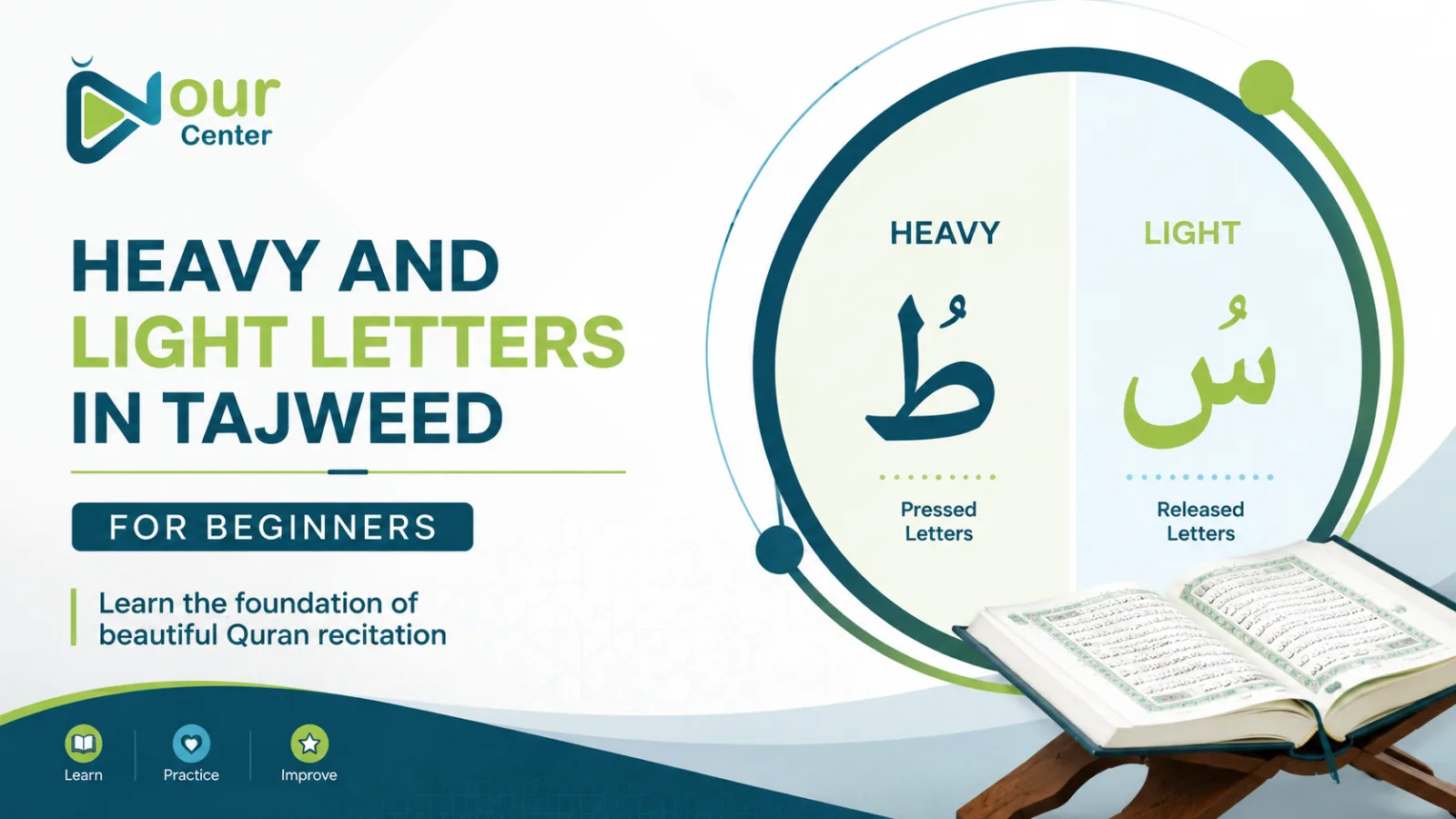
Learn heavy and light letters in Tajweed for beginners, including Tafkhim, Tarqiq, the heavy Arabic letters, rules of Ra...
Read Article →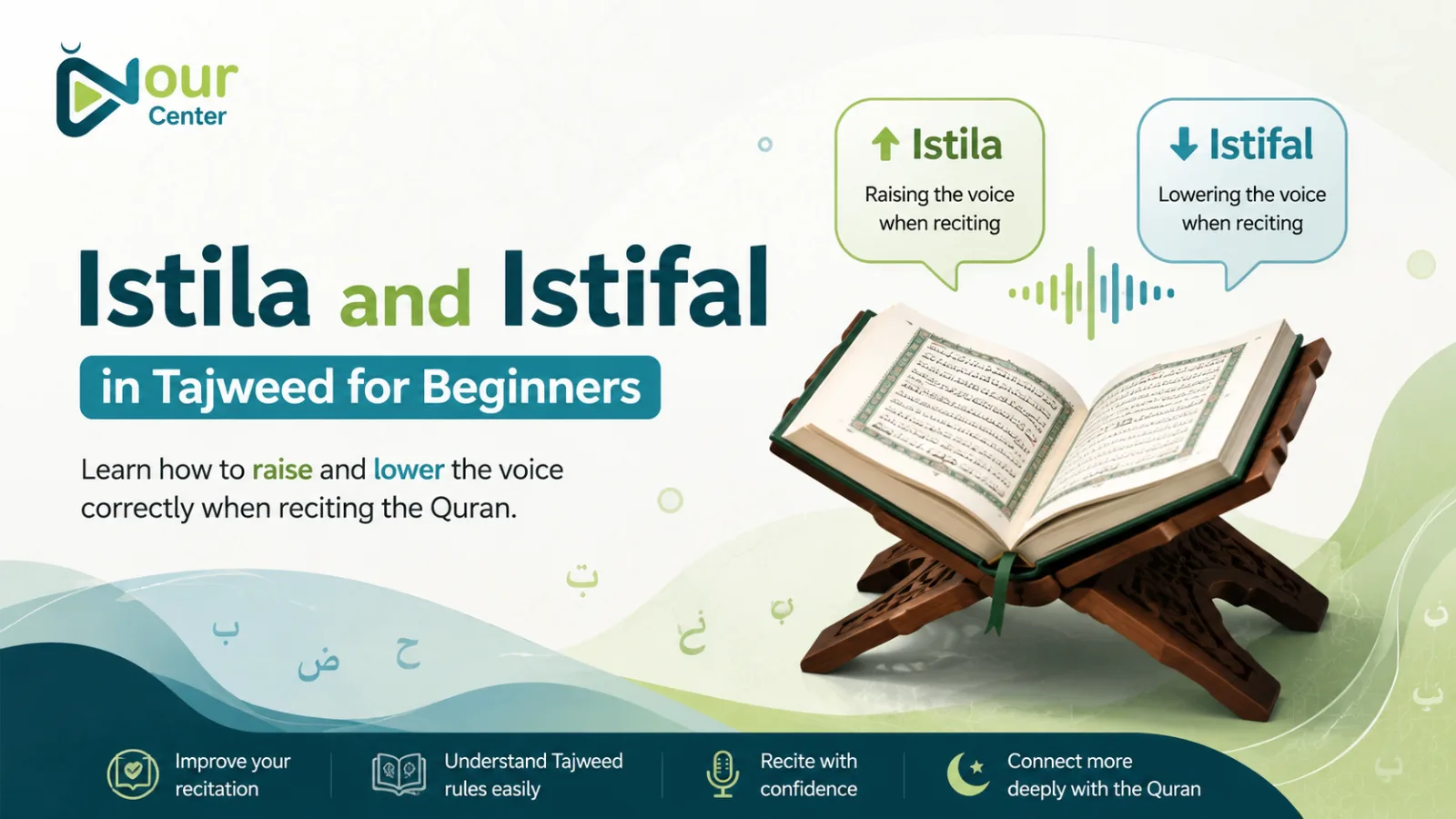
Learn Isti'la and Istifal in Tajweed for beginners, the seven elevated letters, tongue position, heavy and light pronunc...
Read Article →
Learn the basic Tajweed rules every beginner should know, including Makharij, Madd, Ghunnah, Qalqalah, Noon Sakinah, Mee...
Read Article →