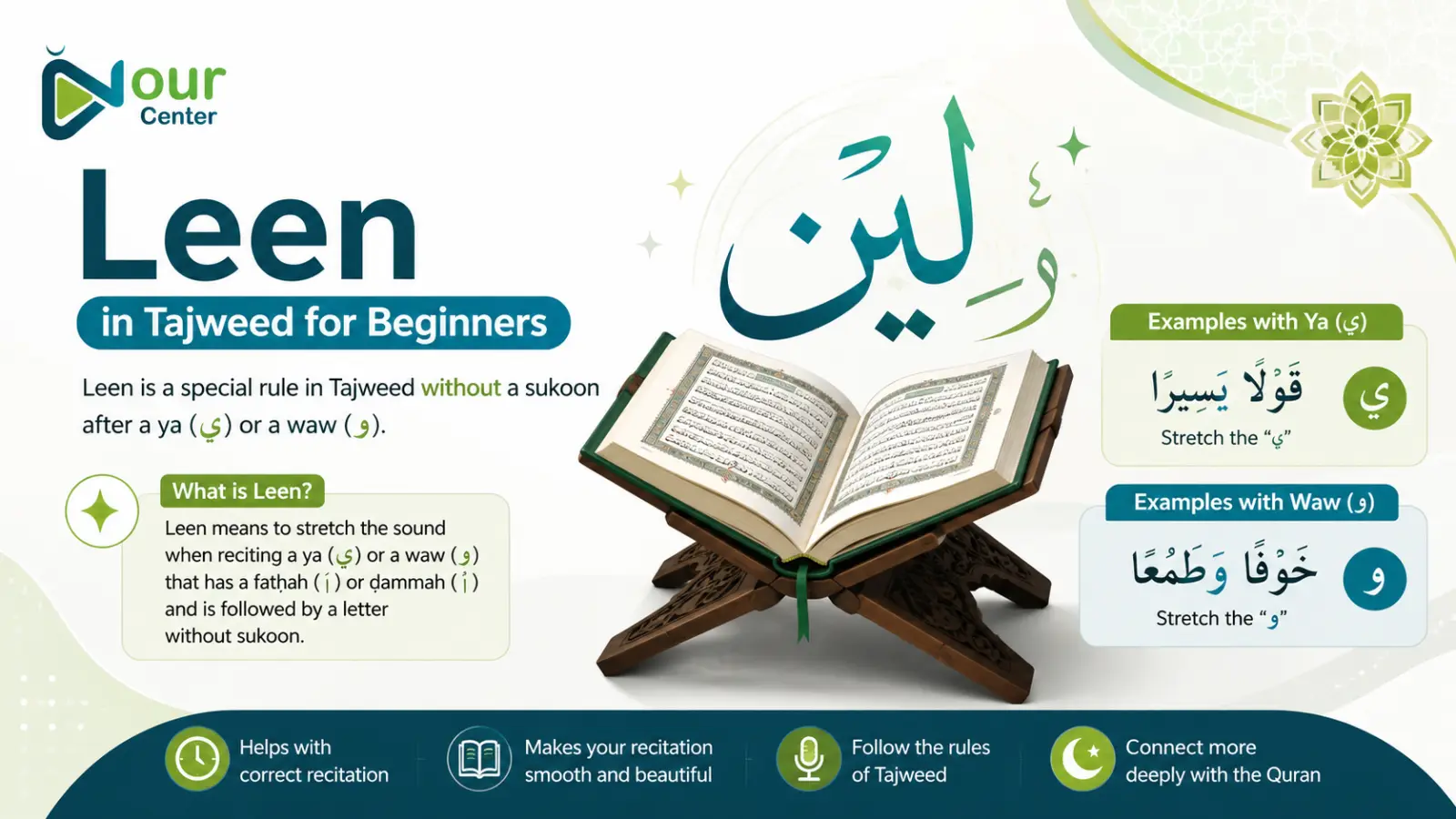
Leen in Tajweed for Beginners: Understanding the Soft Waw and Ya Sounds
Learn Leen in Tajweed for beginners, the conditions of Waw and Ya Leen, the difference between Leen and Madd, stopping r...
Read Article →
Waqf and Ibtida Explained
Stopping and starting in Tajweed are essential skills for anyone learning to recite the Quran accurately and naturally. A learner may pronounce individual letters correctly, apply Madd, Ghunnah, Qalqalah, and other Tajweed rules well, yet still make significant recitation mistakes by stopping in the wrong place or restarting from an unsuitable word. In Tajweed, stopping is commonly called Waqf. Starting or restarting recitation is called Ibtida.
These two skills are closely connected because a good stopping point should usually allow the reader to restart in a way that preserves a clear and appropriate meaning.
Do not stop randomly just because you need a breath. Look at the meaning and the stopping signs in the Mushaf. Understand that stopping can change the pronunciation of the final part of a word. When restarting, choose a point that gives a complete and understandable meaning. Learn the most common Mushaf Waqf signs gradually.
This guide explains stopping and starting in Tajweed for beginners, the meaning of Waqf and Ibtida, common stop signs, pronunciation changes when stopping, common mistakes, and practical Quran exercises.
What Is Waqf in Tajweed? Waqf means stopping during Quran recitation. In practical recitation, the reader stops the voice at a word for enough time to take a breath, with the intention of continuing afterward. Waqf is different from simply hesitating. It is also different from ending the recitation completely. The reader deliberately chooses a suitable place to stop. Correct Waqf considers both pronunciation and meaning.
A good stopping point should not unnecessarily break a phrase in a way that creates confusion or leaves the meaning incomplete.
What Is Ibtida in Tajweed? Ibtida means beginning or restarting recitation.
Beginning from the start of a verse. Starting after a previous stop. Restarting from an earlier word because the chosen stopping point did not allow a suitable continuation. Correct Ibtida is important because beginning from the wrong word may separate a phrase from the context needed to understand it properly.
Start from a place that produces a clear and complete expression.
Quran recitation is not simply a sequence of individual words. Words form phrases. Phrases communicate meaning. Stopping in an unsuitable place can separate words that belong together. Similarly, restarting from a word without its necessary context can create an incomplete or misleading phrase.
Preserve meaning. Control breathing. Improve recitation rhythm. Apply Tajweed rules correctly at word endings. Avoid random pauses. Understand Mushaf stopping signs. Restart naturally. Develop more confident Quran recitation.
Letters. Harakat. Makharij. Madd. Ghunnah. Other pronunciation rules. When they begin reading longer verses, breathing becomes another challenge. A student may stop simply because they run out of breath. That is understandable during early learning, but it creates a new skill to develop. The goal is gradually to plan breathing and recognize appropriate stopping places before the breath becomes exhausted.
Breathing is one reason for stopping, but correct Waqf involves more than physical breath control.
Is the phrase complete? Does the Mushaf indicate a useful stopping point? Will stopping here separate closely connected words? Can I restart naturally afterward? A skilled reciter combines breath control with understanding of the recitation structure.
Many Mushafs contain small symbols that guide the reader regarding stopping and continuing. These symbols can be extremely helpful for beginners.
Stopping is required or strongly indicated. Stopping is permitted. Continuing is preferred. Stopping is preferred. Stopping should generally be avoided. The exact notation can vary slightly between Mushaf editions, so learners should become familiar with the Mushaf they regularly use.
In many commonly used Mushafs, the small Meem sign indicates a strong or necessary stopping point. A beginner should normally stop there when following that notation. The purpose is often to prevent the reader from connecting two phrases in a way that could create confusion. Students should learn to recognize the symbol visually and practice stopping naturally before restarting.
The La sign generally warns the reader not to stop at that position when continuing normal recitation. It indicates that stopping there may leave the meaning incomplete or create an unsuitable break. A beginner should therefore try to continue. If the reader is forced to stop because of breath or another unavoidable reason, it may be necessary to restart from an earlier suitable point.
Jeem commonly indicates that stopping or continuing is permissible. This gives the reciter flexibility.
Breath. Recitation pace. Understanding. The surrounding phrase. It is useful for learners because it allows breathing without necessarily requiring a stop every time.
In many Mushaf conventions, Qila indicates that stopping is preferable even though continuation may be possible. The reader can learn these distinctions gradually. At the beginner stage, understanding the main practical recommendation is more important than memorizing every technical classification immediately.
Some Mushafs use a sign commonly understood to indicate that continuing is preferable. The reader may still have some flexibility depending on the exact convention used. Again, Mushaf notation can differ slightly, so students should learn from a teacher using the same style of Mushaf they read regularly. Do All Mushafs Use Exactly the Same Signs? Not always. The major principles are shared, but visual notation and detailed conventions can vary among printed Mushafs.
This is why a beginner should not panic if a symbol appears slightly different from what they saw in another book or online lesson. Learn the system used in your Mushaf. A teacher can then explain how it corresponds to the broader principles of Waqf. What Happens to a Final Vowel When You Stop? One of the most important beginner rules is that stopping often changes the pronunciation of the final vowel.
When stopping on a word that normally ends with a short vowel during continuous recitation, the final letter is commonly pronounced with Sukoon. This means the final short vowel is not pronounced in the same way it would be during continuation. Beginners need repeated practice because they may automatically pronounce the written vowel even while stopping.
Suppose the final letter carries a short vowel during connected reading. When the reader stops, that ending is commonly made silent.
Complete the final consonant clearly. Avoid adding a new vowel afterward. Stop the voice. This creates a clean ending. A common mistake is adding an extra sound after the final consonant.
Adding a Vowel After Stopping
Some learners cannot comfortably finish on a consonant. They unconsciously add a small vowel. This may sound like an extra Fathah, Kasrah, or Dammah. The solution is controlled Sukoon practice. Read the final consonant. Stop cleanly. Do not release the mouth into another vowel. Teacher feedback is very useful because the learner may not notice the added sound.
Ta Marbuta is an important beginner stopping rule. During connected reading, its pronunciation depends on the grammatical ending and context. When stopping, Ta Marbuta is generally pronounced as Ha. This is a major visual-to-audio difference that beginners need to recognize. The reader should not simply pronounce the written shape as an ordinary Ta when stopping.
Connected pronunciation. Stopping pronunciation. This builds awareness of how Waqf changes word endings.
Tanween also changes when stopping. The pronunciation depends on the type of Tanween. Beginners should learn these patterns through actual Quran examples rather than assuming all three forms behave identically. Tanween Fath generally receives particular treatment when stopping, while Tanween Damm and Tanween Kasr normally lose the final Noon-like sound at a stop. These patterns should be practiced gradually with a teacher.
Tanween is mainly heard during connected pronunciation. At Waqf, the word ending changes according to Arabic stopping rules. This is an excellent example of why a learner cannot simply pronounce every written mark exactly the same way when stopping.
Wasl, or continuation. Waqf, or stopping.
A word may end with a Madd letter. Stopping can interact with the Madd rules already present in the word. The reader should maintain the correct long vowel and then stop according to the relevant Tajweed condition. Students who learned Madd Rules for Beginners should remember that stopping does not mean randomly shortening or extending every final vowel. Each Madd still follows its own rule.
One particularly important connection between Waqf and Madd is Madd Arid Lissukoon. This occurs when stopping creates a temporary Sukoon after a Madd letter. The word may have one pronunciation during continuation and another allowable length pattern when stopping. This demonstrates how Waqf can directly activate another Tajweed rule.
While continuing. While stopping. Hearing both versions makes the concept easier to understand.
Stopping can also affect the Rules of Ra. During connected reading, a final Ra may have a visible vowel. At Waqf, that vowel may disappear and the Ra becomes effectively silent. Now the learner may need to inspect the preceding sound to determine whether the Ra should be heavy or light. Students who understand Rules of Ra in Tajweed for Beginners will recognize why Waqf can change the analysis of a final Ra.
This is one reason Waqf should be studied after basic Tafkhim and Tarqiq. Stopping and the Rules of Lam Stopping does not remove the need to pronounce Lam correctly. Ordinary Lam should remain clear. The special Tafkhim and Tarqiq rule of the Lam in Allah still depends on the relevant context. Students who understand Rules of Lam in Tajweed for Beginners should continue applying correct Lam pronunciation even while learning where to stop and restart.
Tajweed rules work together rather than replacing one another.
Qalqalah becomes especially noticeable when stopping on certain Qalqalah letters. If a Qalqalah letter gains Sukoon because of stopping, the reader may need to apply the appropriate Qalqalah sound. A learner who studied What Is Qalqalah should remember that Waqf can create a Sukoon condition that makes Qalqalah more noticeable at the end of a word. However, do not add Qalqalah to letters that are not Qalqalah letters.
Stopping does not turn every consonant into an echoing sound.
Ghunnah rules also remain relevant near stopping points. If Noon or Meem has a Tajweed condition requiring Ghunnah before the stop, the learner should complete the rule properly rather than cutting it short because the breath is ending. Planning the stop earlier helps. Do not wait until the breath is completely exhausted. Otherwise, the final Tajweed rule may become rushed. What Is Wasl? Wasl means connecting or continuing recitation.
It is the opposite practical situation from Waqf.
When continuing, final vowels, Tanween, and connections between words may be pronounced differently from a stop. Beginners should therefore practice both forms.
How does this word sound when I continue? How does it sound when I stop? This comparison develops flexible Quran reading.
The reader stops. Some final sounds change. The breath can be renewed.
The reader continues. The connection between words remains active. Some Tajweed rules depend on the first letter of the next word. Understanding this distinction is particularly important for Noon Sakinah, Tanween, Madd, and word endings.
Break a closely connected phrase. Separate a noun from an important description. Separate a verb from what completes its meaning. Leave a statement incomplete. Make restarting difficult. Cause the learner to repeat words unnecessarily. This does not mean beginners should be afraid to breathe. It means they should gradually learn better stopping places. What Is a Good Beginner Stopping Strategy?
Look ahead. Find likely stopping signs. Choose a reachable stopping point. Begin reciting. Maintain a controlled pace. Stop before your breath becomes critically short. This is much better than beginning quickly and searching for somewhere to stop only after the breath is almost gone.
Breath control improves naturally with practice. Beginners do not need extremely long breaths. The goal is not to compete in how much Quran can be read on one breath. A shorter phrase with accurate Tajweed is better than a long phrase with rushed pronunciation. Practice moderate breathing. Choose sensible stopping points. Gradually increase fluency.
Students sometimes attempt to reach the end of a verse even when they no longer have enough breath.
Madd becomes too short. Ghunnah disappears. Letters become weak. Final words are rushed. The meaning becomes difficult to follow. It is better to stop correctly earlier. Good recitation is not measured by breath length alone. What If You Must Stop in an Unideal Place?
Breath difficulty. Coughing. Sneezing. Forgetting the next word. Another unavoidable interruption. If the stopping point is not suitable for meaning, the reader can restart from an earlier word or phrase that provides a complete and appropriate beginning. This is where Ibtida becomes important.
Do not automatically begin from the very next word. First consider whether that word can stand naturally as a beginning. If not, return to an earlier phrase. A teacher can help beginners identify how far back to restart. Over time, the learner develops a better sense of phrase structure. What Makes a Good Ibtida? A good starting point should provide understandable and appropriate context.
The learner should avoid starting with a fragment that depends heavily on words before it.
The beginning of a verse. A clearly complete phrase after an established stop. A point recommended by a teacher. As the learner develops Arabic understanding, Ibtida becomes easier to analyze independently.
Pronunciation alone is not enough. Starting from an unsuitable word can produce an incomplete expression. This is why Waqf and Ibtida traditionally involve both recitation knowledge and awareness of meaning. Beginners do not need advanced Arabic grammar before learning anything about stopping. But understanding more Arabic gradually improves stopping decisions. Can Beginners Rely Only on Mushaf Signs? Mushaf signs are extremely useful. However, they are guidance within a larger system.
Teacher instruction. Breath awareness. Understanding context. Correct restart choices. A beginner can start by following the signs and then gradually learn why particular stopping points are preferred.
Stopping at the End of Every Line
The visual end of a printed line does not necessarily represent the end of a phrase. Page layout is not a Tajweed rule. Do not stop automatically because the text reaches the edge of the line. Look for the actual stopping guidance and meaning.
Stopping Whenever You See a Long Word
Some learners become nervous when approaching a difficult word and stop before it. This may break the phrase. Instead, practice the difficult word separately first. Then read the entire phrase with an appropriate stop.
Ignoring Waqf Signs
Beginners sometimes focus so heavily on the main Quran text that they ignore the smaller symbols. Train your eyes to notice them. They provide valuable recitation guidance.
Treating Every Waqf Sign as Mandatory
Not every stopping sign has the same meaning.
Strong stop. Permissible stop. Preferred continuation. Preferred stop. Avoid stopping. Learn the symbols gradually instead of treating all of them identically.
Adding a Final Vowel
When stopping, the final consonant is commonly made silent. Avoid adding a small vowel simply to make the stop easier. This is one of the most common pronunciation errors in Waqf.
Cutting Off Madd Too Early
A learner may see the stopping point and suddenly terminate the sound. If a Madd rule applies, complete it properly. Then stop. Do not allow the stop to destroy the preceding Tajweed rule.
Rushing the Final Word
When breath becomes short, the last word often receives the weakest pronunciation. Plan the stop sooner. Your final word should be as clear as the first.
Restarting From the Next Word Automatically
The next word may not form a suitable beginning. If necessary, return to an earlier part of the phrase. Good Ibtida protects continuity of meaning.
Taking Unnecessarily Long Breaths
Very deep or forced breathing can make recitation uncomfortable. Normal controlled breathing is enough. The goal is stable pronunciation, not maximum lung capacity.
Stopping Too Often
The opposite problem also occurs. Some learners stop every few words even when their breath is comfortable. This can make the recitation fragmented. As fluency improves, combine words into sensible phrases while maintaining accurate Tajweed.
Choose a short Quran passage.
Identify the verse endings. Look for Waqf signs. Choose one or two internal stopping points. Read the first phrase. Stop correctly. Restart. Then read the same passage using a different permissible stop. This teaches flexibility.
Ask your teacher to choose a stopping point. Stop. Then decide where you should restart.
Can you start from the next word? Should you return one word? Should you return to the beginning of the phrase? This turns Ibtida into an active skill rather than passive memorization.
Review common stop signs.
Practice final Sukoon at Waqf.
Practice stopping on Ta Marbuta and Tanween examples.
Practice one Madd or Ra example at a stop.
Read a short Quran phrase and restart correctly.
Scan a passage for stopping signs.
Practice two appropriate stops.
Compare Waqf and Wasl pronunciation.
Practice restarting from suitable points.
Record a complete passage.
Review teacher corrections.
Understand Waqf and Wasl
Learn the difference between stopping and continuing.
Practice how short vowel endings change at a stop.
Ta Marbuta and Tanween
Practice common word-ending changes.
Mushaf Stop Signs
Learn the most frequently encountered symbols.
Waqf With Other Tajweed Rules
Practice Madd, Qalqalah, and Ra at stopping points.
Practice choosing suitable restart points.
Complete Passage Assessment
Breathing. Stop signs. Pronunciation at Waqf. Restart choices. Connected meaning. Waqf and Ibtida for Kids Children can learn stopping through simple visual and listening guidance.
Stop here. Continue here. Take a breath here. Do not stop here. Then explain the symbols gradually. Young students do not need advanced grammatical terminology before they can develop good stopping habits. Practice with short Surahs or familiar passages makes the skill easier. Should Children Be Required to Finish a Verse in One Breath? No. Breathing capacity varies. The priority is correct and comfortable recitation.
A child should be taught suitable internal stopping points rather than encouraged to rush simply to reach the verse ending.
Correct breathing habits support long-term Quran learning.
Adults often have enough breath but may lack awareness of Quran phrase structure. They may stop according to punctuation habits from another language. This can lead to inappropriate breaks. Adults benefit from marking a few planned stopping places before reading and then comparing those decisions with teacher feedback.
Record a full passage.
Did I stop at logical places? Did I rush before each stop? Did I add a final vowel? Was the final consonant clear? Did Madd remain correct? Was my restart natural? Did the recitation sound fragmented? Recording makes breathing patterns much easier to notice.
A basic understanding of Arabic can make stopping and starting easier because the learner begins to recognize which words belong together grammatically and semantically. However, beginners should not wait until they are fluent in Arabic before studying Waqf. Mushaf signs and teacher guidance provide a practical starting point. Arabic understanding can grow alongside Tajweed.
At Nour Center, live one-to-one Tajweed lessons can teach stopping and starting through actual Quran passages rather than isolated theory alone.
Breath control. Reading pace. Mushaf sign recognition. Final vowel pronunciation. Madd at Waqf. Qalqalah at Waqf. Rules of Ra when stopping. Restart choices. General Quran fluency. The teacher can then mark suitable stopping places and ask the learner to repeat the same passage. Over time, the student becomes less dependent on direct instruction and more confident in choosing appropriate stops.
You notice stopping signs before reaching them. You plan breathing in advance. You no longer stop automatically at line endings. Final vowels change correctly at Waqf. You avoid added vowels after silent consonants. You complete Madd before stopping. Qalqalah appears only where its rule requires it. Ra remains correctly heavy or light. Your final words are not rushed. Your recitation sounds less fragmented.
You do not restart blindly from the next word. You recognize when a phrase needs earlier context. You can restart naturally after a breath. Your teacher asks you to repeat fewer starting points. You increasingly recognize complete phrases independently. Waqf and Ibtida become especially powerful when both skills develop together. What Should You Study After Waqf and Ibtida?
Once a learner understands basic stopping and starting, a useful next stage is a more detailed study of Mushaf stopping signs and advanced Waqf situations.
Advanced Madd rules. Detailed Waqf signs. Stopping on different word endings. Hamzat al-Wasl and Hamzat al-Qat. Rules affecting beginning pronunciation. More advanced Makharij and Sifat. The learner can also begin combining all previously studied rules inside longer Quran passages.
Stopping and Starting in Tajweed for Beginners are essential for moving from word-by-word reading toward fluent Quran recitation.
Waqf means stopping. Ibtida means beginning or restarting. Do not stop randomly whenever possible. Use Mushaf stopping signs. Consider the meaning of the phrase. Plan your breath before it runs out. Pronounce word endings correctly at a stop. Do not add unnecessary final vowels. Complete Madd and other Tajweed rules before stopping. Restart from a point that provides suitable context. Do not assume the next word is always the correct place to begin.
Waqf and Ibtida should gradually become part of normal Quran reading rather than separate theoretical subjects. With regular practice, teacher guidance, and careful attention to Mushaf signs, learners can develop smoother breathing, clearer pronunciation, better phrase structure, and more confident Quran recitation.
Note: Comments may require approval before appearing publicly.
Learn Leen in Tajweed for beginners, the conditions of Waw and Ya Leen, the difference between Leen and Madd, stopping r...
Read Article →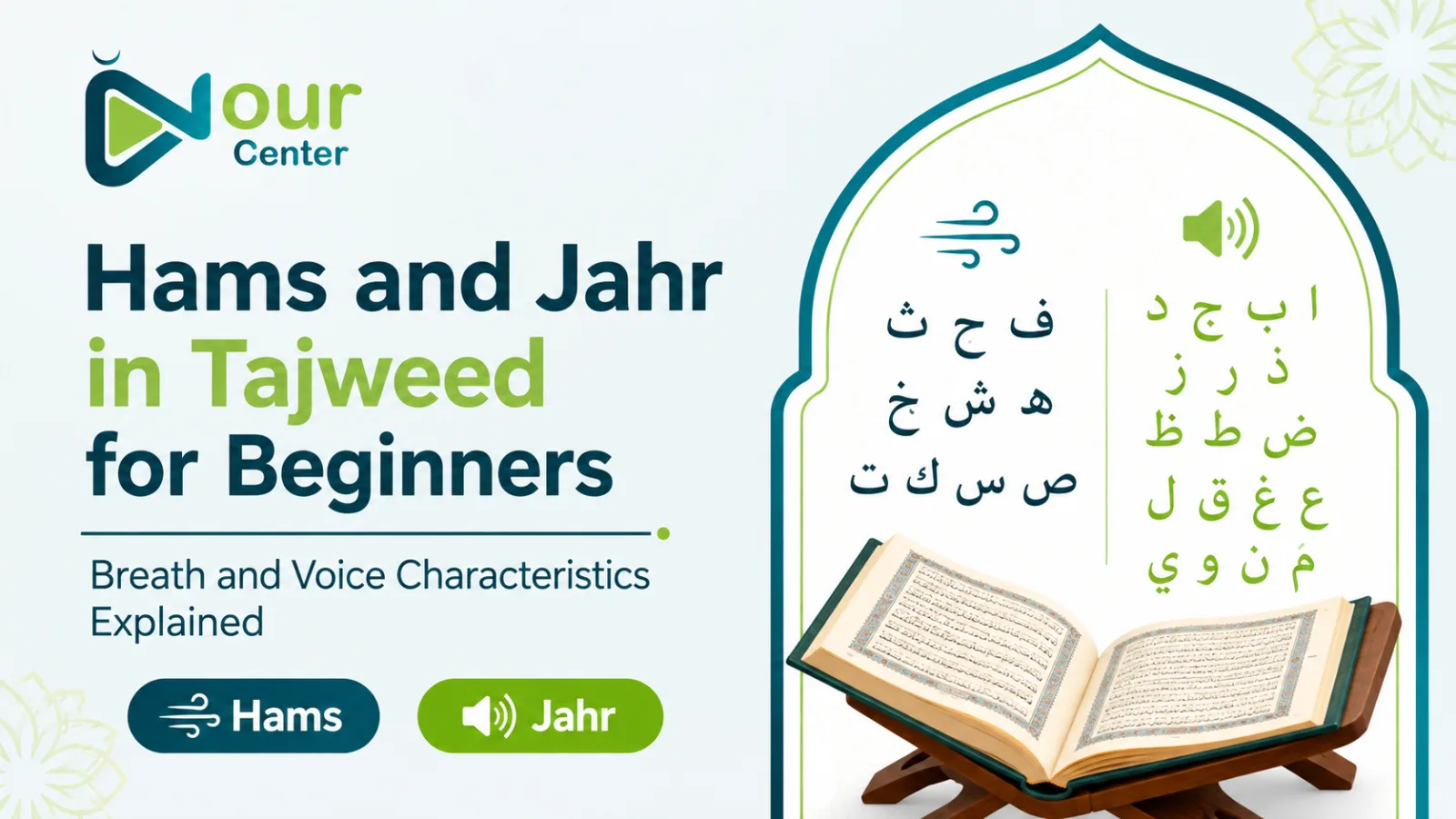
Learn Hams and Jahr in Tajweed for beginners, including their letters, breath flow, sound differences, common mistakes,...
Read Article →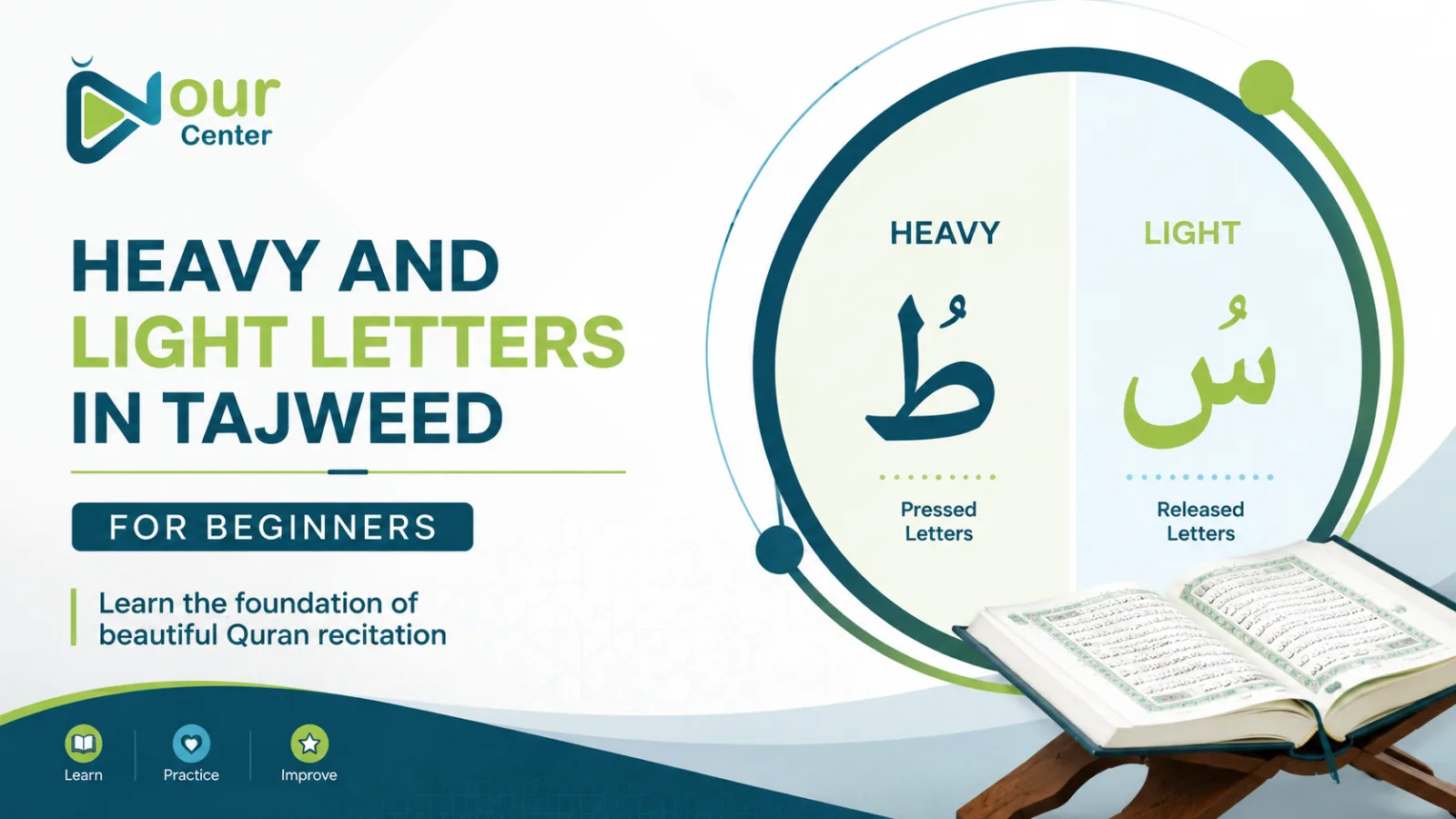
Learn heavy and light letters in Tajweed for beginners, including Tafkhim, Tarqiq, the heavy Arabic letters, rules of Ra...
Read Article →
Learn Madd rules for beginners step by step, including natural Madd, connected and separated Madd, stopping, common mist...
Read Article →